Thursday, August 9, 2012

And the Pulitzer for Adapted Novel Goes To...

Is it just me [all irritated because the Pulitzer board didn't do their job this year] or shouldn't the fiction award go to a completely original work?  Maybe that's just my interpretation of "For distinguished fiction by an American author, preferably dealing with American life." (emphasis mine)

ANYhow, my book club just finished reading a Pulitzer (A Thousand Acres, Jane Smiley - 1992) and my reading-enjoyment kept being compromised by the thought that the storyline wasn't completely original.  It's based (heavily) on Shakespeare's King Lear, (who, in the event you have forgotten, is not American,) both in characters and plot.  Not being all too familiar with King Lear, much of the book (section divisions, character development, plot points, etc.) felt jumpy and forced to me.  As a new perspective on a classic, I'm sure there is much to appreciate, but as a piece of "distinguished fiction by an American author" there was much to be desired.

Despite the oddities present due to the close parallel, the premise was interesting, the writing was easy to digest, and it kept me turning pages.  I had hope at the beginning, when the writing was crisp and unique, that Jane Smiley was a new favorite author.  But I ended up noting only the one passage:
We might as well have had a catechism:
What is a farmer?
A farmer is a man who feeds the world.
What is a farmer's first duty?
To grow more food.
What is a farmer's second duty?
To buy more land.
What are the signs of a good farm?
Clean field, neatly painted buildings, breakfast at six, no debts, no standing water.
How will you know a good farmer when you meet him?
He will not ask you for any favors.
That fun bit aside, this was the least poetic Pulitzer I've ever read.  It was, admittedly, a brilliant look at American farming in the late 1970s, but I was ultimately disappointed.  I would have liked it much more if I wasn't hoping for the quality I've found in other Pulitzer Prize winners.  You've been warned!

Good idea: reading A Thousand Acres as a comparison to King Lear.
Bad idea: reading A Thousand Acres as a comparison to other Pulitzers.

Friday, August 3, 2012

For the Record: July 2012

It's all Northern California
themed with the wine, the
poppy, the gold...and a
little bookishness for
good measure.
Vacation? What vacation? It's true that I was away from the [slave-driver that is my] house—for two whole weeks—but that has no relation to the amount of relaxing (or accomplishment of relaxing pursuits) I experienced.

The first week I could have [theoretically] blown through an audio book or two while I was assembling wedding reception favors (...my brother teaches in Seoul, where he met and married an Australian girl, and they came to California for some sightseeing and a reception...) but I opted to screen a handful of documentaries in preparation for home-schooling an 11th grader this year instead.  It was very productive, which perhaps made up for not being relaxing.  Perhaps.

The second week of vacation I was treated to  visits from friends and family that I don't see often enough.  Two parents, two brothers, two sisters-in-law, two nieces; the house was full of wonderfulness.

And now we're in August.  So quickly does time pass!  On my plate this month: a lot of work for our home remodel, including making a final decision on a contractor, moving completely out of the house, and amping up the design decisions; a lot of school prep, both for the two I'll be home-schooling and for the two in middle school; amping up for a Christian music festival that we put on over Labor Day weekend, (not my style of music, but I love that it reaches teens and others that don't feel they belong anywhere,) though thankfully this requires less of my work now than it did before; also, I'm hoping, some reading along the way.  Here's what I read in July:

9 Books Read in July: (75 year-to-date)
2 for Book Club:
  - How Green Was My Valley, Richard Llewellyn (4.5) [A lovely reread from highschool.]
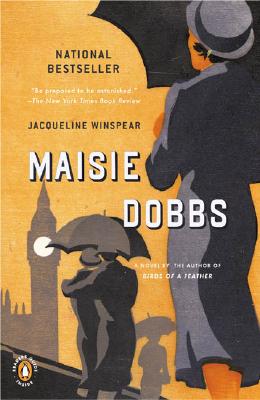
  - Maisie Dobbs, Jacqueline Winspear (4) [A wonderful series, reviewed here]

4 for Fun/Challenges:
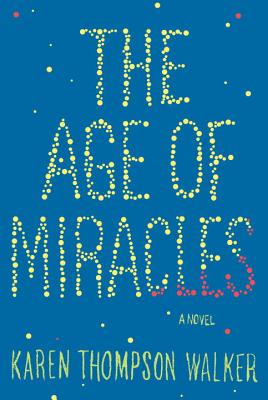
  - The Age of Miracles, Karen Thompson Walker (3) [From Indiespensable, reviewed here]
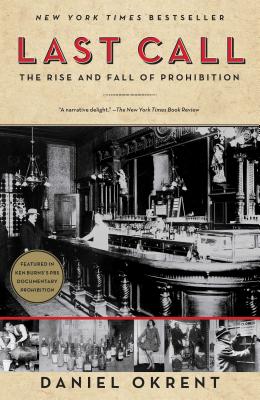
  - Last Call, Daniel Okrent (5) [wonderful non-fiction, reviewed here]
  - Eli the Good, Silas House (4) [let's read more Silas House!  ...not yet reviewed]
  - On the Road, Jack Kerouac (3.5) [read-along, reviewed here]
  - She Who Remembers, Linda Lay Shuler (3) [I've been promising to read this for decades!  I finally did it, but I really would have enjoyed it much more back when my friend first told me to read it.  Too many "man parts" for this reader's enjoyment.]

2 Pre-Reads for home-school: [both reviewed here]
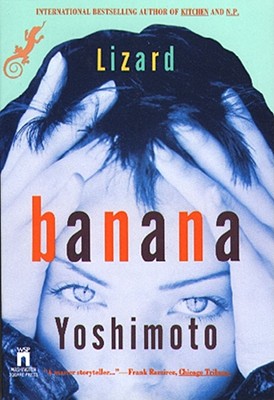
  - Lizard, Banana Yoshimoto (4)
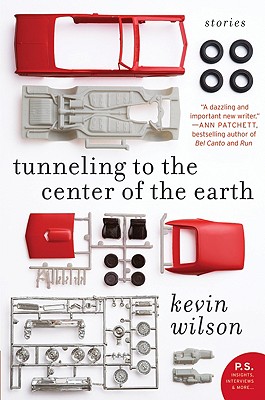
  - Tunneling to the Center of the Earth, Kevin Wilson (4)


Challenges:
This month I read 2 books of 51 (26 year-to-date) for my various year-long challenges.
   - Short Stories: Lizard (done!)
   - Wishlist: Maisie Dobbs (7 more to go)

And a CHALLENGE UPDATE:
Because of the ensuing craziness in life, I've decided to let go of my Art of the Novella Challenge for August, and instead just try to get those novellas read when possible, continuing in chronological order. The second half of the year always has me feeling like I'm running out of time, so unfortunately this one is getting the axe.

2 Current Reads:
  - Different Seasons, Stephen King.  I'm pre-reading this for my son's Lit class.  I'm only in the first of the 4 stories (Rita Hayworth & the Shawshank Redemption) but am enjoying it.
  - A Thousand Acres, Jane Smiley.  I have to get this read by Monday night for Book Club.  Yikes!  The good news is that I work well with deadlines, and this one has the added bonus of being a Pulitzer (I love crossing things off my list!)  The bad news is that I'm a terrific procrastinator.


On My Nightstand:
  - I still have some books to pre-read for my son's Lit class, notably the nonfiction (Booker T. Washington, David Foster Wallace).
  - A Long Long Way, Sebastian Barry.  I've been aching to re-read this one, probably because I want to combat my busy schedule by soaking in some poetry, but if I don't get to it soon the timing will pass me by.


Tuesday, July 31, 2012

On the Road by Jack Kerouac

I've officially done it!  Wallace's read-along for Kerouac's On the Road is complete and I can now say that I Have Read This Book.

I discovered that many of my fuzzy notions about this book were actually sizable misconceptions.  For example, I was rather worried about the rumours of stream-of-consciousness and hard-to-follow writing.  In actuality, Kerouac's writing was one of the things that made this book enjoyable.  I adored this (from page 8) which was just about as "streamy" as it got:

They rushed down the street together, digging everything in the early way they had, which later became so much sadder and perceptive and blank.  But then they danced down the streets like dingledodies, and I shambled after as I've been doing all my life after people who interest me, because the only people for me are the mad ones, the ones who are mad to live, mad to talk, mad to be saved, desirous of everything at the same time, the ones who never yawn or say a commonplace thing, but burn, burn, burn like fabulous yellow roman candles exploding like spiders across the stars and in the middle you see the blue centerlight pop and everybody goes "Awww!"

I loved this description: “His excitement blew out of his eyes in stabs of fiendish light.”

Apart from being a little bit in love with Kerouac himself, I also loved the clear picture of America and Mexico in the late 1940s.  It was like getting a real glimpse of history, rather than a retelling.  Unfortunately, the novelty of traveling and visiting places familiar and strange wore off the more Dean Moriarty (aka Neal Cassidy) was in the picture.  That guy is just a super-stressball (compounded by the fact that I know someone who (in some ways) is very much like him.  So much that I've actually heard the same defense for said person as Kerouac did for Dean:)
I longed to go and put my arm around Dean and say, Now look here, all of you, remember just one thing: this guy has his troubles too, and another thing, he never complains and he's given all of you a damned good time just being himself, and if that isn't enough for you then send him to the firing squad, that's apparently what you're itching to do anyway...
Another misconception I held before reading the book was that it was all only sex&drugs.  Certainly there is a lot of sex&drugs, (one scene in Mexico stands out in my mind,) but for the most part, Kerouac's insights and observations made it apparent that post-WWII America was a little lost and trying to figure out exactly what life was all about.  The problem was the lack of hope.  Seeing a group of people not be able to move on, or grow out of, such behaviors is sad.  Although I appreciated the historical importance, and enjoyed Kerouac's writing, most of this book ended up leaving me somewhat ambivalent.  Dean was stressful, and everyone's inability to be content was depressing.

I am glad I read it though, both for its significance in literature, and because I no longer have those misconceptions I began with.  It was easy to read in many respects, but a growing experience at the same time.  Kerouac had many acute observations, even in the midst of dizzying jazz and exhilarating car rides, that made my time with the book much more enjoyable that it might have been otherwise.  I'll leave you with one I especially liked.
Dean took out other pictures. I realized these were all the snapshots which our children would look at someday with wonder, thinking their parents had lived smooth, well-ordered, stabilized-within-the-photo lives and got up in the morning to walk proudly on the sidewalks of life, never dreaming the raggedy mess and riot of our actual lives, our actual night, the hell of it, the senseless nightmare road. All of it inside endless and beginningless emptiness. Pitiful forms of ignorance.

Monday, July 23, 2012

Last Call: The Rise and Fall of Prohibition

I don't usually blog mid-book, (I guess I'm a completed-project kind of girl,) but I did talk about this one midway because there was too much fascinating information to keep it all to myself.  So much, in fact, that I've worked this book into just about every conversation I've had in the last 2 months.  Because of this, I've had to make a smidge of an exception in my final rating (usually I reserve my 5-star ratings for books that I can't find any fault with, but the conversation application was like super-extra-credit here and nothing less than 5 stars would be accurate.)

My complaint is minor, actually: in a perfect world, a few of the pages about political machinations would have been swapped for more info about the more titillating descriptions of speakeasies, flappers, and social life (these aspects were addressed, just not in the ratio I yearned for).  Admittedly, Okrent is not ignorant of this: "The most familiar legacy of Prohibition might be its own mythology, a body of lore and gossip and Hollywood-induced imagery that comes close enough to the truth to be believable but not close enough to be...well, true."

What it is, if not the source for all the gossip and lore surrounding the 14 years Prohibition lasted, is the most thorough and engaging history of the era when America transitioned from rural to urban (and all the changes that entailed) that I've come across.  I loved discovering how many different issues were tied into this thing that we label, simply, Prohibition.  There's the conflict between rural and urban lifestyles, federal government's role in the individual's life, women's suffrage, the federal budget and income tax, immigration and racism, classism, religion, continuing resentment from the Civil War, - the list goes on and on.  This book is the WHY that always seems so out of reach, and the amazing thing is how enjoyable and attainable the author has made it.

If you hold the slightest interest in American history, you won't regret setting aside a little time for this book.  Highly researched, well organized, and a joy to read, this is what history should be.  You'll meet forgotten famous people like Wayne Wheeler and Mabel Willebrandt; you'll discover the origins of powder rooms, booze cruises, Las Vegas, NASCAR, and tourism in the Bahamas.  I could talk about it for days, but instead I'll leave you with a few brief excerpts and a strong encouragement to check it out for yourself.
"The connection between liquor and politics was not a new one.  When twenty-four-year-old George Washington first ran for a seat in the Virginia House of Burgesses, he attributed his defeat to his failure to provide enough alcohol to the voters."
"The booming prescription trade had been accompanied by a dawning realization among America's physicians that alcoholic beverages were in fact useful in treating twenty-seven separate conditions, including diabetes, cancer, asthma, dyspepsia, snakebite, lactation problems, and old age."
"It was a later edition of the KKK that focused its venomous loathing on black people; this version had a special hatred for Jewish and Catholic immigrants.  The Klan, which supported woman suffrage in behalf of Prohibition, in turn supported Prohibition as a weapon against the immigrants. [...] In many towns there was little distinction between membership in the Klan and in an ASL (American Saloon League) affiliated church."
"Wrote newspaperman Malcolm Bingay, 'It was absolutely impossible to get a drink in Detroit unless you walked at least ten feet and told the busy bartender what you wanted in a voice loud enough for him to hear you above the uproar.'"
"It was one thing for Pennsylvania legislature--any legislature, really--to give militant drys the laws they wanted, but quite another to provide the funds necessary for their enforcement."
"In 1925, when The Great Gatsby was published, the meaning of "drug-stores" was as clear as gin."

Thursday, July 19, 2012

Perhaps I Like Short Stories After All...

This year, one of my personal goals was to read three poetry collections and three short story collections.  This was definitely a challenge for me, as these are both forms that I'm trying to learn to appreciate.  I'll save the poetry for a later discussion, because it's the stories that are forefront on my mind right now.

In my mind, the purpose of the short story is to make the reader respond in some way.  The first two collections I read did an okay job at that, (The Complete Stories of Flannery O'Connor suffered only in that there were an incredible number of stories and it took me years to complete. Youth and the Bright Medusa by Willa Cather was good, but wasn't as magical for me as O Pioneers! or Song of the Lark) but they didn't really change my perspective about short stories.  They were [mostly] good, interesting, stories, but (with a few exceptions) left me feeling like they weren't complete somehow.  They ended too abruptly perhaps, or seemed too formulaic, or maybe I was never fully invested in the story to begin with.

In any case, these problems vanished when I began reading short stories to prepare for my son's high school English course.  I chose Lizard by Banana Yoshimoto because my son is infatuated with Japanese culture (and I thought Haruki Murakami might be too slow for him at this point) and Tunneling to the Center of the Earth by Kevin Wilson because I loved The Family Fang and thought it might be just the right sort of quirky.  Turns out, I really enjoyed both of these collections.  Where the two collections I read earlier this year suffered from too many similar stories, these did not.  They felt fresh throughout, and kept me wanting to read more.  None of the stories felt too long.  In fact, most of them had me wishing that they were longer.  (As Jane Austen said, "but for my own part, if a book is well written, I always find it too short.")

From what I understand, both of these authors were in their early 20s when they wrote these stories, which explains the What Do I Do With My Life vibe that runs throughout both collections.  It happens to be perfect for what my goal is, but I found them enjoyable even apart from that.

Lizard has a distinct Japanese flavor, which makes observing that transition to adulthood all the more interesting. The stories are high interest and easy to read, but at the same time they dig deep into themes of hurt, memory, love and loss, with growing as a person and figuring out who you are and why. It isn't just all surface action, the characters make you think and feel.

Kevin Wilson has a quirky writing style that might not work for everyone, but seems to work quite well for me.  Where Aimee Bender's (and Jonathan Safran Foer's) magical realism is too off-the-wall to really engage me, Wilson's surreal realism (is that even a thing?) hits me just right.  These stories often start off with an attention grabber: "First of all, we were never tunneling to the center of the earth.  I mean, we're not stupid."  Or: "It took me damn near a week to convince Sue-Bee to come watch this guy shoot himself in the face."  The themes revolve around loneliness and family and love - things that you'll recognize if you've read The Family Fang.

Not only did I find success in my attempt to gather required reading for my 11th grade son (he'll be reading Blood & Water from Yoshimoto and the title story from Wilson) but I enjoyed myself along the way.  Perhaps my short-story-ennui had more to do with finding the right balance of authors than anything else.  I'm not confident I'll be able to say the same thing about poetry, but I'm not giving up hope yet.

Wednesday, July 18, 2012

Buzzing about Chabon

(photo credit)
Michael Chabon, anyone?  If you didn't already know, this uber-talented, Pulitzer-Prize-winning author has a book being released in September titled Telegraph Avenue.  Emily, at As The Crowe Flies and Reads has joined forces with Harper and is hosting a pre-publication blogger readalong - such a fun idea, don't you think?  (I adore Emily and her blog - not only is she a blast to talk books with, but she's got the best-decorated house on earth, I'm absolutely certain.)

While I'm not joining in the readalong by reading the book, I have been following it and enjoying everyone's thoughts.  The real Telegraph Avenue (not the book) is located in Oakland and Berkeley CA, and is the spot on the globe that Chabon calls home.  Being a NorCal girl myself, and particularly fascinated with books written about an author's hometown, I decided to look into the locale a bit more.  What resulted was a post about home, (Chabon's home in particular,) and a little tour of Telegraph Avenue given by the author himself.

Emily was incredibly kind and allowed me to guest post on her blog.  It's my first time guest-posting, so I'd love it if you'd give it a little look-see.  While you're there, spend a minute browsing her other posts - you won't be disappointed!

Friday, July 13, 2012

Nice to Meet You, Maisie Dobbs

Ever since I'd heard that Maisie Dobbs was a post-WWI, London-based sleuth (of sorts) written on a more literary level, my curiosity was roused.  One of my book groups ended up reading it together (met earlier this week - book club outside by the pool, how fun is that?) and it was all I'd hoped it would be and more.  (Actually, it was all I'd hoped Mr. Churchill's Secretary would be, which made it all the better.)

Although much of the book takes place a good decade after WWI ended, the story revolves around the war and its after-effects.  I love reading about this era.  Talk about generation shaping - the thought of shell-shocked young men roaming the streets of London at night, trying to come to terms with the war, and this: "Like many young women who came of age in the years 1914-18, Iris had no husband, for her sweetheart had been lost in the war."  Gives my heart an insta-ache.  I can't even imagine, yet I long to understand.

Maisie Dobbs is a great example of what a literary mystery can be.  There is history, real characters, more than one line of  suspense, paired with good writing and a touch of introspection.  A book needn't be poorly written to have a good storyline.  What makes this discovery even more intriguing is the fact that it is the first in a series.  I generally don't think very highly of books that are drawn out into series, simply because they typically feel to be just that: one story that is drawn out for no good reason.  I hate feeling like I need to read the next book just to find out what happens. But here, for the first time in recent history, I've found a book that actually makes me think I could keep reading the series and not risk disappointment.  Maybe because it is a character/era driven series instead of a plot driven series?  I don't know, but I'm on board.  Birds of a Feather is #2 and on its way to my shelf, one way or another.

Reading Maisie Dobbs also stirred up all those sympathies and feelings about the dreadful ramifications of the Great War that left me feeling pangs of want for A Long, Long Way by Sebastian Barry.  It hasn't even been a full year since I read it, and I don't often reread a book, but I need this one like I need a good long visit with an old friend.  Thank you, Ms. Dobbs (& Ms. Winspear) for the experience, it was nice to meet you.

Saturday, July 7, 2012

The Age of Miracles by Karen Thompson Walker

Can you believe I'm reviewing a Hot Off The Shelves New Release??  Maybe this occurrence isn't as crazy-rare as it feels, but it does feel to me like this is the first new release I've read in a while (pls excuse my exuberance).

Even if you've had your head buried in the sand (like me) you've likely heard of this book.  Which explains my disappointment when I heard it was going to be featured in the next Indiespensable shipment (ugh, hype and all that jazz.)  Fortunately, those kind folks did an incredible job putting together a fun package - the best one recently - beautiful hardback, purty dust jacket, lovely slipcase, "survival" goodies.  Okay, maybe I wasn't miffed after all.

And now, on with the book, right? The premise is interesting: a California girl and her family try to adjust to the one global calamity they had never considered, as the earth's rotation begins to slow.  Sounds science-fictiony, yet - as my husband declared - The Book Is Way Too Short To Explain Everything...it's really more about the people, how they adjust and react.  Sounds like my sort of thing after all!

There was a lot that I enjoyed about this book.  I found the writing to be enjoyable, the premise piqued my interest throughout the book.  However, there were a lot of little things that bugged me, making this more of an "enjoyable reading experience" rather than a "wonderful book".   Let's bullet-point this:
  • The ages of the kids seemed incompatible with their behavior.  These were 11 year-old kids acting like 14 year-olds (parties & other behavior) and I had to keep reminding myself of their ages. (And before you say that's how it is now and declare me out of touch with reality, keep in mind that I have an 8, 11, 13, and 16 year old and we live Southern California.  I should be able to identify.)
  • As if California didn't already have enough stereotypes...luckily the "We Californians..." sentences began to thin out as the book went on because they were about to ruin the book for me.   Really.  As a native Californian who has felt only 2 real earthquakes and rarely eats outside, I could rant about this for pages.  It's a big, diverse state, making generalities a little silly.
    • "We were Californians and thus accustomed to the motions of the earth. [...] But we Californians were no more prepared for this particular calamity than those who had built their homes on more stable ground." 
    • "This was California--almost everyone had migrated here from someplace else." 
    • "This was California--we ate outside in every season."
  • People's motivations seemed non-existent or unimportant.  Julia didn't seem all too upset when upsetting things happened, and why the "clock-time" people despised the "real-time" people was never really shown.  So, not only did people react differently than I would have thought, but there wasn't any real explanation showing why this might be.
  • Way too many blatant foreshadowing sentences for such a mellow ending.  Tons of "I would learn later" and "We didn't know then" or "It was the last time" sorts of comments that ended up not really pointing to anything in particular.
Despite all those complaints, I really did enjoy reading the book.  I liked that it didn't have a super tidy ending.  I can't help thinking that the hype is do more to the politically-correct timing of the global disaster theme than anything else, but the ease of reading and the interesting story were enough to overshadow the lack of character development and other minor irritations for me.  And besides, it's a treat to look at.  That's got to count for something, right?

Sunday, July 1, 2012

For the Record: June 2012

I always think summer = time to read, but it just doesn't in my life.  Here I am, presenting my lightest reading month all year.  My schedule was definitely amped up: 
  • having to chauffeur my son to Driver's Ed classes, 
  • join my girls at Horse Camp, 
  • meet with contractors (and sub-contractors) wanting to bid on our remodel project, 
  • shuttle people to and from airports, 
  • celebrate birthdays and anniversaries, 
  • making home-design decisions, 
  • packing and organizing for our imminent move (out of the house/remodel zone,) 
  • organizing/planning for home-schooling next year (3rd grader and 11th grader: hello) 
  • entertaining 3 sets of house guests for weeks on end.  
And me, trying to squeeze in some reading, writing, knitting.  Sleep.  Something's gotta give.

7 Books Read in June: (66 year-to-date)
1 ARC:
  - The Bird Saviors, William J. Cobb (2) [The 1st Unbridled book I didn't love.]
4 for Fun/Challenges:
  - The Lonely Polygamist, Brady Udall (4.5) [see my review]
  - Youth and the Bright Medusa, Willa Cather (3.5) [see my review]
  - Frankenstein, Mary Shelley (3.5) [see my review]
  - The Family Fang, Kevin Wilson (4.5) [see my review]
2 Read-Alouds for my kiddos:
  - George Washington: Our First Leader, Augusta Stevenson (3)
  - Toliver's Secret, Esther Wood Brady (4)


Challenges:
This month I read 2 books of 51 (24 year-to-date) for my various year-long challenges.
   - Willa Cather: Youth and the Bright Medusa (1 more to go)
   - Classics: Frankenstein (3 more to go)

3 Current Reads:
  - Last Call, Daniel Okrent.  Still really enjoying this book.  I have 100 pages left, and I don't want it to end.  Annotating has certainly helped me stay engaged and retain information here, so much that I think I might annotate just about any nonfiction book from now on.
  - How Green Was My Valley, Richard Llewellyn.  About halfway through, and book club is discussing it tomorrow night.  I really should be reading instead of blogging.  Yeah.
  - On the Road, Jack Kerouac.  Mid-point in the read-along (at Unputdownables) and I'm enjoying this so much more than I thought I would.  Not intimidating at all. (what was I so worried about?)


On My Nightstand:
  - Selected titles to preview for my son's 11th grade English...mostly short stories (some by Kevin Wilson, some by Banana Yoshimoto) and nonfiction (Booker T. Washington, David Foster Wallace).
  - Maisie Dobbs, Jacqueline Winspear: A book club selection, and hopefully a refreshing read.
  - The Sisters Brothers, Patrick DeWitt: I picked this up when I bought The Family Fang, and I'm afraid that if I don't get to it soon it will be doomed to sit on the shelf for years.

Friday, June 29, 2012

Top 5 Books: Mid-Year Report

I love how blogging helps me digest and reflect on the books I read.  The end of June seems as natural a time to reflect on my goals as does the end of the year, and a Top 5 felt in order.  First, a few challenge stats: (I'm doing (obviously) much better in some challenges than others, but I think it balances out.)
  • Books read as of 6/30: 66 [feels pretty good!]
  • Reading Willa Cather Chronologically: 3 out of 4 (75%) [this one's in the bag]
  • Reading the Newbery Medal Books: 4 out of 5 (80%) [I can do it!]
  • Reading the Pulitzer Prize Winners: 2 out of 5 (40%) [no 2012 winner = I don't care]
  • Reading from my To Be Read Shelf: 3 out of 10 (30%) [oh...books on my shelf? oops.]
  • Reading Short Stories and Poetry: 4 out of 6 (67%) [duty calls...must.read.poetry.]
  • Reading from my Wish List: 4 out of 12 (34%) [this one is fun. how'd I get behind?]
  • Back to the Classics Challenge 2012:  6 out of 9 (67%) [loving me some classics this year.]
  • Spring into Junior Fiction Challenge: 8 out of 10 (80%) [hrm.  may acknowledge defeat.]
  • Art of the Novella Challenge: 0 out of 18 (0%) [August will be here WAY too soon...]


AND...my Top 5 of 2012 [so far]

Cutting for Stone, Abraham Verghese

This book was so AllTheRage when it was released that I pretty much decided not to read it.  But then Emily loooved it, and I started revising my opinion (I trust that girl's opinion!)  Finally, it was chosen for my book club, and I was entranced from the first page.  I haven't talked about it much because I don't know where to start.  It's one of those books that is so special that I simultaneously want to buy it for every person on earth, and hide every copy under my mattress so I never run out.  It was beautifully written, with beautifully real & complex characters and themes.  Highly recommended.

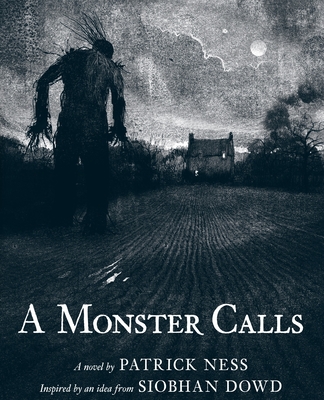
A Monster Calls, Patrick Ness

I talked about this book here, and I highly recommend reading Heidi's opinion on it (she has the insight of first-hand experience - well worth reading her thoughts!)  This is another book that hooked me from the beginning.  The writing, accompanied by beautifully fitting illustrations, allowed an incredible understanding of the emotional confusion inside a child coming to terms with an impending tragedy.  I don't think I've ever seen such an intimate issue portrayed so well.  (And, just in case you are wondering, my 11 year-old daughter fell in love with it too, so it's not just for biggies, and not just for littles.)

11/22/1963, Stephen King

Admittedly, when I picked this up I was in the mood for a cracking good read, something that has been more difficult for me to find the more I read.  The trip back to the late 50s/early 60s was so much fun for me.  More than just the JFK story, this is a comparison of the times in which we live and of those gone by.  And without the threat of freaky horror happenings, it is a book that I'm glad to recommend to a wide variety of people.  It's a chunkster, but it's Stephen King...which means that the story is the show and you needn't worry about getting bogged down.

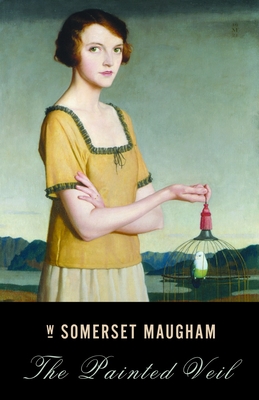
The Painted Veil, W. Somerset Maugham

What a terrific surprise my first Maugham book was!  I bought this on a whim, partially because the author had been mentioned at book club, and partially because it was short and had a good cover.  (what? those sound like good reasons to me!)  It instantly felt like a guilty pleasure: too much fun to be any good.  But it was good.  I adored every word of this book, I think, and can't wait to add more Maugham to my shelf.  I almost bought The Razor's Edge instead, and now I'm wondering if I'll like that one just as much...I've heard it was a departure for him.
The Song of the Lark, Willa Cather

I almost didn't include this one because it was a re-read, but I love it so much I couldn't leave it out.  I feel like this is my book.  It describes the intimate nature of the creative spirit like I've never before experienced.  Being one of Cather's "prairie" novels, you should expect a good dose of atmosphere here as well, although it doesn't all take place on the prairie.  You get some city and southwest mixed in there too, each subsequent place as tangible as the one before it.  The choices that Thea makes lands her in an unenviable place, which is a bit sad to see since it is also the thing she deemed more important than anything else.