Showing posts with label Short Stories. Show all posts

Sunday, January 5, 2014

Short Stories and Retro Reads

I'm sitting by a fire in cozy socks, drinking Mexican hot chocolate in a hand-painted mug from Mexico (little things like that make me happy) and trying not to thinking about the fact that this coziness is all part of an elaborate attempt to recreate the effect of seasons in season-less land.  The truth of the matter is that earlier today I was barefoot with a tank-top on, complaining about the heat. SoCal is hard on a girl whose favorite season is winter!

Today I finished reading my first book of the year: Free Air by Sinclair Lewis.  Written in 1919, this was a novel about adventuring via automobiles—already an established American pasttime‐as well as a humorous look at the different social classes before the World Wars.  In some ways, it was a bizarre mash-up of F.Scott Fitzgerald and Willa Cather where socialites meet farmers.  I love how the literature of this era reflects the times, teaching so much about daily aggravations and expectations.  Driving back then, by the way, was a chore.

I enjoyed this book quite a bit, for all that it is apparently one of his lesser appreciated novels.  I liked his humor and his talent for highlighting human foibles.

The other thing I've been reading in bits and pieces is the latest Indiespensable selection: The Best of McSweeney's.  I had previously been entirely unaware of McSweeney's (soooo out of the loop in regards to literary journals!) but got pretty excited upon opening the package for a few reasons.  First, the paper quality is divine: a tactile delight!  Second, Powell's had six of the authors sign the inside of the book.  Third, the dust jacket is a poster in disguise.  And ultimately, all the writing has been wonderful thus far.  Most of the 600 pages is comprised of short stories, though there are letters, comics, and other goodies interspersed throughout.  It might take a little while to get through, but it will be worth it.

What are you starting your year out with?  Are you diving into challenges or taking it easy?


Wednesday, April 17, 2013

A Smattering of Irish Stories

March had me really missing Ireland, wishing I was there, and thus reading Irish literature as a way to make do.  I finished a small assortment of Irish books, and felt like I'd keep finding more, but I think the craving may have receded for a while.

After owning it for 2 years (and having it partially read for just about as long) I have finally finished reading the stories in this volume. While many of the stories left me ambivalent or disappointed, there were a few standouts that I was very glad to have read. As a group, I think they made an interesting Irish portrait. Two authors I especially enjoyed, and anticipate reading more from, were Dermot Bolger and Orfhlaith Foyle.  

I was disappointedly not as enraptured with my first tastes of Roddy Doyle, Colum McCann, or Colm Toibin as I'd hoped I'd be.

"These mornings when I wake up - no longer even caring if I wake up - I feel oddly free. It's a terrible freedom, but it's the freedom that comes from knowing there is nothing more that life can do to you, that fate can have no more tricks up its sleeve.  I'm numb with grief, Maureen, I don't know if I'll ever feel warm again.  But I'm afraid of nothing now.  My sleepless nights are over because there is nothing left for life to snatch away from me." Winter, by Dermot Bolger


Ireland by Frank Delaney is a book that always caught my eye in the book store, so I finally received it through PaperbackSwap sometime last year, and then I ended up listening to it on Audible just recently.  Actually, it was a much more drawn out process than "recently" implies.  It was narrated by the author himself, and - though he has much experience reading aloud - wasn't very engaging.  The recording was some 20 hours long (thank goodness for being able to speed up the narrator's voice) and felt that long - and longer.

In the end there was much to appreciate, but I felt that Ronan's story was too bogged down by the lengthy "histories" that were the real point of the story.  The stories themselves weren't connected enough or interesting enough to keep me going.  Only the fact that it was on audio (and therefore multi-task-able) got me through it.  Makes me loathe to try his other titles, even if they are all about Ireland.


Sebastian Barry always writes beautifully.  If you are in the mood for some contemplative, gorgeous prose, pick up a Sebastian Barry novel.  His novel of WWI (A Long Long Way) is one of my most favorite books, and in fact, little Annie Dunne appeared in that novel, as she was the sister of the main character.  In this novel, life has passed her by for the most part, and we are treated to a portrait of her aged self.

Most of what I've read from Barry (this was my 4th novel) has a perfect (for me) balance of plot and sparkling composition, but Annie Dunne was definitely lacking a bit on the plot side—even for me, which is saying something!  I actually began reading it last autumn, and just now picked it up to finish it.  It took a level of focus I've found difficult to harness lately.

Still, I'd recommend giving Barry a try.  As a first foray I'd recommend The Secret Scripture, as I remember it being a tad more plot-driven.  And as always, I'm up for recommendations also!

Sunday, August 19, 2012

Appalachian Stories - Recommendations Wanted!

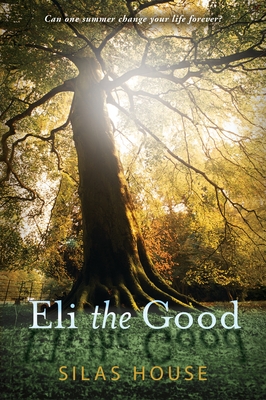
I recently read another book by Silas House which reminded me of how much I connect with his settings.  Eli the Good wasn't quite as Appalachian as his others, but Nature still weighs heavily in the story.

In addition to being his first foray into young adult literature, this book also happens to be great Independence Day reading.  It takes place in 1976, and follows 10-year-old Eli through the course of one summer.

Although the setting felt thoroughly American, the themes are universal.  What defines family?  Why is honesty a vital component of communication?  How do we show—or feel—love and concern?

Absolutely recommended, (although the epilogue didn't quite feel organic to the story,) especially for those who enjoy the coming-of-age aspect.  My enjoyment of the story ended up leading me to a book of short stories that has been on my shelf since August 2004. (Crazy, that.)  Chris Holbrook's Hell and Ohio: originally acquired because I'd enjoyed Silas House's other books.  At that time, newly entrenched in caring for a new infant (for the 4th time, hello) and therefore lacking in extra brain cells, I read only the first story and felt that it was a little slow.  Nothing special.  Reading it again 8 years later, I am entranced.  (I'm guessing that at least part of the reason is that I've taken measures to appreciate short stories, so I simply have more familiarity with the form.)

In the nine stories, coal mining (land development/destruction) is a common theme, as are manners, alcohol, religion. All themes that rang true to me...perhaps because I grew up in a small mountain town (admittedly it was in Northern California's Sierra Nevadas as opposed to the Appalachians, but the lumber mill and logging industry had a similar heavy presence in some respects to the coal mines).  I grew to enjoy feeling "a little closed in by all the trees and mountains on every side."

All the stories are wonderful, skillful, and worth reading.

(As a side note - I had the most visceral reaction (to The Lost Dog) I've ever had to a written work.  My first thought after reading the story was that it didn't say anything, but then immediately I was flooded with memories from my childhood that mirrored the story, and began to get choked up (something I don't often do, especially to the extreme I did) thinking about the fact that somebody else understood, perfectly, those feelings. I just had to stop and cope for a few minutes, I couldn't think about or look at anything else until I'd taken a few deep breaths. Pretty crazy experience!)

Recommendations?
I'd like to put a few books on my wishlist that would be good places to go from here.  Any suggestions?  I think I might have a copy of River of Earth by James Still from back in 2004 when I was on the hunt for Appalachian stories.  I enjoyed Lee Smith's Fair and Tender Ladies a couple years back...that's all I've got.  What've you got?  Recommend me!

Thursday, July 19, 2012

Perhaps I Like Short Stories After All...

This year, one of my personal goals was to read three poetry collections and three short story collections.  This was definitely a challenge for me, as these are both forms that I'm trying to learn to appreciate.  I'll save the poetry for a later discussion, because it's the stories that are forefront on my mind right now.

In my mind, the purpose of the short story is to make the reader respond in some way.  The first two collections I read did an okay job at that, (The Complete Stories of Flannery O'Connor suffered only in that there were an incredible number of stories and it took me years to complete. Youth and the Bright Medusa by Willa Cather was good, but wasn't as magical for me as O Pioneers! or Song of the Lark) but they didn't really change my perspective about short stories.  They were [mostly] good, interesting, stories, but (with a few exceptions) left me feeling like they weren't complete somehow.  They ended too abruptly perhaps, or seemed too formulaic, or maybe I was never fully invested in the story to begin with.

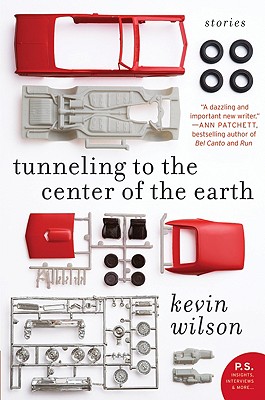
In any case, these problems vanished when I began reading short stories to prepare for my son's high school English course.  I chose Lizard by Banana Yoshimoto because my son is infatuated with Japanese culture (and I thought Haruki Murakami might be too slow for him at this point) and Tunneling to the Center of the Earth by Kevin Wilson because I loved The Family Fang and thought it might be just the right sort of quirky.  Turns out, I really enjoyed both of these collections.  Where the two collections I read earlier this year suffered from too many similar stories, these did not.  They felt fresh throughout, and kept me wanting to read more.  None of the stories felt too long.  In fact, most of them had me wishing that they were longer.  (As Jane Austen said, "but for my own part, if a book is well written, I always find it too short.")

From what I understand, both of these authors were in their early 20s when they wrote these stories, which explains the What Do I Do With My Life vibe that runs throughout both collections.  It happens to be perfect for what my goal is, but I found them enjoyable even apart from that.

Lizard has a distinct Japanese flavor, which makes observing that transition to adulthood all the more interesting. The stories are high interest and easy to read, but at the same time they dig deep into themes of hurt, memory, love and loss, with growing as a person and figuring out who you are and why. It isn't just all surface action, the characters make you think and feel.

Kevin Wilson has a quirky writing style that might not work for everyone, but seems to work quite well for me.  Where Aimee Bender's (and Jonathan Safran Foer's) magical realism is too off-the-wall to really engage me, Wilson's surreal realism (is that even a thing?) hits me just right.  These stories often start off with an attention grabber: "First of all, we were never tunneling to the center of the earth.  I mean, we're not stupid."  Or: "It took me damn near a week to convince Sue-Bee to come watch this guy shoot himself in the face."  The themes revolve around loneliness and family and love - things that you'll recognize if you've read The Family Fang.

Not only did I find success in my attempt to gather required reading for my 11th grade son (he'll be reading Blood & Water from Yoshimoto and the title story from Wilson) but I enjoyed myself along the way.  Perhaps my short-story-ennui had more to do with finding the right balance of authors than anything else.  I'm not confident I'll be able to say the same thing about poetry, but I'm not giving up hope yet.

Sunday, June 10, 2012

More Stories by Willa Cather

Youth and the Bright Medusa was published in 1920 and contained a collection of eight short stories that revolve around themes of fame and fortune, and the great price they extract.

Four of the stories had been previously published in The Troll Garden (Paul's Case, A Wagner Matinee, The Sculptor's Funeral, and A Death in the Desert) so I won't rehash them here (you can see my post about them if you like.)  Of these four, Paul's Case seems to be the most popular, although I infinitely preferred A Wagner Matinee, as it contains that real warmth of spirit and nostalgic reflection that I loved about Cather.

The four other stories had been published in various magazines before appearing in this collection, and are very much opera star/famous girl centered, a little too concentrated a topic for me.  While Cather's writing here is polished, I didn't connect with the characters or the theme as I thought I would, based on how much I loved Song of the Lark - ostensibly about the same topic.

Coming, Aphrodite!
The first story in the collection was my favorite of the four I hadn't yet read.  It was full of vivid scenes, and the characters were unique and interesting, with personality quirks and distinct motivations.  Don Hedger, and unknown painter, finds himself with a new neighbor, Eden Bower, who quickly disrupts the peace and patterns Hedger and his dog had previously enjoyed.  They get to know each other in a rather jolting, awkward manner, trying to get past their differences of temperament.

I enjoyed the trip to Coney Island, and liked Hedger's devotion to his dog...not that I'm a huge dog person, but it added nice dimension to the story.  I didn't much like the whatever happened to so-and-so? way the story ended, simply because Cather seems to like to fall back on that format (similar to how Flannery O'Connor likes to make something terrible happen to her characters at the end of her stories) and I was hoping for something different.  However, that's a minor complaint for a story that was so full and interesting.

The Diamond Mine
Okay, I liked this story too.  It's a rather sad story of a girl who worked her patootie off, finally succeeding at becoming a famous singer, only to be unappreciated and taken advantage of by all of her family, husbands and child included.  When Cressida Garnet happens to be on the same ship as a cousin of her first husband, we are allowed a picture of her her trials as well as a brief spot of happiness she looks back on fondly.

It is sad, but easily conceivable, to see how hard it might be for a hugely famous person to find true, loyal friendship.  Even when Cressida found someone who didn't seem to care so much about her money for once, things didn't turn out well in the end.  And yet she somehow retained hope, through all her family's selfishness and the absence of love or friendship, she may have been tired and hurt, but she didn't become jaded.  Could she have acted differently and still protected her tender heart?  It's nice to think she could have, but I'm not so sure.

A Gold Slipper and Scandal
Both of these stories involve Kitty Ayrshire, an opera singer.  The first relates the story of a disgruntled husband that is coerced in to hearing Kitty perform despite his general dislike for people such as he imagines Kitty to be.  He has to come to terms with his stereotypes and prejudices later when he ends up inadvertently escorting Kitty on her train ride after the show.  In the second story, we get to reflect with Kitty and her friend about a scandal of sorts that had happened years earlier in New York.

I didn't fall in love with either of these stories, but did enjoy the brief discussion in the first story about Leo Tolstoy's "What is Art?" and I discovered that "Scandal" was a favorite story of F. Scott Fitzgerald...a tidbit I found interesting.  I suppose that ties into his interest in the shenanigans of the upper crust?


Youth and the Bright Medusa was the 7th of 19 books in my Chronological Willa Cather Challenge, and 3 of the 4 I wanted to get read this year.  Next up in this challenge is her Pulitzer Prize Winner: One of Ours.

Friday, March 9, 2012

Oh Flannery, You Charmer You...

When, in 2009, Flannery O'Connor's collection of stories (A Good Man is Hard to Find) became our next book club selection, I decided to attempt super-reader-status and read the complete, entire, whole she-bang instead. It took me 2 1/2 years to finish.  Not so super-reader-ish after all.

From that, you may think that these stories aren't any good, but you'd be [mostly] wrong.  Admittedly, there are a few that had me thinking that one of us (either Flannery or I) was off her rocker, but for the most part these stories are all very entertaining.  The problem is, they are rather dark and a bit heavy.  Even the humor is dark.  Reading very many stories in a row is like being smacked up-side the head with a heavy dose of hopelessness.  Still, there are many more gems than duds, proving O'Connor a true champion of short stories.

Most of her characters have major issues regarding prejudice, religion, and pride.  It would take some serious work to catalog the number of slack-jawed, dull-eyed folk between these covers.  If you're looking for something pure, pretty, and politically correct, these stories won't suit.  If you're looking for a sharp eye and witty cynicism, however, look no further.

So.  Maybe I don't recommend reading straight through this collection.  But I do recommend experiencing some of her writing, and there are some fabulous options here.  Generally speaking, I enjoyed the stories from A Good Man is Hard to Find more than the others, but there is much to enjoy throughout.  Here are some stories that were highlights for me:

A Stroke of Good Fortune
"Standing up straight, she was a short woman, shaped nearly like a funeral urn."

Instead of pitting two people against each other to illuminate their faults, this story allows the main character Ruby Hill to do it all herself in the span of time it takes her to walk up the stairs to her apartment.  Ruby's particular plight is unique in that she mixes pride with a dose of hypochondria.  (I've just discovered that this story later grew into her first novel, Wise Blood, so I've got more Flannery on my list.) The reader quickly ascertains Ruby's true condition, making all of her thoughts and complaints all the more entertaining.  At a mere 13 pages, this story is well worth the ride.

A Good Man is Hard to Find
"The grandmother was curled up under the dashboard, hoping she was injured so that Bailey's wrath would not come down on her all at once."

I love this story.  Even though the ending is absolutely horrid, it is a delight to read.  The characters are so vivid (but then, that is to be expected with Flannery) and the dialogue lively.  Have you ever taken a road trip with a grandmother and a cat in the vehicle?  Not the most peaceful of moments.  Even if you've wisely avoided such a catastrophe (terrible pun, my apologies) there's something enjoyable about seeing someone else experience it.  If you want to experience a gritty story with distinct Southern character, this story is a standout.

The Lame Shall Enter First
"Grudgingly, Sheppard felt a slight return of sympathy for the boy."

What is good? What is bad?  How well do you understand the motivations and thoughts of those around you?  How well do you understand your own motivations?  This story does more than illuminate the faults and prejudices of its characters and show the difference between people in different walks of life.  It goes a little deeper--into those times when we deceive ourselves, convinced we are operating for the greater good and doing more harm in the process.  Some interesting thoughts to consider.

Good Country People
"The reason for her keeping them so long was that they were not trash.  They were good country people."

Like in many of her stories, this one contrasts two kinds of people, and the one that is supposed to be "better" ends up looking rather foolish.  Of course, there are no "good" characters and "bad" characters, there are only human beings that have faults, whether they believe it or not.  This story was a nice change of pace from some of the others because the ending wasn't as quick and drastic.  If you're feeling timid about diving into Flannery O'Connor's stories and are looking for something a little more mild, this is your story.

Friday, May 20, 2011

Short Stories by Willa Cather: The Troll Garden and Others

The Troll Garden and OthersAfter falling in love with Willa Cather's Prairie Trilogy (O Pioneers! Song of the Lark and My Antonia) I decided to read through all of her published works chronologically.  Even with how much I enjoyed those three books, however, this is quite a challenge for me for a couple of reasons:
  - first: I have a hard time staying on a single author, so this may take me forever
  - second: I like to choose books based on my mood, so this may take me forever.

Which is why I've only just finished #2 of her 19 published works.

The Troll Garden and Others is a collection of short stories, and is Willa Cather's second published work (first was April Twilights, a collection of poetry published in 1903.)  It was first published in 1905 and contains the following short stories: (titles link to an online copy of the story, titles in bold were my favorites)

The Troll Garden:
  - Flavia and Her Artists interesting peek at the artsy social scene at the turn of the century.
  - The Sculptor's Funeral layered, complex characters--felt like the Willa Cather I know
  - "A Death in the Desert" a sad look at the inequality of love
  - The Garden Lodge delightful little character sketch
  - The Marriage of Phaedra a story of art and artists
  - A Wagner Matinee another lovely happy/sad story with great insight into character
  - Paul's Case "A Study in Temperament" ...truly does feel more like a study than a story.

And Others:
  - On the Divide the old world in a new land--thought provoking look at culture clash
  - Eric Hermannson's Soul beautiful but saddening look at religion back in the revival days
  - The Enchanted Bluff a look at the dreams of boys and how the years pass
  - The Bohemian Girl community and family expectations are at odds with happiness

I have to mention that I've discovered I'm really no good at reading short story collections.  This took me forever to read, simply because I'd read one story and then be in the mood for other things.  I finally forced myself to just finish it already--and I'm glad I did!  This collection had some gems in it--much more poetic than her poetry, funny enough. Some of these stories have that spark of magic that make Willa Cather so easy to love.

The Garden Lodge 
Much of Cather's works seem to try to make sense of the disparity between poverty and art, and the choice between familial duty and pursuing dreams. The Garden Lodge, which at first glance seems to be a completely different type of story than the others, soon shows itself as exploring the same concept from another light.  This story is more lighthearted, yet in some ways more dramatic, than many of her other stories, and was a fun change of pace.  Apart from addressing poverty and art, this story also skillfully shows the internal struggle even the staunchest character may have with the choices made in life.

A Wagner Matinee
American grade schools exalt the Pioneer Spirit--the strength and sturdiness of the people who conquered the West--and rarely explore the more personal side (or drawbacks) to the lives they lived.  Cather's work sets some of this to rights.  In A Wagner Matinee, we experience the generational divide (as in O Pioneers!) that separated the strength of character  in the pioneers from the industrial innovation of their children.  Again, this story speaks to the love of art and following dreams, contrasted with convention and duty (and the poverty that often went along with that.)  This story is a precious peek into the wealth of feeling and experience that resides in the older generation.

Eric Hermannson's Soul
How sad is it that the one thing that should bring comfort and relief (namely, faith) is often the very source of contention and misery?  It would be nice if I could claim that the church was represented incorrectly in this book, but it felt painfully realistic.  Again, Cather explores the choice between pleasure in art and duty to family/community, but this time underpinned by religion.  The look at that "old time religion" was fascinating to me, and it was made even more poignant by the element of love.  We, as humans, are continually evaluating our priorities, whether consciously or not, and sometimes that requires a big decision--an eternal decision--to be made.

The Bohemian Girl
If the character sketches (like in The Garden Lodge and A Wagner Matinee) aren't really your thing, you might try The Bohemian Girl, which--as the longest story in the collection--has a more developed storyline.  Thematically, it still focuses on generations and expectations, choices in life, and love.  A young man returns home, to the surprise of his family, and makes some waves.  The story doesn't end with this young man or the Bohemian girl, however, but continues on to examine some of the consequences of their decisions.  Our choices rarely affect only ourselves, even if we are convinced that they do.

My two favorite stories were A Wagner Matinee and Eric Hermannson's Soul.  Those two I'd highly recommend--and the good news is that you can read them online for free!  The other stories weren't bad, but unless you are a Cather fan or a short story fan, I don't think that this collection is a must-read.  However, the amount of growth in Cather's writing from her first published work (poetry) to her second (these short stories) seems quite significant.  In her poems, there were hints of her interest areas, but it seemed like she had a difficult time expressing herself.  In prose, however, she has really opened up.

Alexander's Bridge (Vintage Classics)Next up in my Willa Cather Journey: Alexander's Bridge--her first published novel.  First published in 1912, and weighing in at a slim 128 pages, it is the only novel published before the Prairie Trilogy.    I'm eager to see how it compares, especially since the setting is not the prairie but rather Boston, Canada, and London.  In my experience, it is Cather's ability to understand and draw a character that makes you feel their surroundings...we'll see if my theory holds true after reading this one!

Title: The Troll Garden and Others
Author: Willa Cather
Pages: 200
Published: 2006 Aegypan (orig. 1905)
Read For: personal challenge
My Rating: 4 stars