I've seen Van Booy's name around the interwebs...it's an interesting name; it lodges in one's brain. Every time one of his books popped to the forefront, however, I pushed it away: dismissing it as one in a crowd of inordinately popular pieces of fluff.
Boy was I wrong.
Little did I know when I opened my Indiespensable box and saw the unassuming galley lying there that I was about to be exposed to utter exquisiteness. The writing, the characters, the story—all were wonderful. From the first words I was hooked.
I've read books before that create a novel from a mix of seemingly unrelated short stories, but none done as beautifully, delicately, and organically as this. Each sentence urged me to read the next, as if there were a shimmer of wonder cloaking each thought.
Plus, the title is fabulous. It really serves as a basis for the over-arching theme of the book. So many times we read (or hear) stories from different times and different places, and we look at them as isolated, confined experiences, but this book challenges the reader to look beyond, to wonder, to strive to be a part of a bigger story - one in which we are all connected whether we realize it or not.
This title is set to be released in June, and it is worth keeping in mind until then. I'm going to need to buy a copy to loan out, a copy to keep as back-up, etc. etc. I'm also going to need to read everything else he's every written. In fact, I chose a collection of his short stories for my book club to read (The Secret Lives of People in Love) and while it wasn't quite as marvelous as The Illusion of Separateness, I still had that conflicting want-to-read-it-all-right-now/don't-want-it-to-ever-end thing happening. Have you read anything of his? What do you think?
Showing posts with label Adult Fiction. Show all posts
Tuesday, May 14, 2013
Wednesday, April 17, 2013
A Smattering of Irish Stories
March had me really missing Ireland, wishing I was there, and thus reading Irish literature as a way to make do. I finished a small assortment of Irish books, and felt like I'd keep finding more, but I think the craving may have receded for a while.
After owning it for 2 years (and having it partially read for just about as long) I have finally finished reading the stories in this volume. While many of the stories left me ambivalent or disappointed, there were a few standouts that I was very glad to have read. As a group, I think they made an interesting Irish portrait. Two authors I especially enjoyed, and anticipate reading more from, were Dermot Bolger and Orfhlaith Foyle.
I was disappointedly not as enraptured with my first tastes of Roddy Doyle, Colum McCann, or Colm Toibin as I'd hoped I'd be.
"These mornings when I wake up - no longer even caring if I wake up - I feel oddly free. It's a terrible freedom, but it's the freedom that comes from knowing there is nothing more that life can do to you, that fate can have no more tricks up its sleeve. I'm numb with grief, Maureen, I don't know if I'll ever feel warm again. But I'm afraid of nothing now. My sleepless nights are over because there is nothing left for life to snatch away from me." Winter, by Dermot Bolger
Ireland by Frank Delaney is a book that always caught my eye in the book store, so I finally received it through PaperbackSwap sometime last year, and then I ended up listening to it on Audible just recently. Actually, it was a much more drawn out process than "recently" implies. It was narrated by the author himself, and - though he has much experience reading aloud - wasn't very engaging. The recording was some 20 hours long (thank goodness for being able to speed up the narrator's voice) and felt that long - and longer.
In the end there was much to appreciate, but I felt that Ronan's story was too bogged down by the lengthy "histories" that were the real point of the story. The stories themselves weren't connected enough or interesting enough to keep me going. Only the fact that it was on audio (and therefore multi-task-able) got me through it. Makes me loathe to try his other titles, even if they are all about Ireland.
Sebastian Barry always writes beautifully. If you are in the mood for some contemplative, gorgeous prose, pick up a Sebastian Barry novel. His novel of WWI (A Long Long Way) is one of my most favorite books, and in fact, little Annie Dunne appeared in that novel, as she was the sister of the main character. In this novel, life has passed her by for the most part, and we are treated to a portrait of her aged self.
Most of what I've read from Barry (this was my 4th novel) has a perfect (for me) balance of plot and sparkling composition, but Annie Dunne was definitely lacking a bit on the plot side—even for me, which is saying something! I actually began reading it last autumn, and just now picked it up to finish it. It took a level of focus I've found difficult to harness lately.
Still, I'd recommend giving Barry a try. As a first foray I'd recommend The Secret Scripture, as I remember it being a tad more plot-driven. And as always, I'm up for recommendations also!
After owning it for 2 years (and having it partially read for just about as long) I have finally finished reading the stories in this volume. While many of the stories left me ambivalent or disappointed, there were a few standouts that I was very glad to have read. As a group, I think they made an interesting Irish portrait. Two authors I especially enjoyed, and anticipate reading more from, were Dermot Bolger and Orfhlaith Foyle.
I was disappointedly not as enraptured with my first tastes of Roddy Doyle, Colum McCann, or Colm Toibin as I'd hoped I'd be.
"These mornings when I wake up - no longer even caring if I wake up - I feel oddly free. It's a terrible freedom, but it's the freedom that comes from knowing there is nothing more that life can do to you, that fate can have no more tricks up its sleeve. I'm numb with grief, Maureen, I don't know if I'll ever feel warm again. But I'm afraid of nothing now. My sleepless nights are over because there is nothing left for life to snatch away from me." Winter, by Dermot Bolger
In the end there was much to appreciate, but I felt that Ronan's story was too bogged down by the lengthy "histories" that were the real point of the story. The stories themselves weren't connected enough or interesting enough to keep me going. Only the fact that it was on audio (and therefore multi-task-able) got me through it. Makes me loathe to try his other titles, even if they are all about Ireland.
Sebastian Barry always writes beautifully. If you are in the mood for some contemplative, gorgeous prose, pick up a Sebastian Barry novel. His novel of WWI (A Long Long Way) is one of my most favorite books, and in fact, little Annie Dunne appeared in that novel, as she was the sister of the main character. In this novel, life has passed her by for the most part, and we are treated to a portrait of her aged self.
Most of what I've read from Barry (this was my 4th novel) has a perfect (for me) balance of plot and sparkling composition, but Annie Dunne was definitely lacking a bit on the plot side—even for me, which is saying something! I actually began reading it last autumn, and just now picked it up to finish it. It took a level of focus I've found difficult to harness lately.
Still, I'd recommend giving Barry a try. As a first foray I'd recommend The Secret Scripture, as I remember it being a tad more plot-driven. And as always, I'm up for recommendations also!
Monday, April 8, 2013
Benediction by Kent Haruf
I believe I've read two previous novels by Kent Haruf. One, Plainsong, I loved. The other, (title unfortunately forgotten,) I remember loving until the ending—at which point it earned itself a spot at the bottom of the Caribbean.* Benediction has redeemed my opinion of Haruf.
For being a story packed with things that could [quite plausibly] have been antagonistic or offensive, (the roles of religion, sex, and other beliefs and needs,) the book is surprisingly gentle, warm, and embracing. Well, from my point of view at least. I'm curious to see how it would hit others.**
Haruf uses beautifully fleshed out characters to explore the gap between our ideas and our actions. What is good? What is bad? Why? Do we believe (and live by) the ideas we profess? What do our words and actions show our priorities to be?
This passage addresses what very well may be the crux of the problem:
I am a Christian because I believe in Jesus Christ and his teachings. The point and purpose is to improve my life and those around me by changing my actions to align with his. This takes thought. This takes action. This takes making difficult choices and challenging my built-in thought processes. These are good things. What on earth is the point of floating around in a little bubble of platitudes? Why bother with the tremendous effort of keeping up appearances when you could be getting all the benefits that come with actually living out your beliefs?
Benediction represents one of the larger reasons I love to read. It expands my horizons and exposes me to different ideas that I can bounce off my own—it allows me to see the world through different eyes and prevents me from becoming complacent. I loved the complexity of the characters, the beautiful simplicity of the writing, the way it pulled me through in a few hours' time. The characters seem to belong to their setting in the way that Willa Cather's are one with theirs: without effort, but with a vitality that makes the story that much more real.
_______________________
* It wasn't me who put it there. Rather, my husband, himself inflamed at my griping, tore it from my hands and fed it to the fishes. True story.
** It got me thinking. Why wasn't Benediction offensive to me when Flight Behavior was? In a way, they both took a small town setting to address some big issues...yet Flight Behavior felt smug and preachy, while Benediction felt compassionate and peaceful. The subject of Flight Behavior (global warming) isn't as personal to be as the subject of Benediction (beliefs etc) so it seems that my reaction should be opposite...unless Benediction was in fact written with more respect, more peace, more compassion. I'm compelled to think it must be so.
For being a story packed with things that could [quite plausibly] have been antagonistic or offensive, (the roles of religion, sex, and other beliefs and needs,) the book is surprisingly gentle, warm, and embracing. Well, from my point of view at least. I'm curious to see how it would hit others.**
Haruf uses beautifully fleshed out characters to explore the gap between our ideas and our actions. What is good? What is bad? Why? Do we believe (and live by) the ideas we profess? What do our words and actions show our priorities to be?
This passage addresses what very well may be the crux of the problem:
People don't want to be disturbed. They want assurance. They don't come to church on Sunday morning to think about new ideas or even the old important ones. They want to hear what they've been told before, with only some small variation on what they've been hearing all their lives, and then they want to go home and eat pot roast and say it was a good service and feel satisfied.
I am a Christian because I believe in Jesus Christ and his teachings. The point and purpose is to improve my life and those around me by changing my actions to align with his. This takes thought. This takes action. This takes making difficult choices and challenging my built-in thought processes. These are good things. What on earth is the point of floating around in a little bubble of platitudes? Why bother with the tremendous effort of keeping up appearances when you could be getting all the benefits that come with actually living out your beliefs?
Benediction represents one of the larger reasons I love to read. It expands my horizons and exposes me to different ideas that I can bounce off my own—it allows me to see the world through different eyes and prevents me from becoming complacent. I loved the complexity of the characters, the beautiful simplicity of the writing, the way it pulled me through in a few hours' time. The characters seem to belong to their setting in the way that Willa Cather's are one with theirs: without effort, but with a vitality that makes the story that much more real.
_______________________
* It wasn't me who put it there. Rather, my husband, himself inflamed at my griping, tore it from my hands and fed it to the fishes. True story.
** It got me thinking. Why wasn't Benediction offensive to me when Flight Behavior was? In a way, they both took a small town setting to address some big issues...yet Flight Behavior felt smug and preachy, while Benediction felt compassionate and peaceful. The subject of Flight Behavior (global warming) isn't as personal to be as the subject of Benediction (beliefs etc) so it seems that my reaction should be opposite...unless Benediction was in fact written with more respect, more peace, more compassion. I'm compelled to think it must be so.
Friday, February 1, 2013
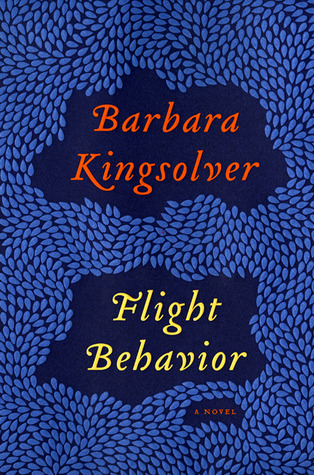
Flight Behavior, or: May I Have an Agenda Please?
Of course, I'm willing to concede that this could be partly personal opinion. After all, I know many people love Lord of the Flies, and (though its message was far more integrated into the story than how Kingsolver handled her message) I found it maddeningly like being preached at.
Around midpoint, this book went from being a light engaging read (in the weight of the prose, not in significance or beauty) to being a dragging slog through an environmental primer. It did pick up at the end, but the whole agenda/lecture felt rather insulting.
One of the things that frustrated me no end was the tone Kingsolver used in her arguments...that let-me-explain-this-to-you-in-very-simple-terms tone. As a reader, I'm stuck giving the author the final word—or so it feels whilst reading—and can't help but feel that, though I'm the frustrated one, she's the one that loses in the end, because this was not an intelligent discussion or an invitation to stimulate thought; this was a lecture. A lecture that didn't accomplish anything.
In one sentence she rages that nobody will open their eyes and see what is going on, and in the next she says there is absolutely nothing anyone can do to stop it. Have you ever watched a documentary hoping to bring awareness to a serious issue, that tells you in the end that there is no solution? What's the point of that? OK, we're all aware, so what's next? Live in hopelessness and despair? What does that accomplish?
I've always been so impressed with Kingsolver's nuance and subtlety but she let it drop here. I liked the location, even though I never fully felt the setting. The characters were interesting, and the butterflies were beautiful and amazing. My final feelings are torn, as I did enjoy the writing, but being talked down to is never a pleasant experience. 3.5 stars for what might have been...though as time goes on I like it less and less.
Friday, November 16, 2012
Virago, you say?
"Yes, we'll have to put a stop to this bookworming. No future in that."
Every once in a while I stumble across a treasure: a book written in fairly recent years that holds all the style and charm of a book written long ago. This happened recently when I inadvertently came across Good Behaviour by Molly Keane (a Virago Modern Classic) while shopping at Book Depository.
It was short, sweet, and brilliant in many ways. Published in 1981, but set in the decaying aristocracy of an Anglo-Irish family in the 1920s[ish], this book had that perfect combination of melancholy and wit that I've come to appreciate in Irish literature.
It was a wonderfully vivid story. Plus, the cover art is terrific, am I right? Our main character, Aroon St. Charles, doesn't know half of what you, as the reader, will catch on to, which is both terribly intriguing and terribly sad. You see, Aroon isn't the most attractive or astute character you'll meet, though through her you will discover a vivid, distinguished world that she wishes she belongs in...and there is humor to boot (what more could I ask for?)
So, you veterans of Virago, tell me:
- what you love about Virago
- why I should read more
- whether this book is characteristic of what I can hope to expect
- where I go next!
Monday, September 17, 2012
Oscar Fingal O'Flahertie Wills Wilde
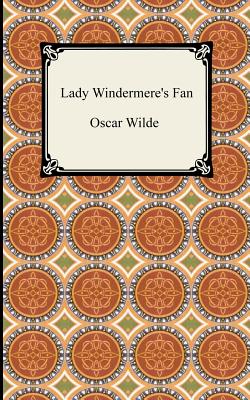
I don't know if I like Oscar Wilde so much simply because he writes amazingly witty lines, or because I feel so bad for him having to do prison time and want to give him hugs. I've only read two of his plays (The Importance of Being Earnest, and most recently, Lady Windermere's Fan) but they've convinced me that I need to read more.
I've heard that The Picture of Dorian Gray (his only published novel) tends toward the dark and depressing—have you found that to be true? I bought a copy & plan on reading it anyhow, but like to know what the general consensus is before I jump in. (Just the overview, not the details...no spoilers!)
Lady Windermere's Fan is a play about a young married couple in the upper echelons of London society that find themselves (and their marriage) being challenged by rumors and a lack of proper communication. As you may expect, it is filled to the brim with his characteristic wit and humor. Not only is it entirely entertaining, however, but it is thought-provoking as well: a perfect combination and definitely recommended (it's super quick to boot.)

Not only does Wilde's writing spur the imagination, but his name does as well. In Patrick Taylor's An Irish Country Doctor, one of the main characters is named after Wilde—an homage paid to Irish literature in general, and a tribute to those Irish authors, such as Wilde, who may not have received such honors during their lifetimes.
An Irish Country Doctor is the beginning of a series, and is a cozy read for those days when you wish you were back in Ireland (or wait, is that just me?) Filled with humorous anecdotes and endearing characters, the town of Ballybucklebo will be one you'll love visiting (especially with the audio version read by John Keating—love that accent!)
Wouldn't it be fantastic to see one of Oscar Wilde's plays performed live? I've decided that's one of my goals in life. :) How have your Wilde experiences been? Any other works (of his or about/inspired by him) that I should put on my list? (As an aside, did you see these 10 interesting facts about Wilde?)
I've heard that The Picture of Dorian Gray (his only published novel) tends toward the dark and depressing—have you found that to be true? I bought a copy & plan on reading it anyhow, but like to know what the general consensus is before I jump in. (Just the overview, not the details...no spoilers!)
Lady Windermere's Fan is a play about a young married couple in the upper echelons of London society that find themselves (and their marriage) being challenged by rumors and a lack of proper communication. As you may expect, it is filled to the brim with his characteristic wit and humor. Not only is it entirely entertaining, however, but it is thought-provoking as well: a perfect combination and definitely recommended (it's super quick to boot.)
Not only does Wilde's writing spur the imagination, but his name does as well. In Patrick Taylor's An Irish Country Doctor, one of the main characters is named after Wilde—an homage paid to Irish literature in general, and a tribute to those Irish authors, such as Wilde, who may not have received such honors during their lifetimes.
An Irish Country Doctor is the beginning of a series, and is a cozy read for those days when you wish you were back in Ireland (or wait, is that just me?) Filled with humorous anecdotes and endearing characters, the town of Ballybucklebo will be one you'll love visiting (especially with the audio version read by John Keating—love that accent!)
Wouldn't it be fantastic to see one of Oscar Wilde's plays performed live? I've decided that's one of my goals in life. :) How have your Wilde experiences been? Any other works (of his or about/inspired by him) that I should put on my list? (As an aside, did you see these 10 interesting facts about Wilde?)
Sunday, August 19, 2012
Appalachian Stories - Recommendations Wanted!
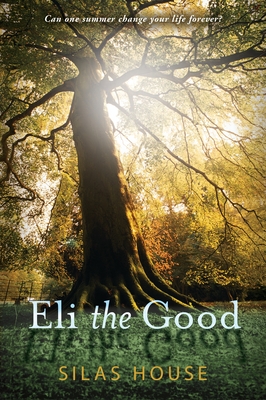
I recently read another book by Silas House which reminded me of how much I connect with his settings. Eli the Good wasn't quite as Appalachian as his others, but Nature still weighs heavily in the story.
In addition to being his first foray into young adult literature, this book also happens to be great Independence Day reading. It takes place in 1976, and follows 10-year-old Eli through the course of one summer.
Although the setting felt thoroughly American, the themes are universal. What defines family? Why is honesty a vital component of communication? How do we show—or feel—love and concern?
Absolutely recommended, (although the epilogue didn't quite feel organic to the story,) especially for those who enjoy the coming-of-age aspect. My enjoyment of the story ended up leading me to a book of short stories that has been on my shelf since August 2004. (Crazy, that.) Chris Holbrook's Hell and Ohio: originally acquired because I'd enjoyed Silas House's other books. At that time, newly entrenched in caring for a new infant (for the 4th time, hello) and therefore lacking in extra brain cells, I read only the first story and felt that it was a little slow. Nothing special. Reading it again 8 years later, I am entranced. (I'm guessing that at least part of the reason is that I've taken measures to appreciate short stories, so I simply have more familiarity with the form.)
In the nine stories, coal mining (land development/destruction) is a common theme, as are manners, alcohol, religion. All themes that rang true to me...perhaps because I grew up in a small mountain town (admittedly it was in Northern California's Sierra Nevadas as opposed to the Appalachians, but the lumber mill and logging industry had a similar heavy presence in some respects to the coal mines). I grew to enjoy feeling "a little closed in by all the trees and mountains on every side."
All the stories are wonderful, skillful, and worth reading.
(As a side note - I had the most visceral reaction (to The Lost Dog) I've ever had to a written work. My first thought after reading the story was that it didn't say anything, but then immediately I was flooded with memories from my childhood that mirrored the story, and began to get choked up (something I don't often do, especially to the extreme I did) thinking about the fact that somebody else understood, perfectly, those feelings. I just had to stop and cope for a few minutes, I couldn't think about or look at anything else until I'd taken a few deep breaths. Pretty crazy experience!)
Recommendations?
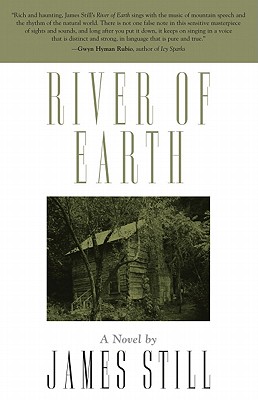
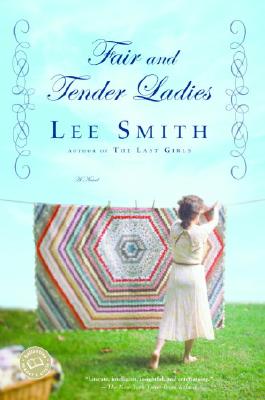
I'd like to put a few books on my wishlist that would be good places to go from here. Any suggestions? I think I might have a copy of River of Earth by James Still from back in 2004 when I was on the hunt for Appalachian stories. I enjoyed Lee Smith's Fair and Tender Ladies a couple years back...that's all I've got. What've you got? Recommend me!
In addition to being his first foray into young adult literature, this book also happens to be great Independence Day reading. It takes place in 1976, and follows 10-year-old Eli through the course of one summer.
Although the setting felt thoroughly American, the themes are universal. What defines family? Why is honesty a vital component of communication? How do we show—or feel—love and concern?
Absolutely recommended, (although the epilogue didn't quite feel organic to the story,) especially for those who enjoy the coming-of-age aspect. My enjoyment of the story ended up leading me to a book of short stories that has been on my shelf since August 2004. (Crazy, that.) Chris Holbrook's Hell and Ohio: originally acquired because I'd enjoyed Silas House's other books. At that time, newly entrenched in caring for a new infant (for the 4th time, hello) and therefore lacking in extra brain cells, I read only the first story and felt that it was a little slow. Nothing special. Reading it again 8 years later, I am entranced. (I'm guessing that at least part of the reason is that I've taken measures to appreciate short stories, so I simply have more familiarity with the form.)
All the stories are wonderful, skillful, and worth reading.
(As a side note - I had the most visceral reaction (to The Lost Dog) I've ever had to a written work. My first thought after reading the story was that it didn't say anything, but then immediately I was flooded with memories from my childhood that mirrored the story, and began to get choked up (something I don't often do, especially to the extreme I did) thinking about the fact that somebody else understood, perfectly, those feelings. I just had to stop and cope for a few minutes, I couldn't think about or look at anything else until I'd taken a few deep breaths. Pretty crazy experience!)
Recommendations?
I'd like to put a few books on my wishlist that would be good places to go from here. Any suggestions? I think I might have a copy of River of Earth by James Still from back in 2004 when I was on the hunt for Appalachian stories. I enjoyed Lee Smith's Fair and Tender Ladies a couple years back...that's all I've got. What've you got? Recommend me!
Thursday, August 9, 2012
And the Pulitzer for Adapted Novel Goes To...
ANYhow, my book club just finished reading a Pulitzer (A Thousand Acres, Jane Smiley - 1992) and my reading-enjoyment kept being compromised by the thought that the storyline wasn't completely original. It's based (heavily) on Shakespeare's King Lear, (who, in the event you have forgotten, is not American,) both in characters and plot. Not being all too familiar with King Lear, much of the book (section divisions, character development, plot points, etc.) felt jumpy and forced to me. As a new perspective on a classic, I'm sure there is much to appreciate, but as a piece of "distinguished fiction by an American author" there was much to be desired.
Despite the oddities present due to the close parallel, the premise was interesting, the writing was easy to digest, and it kept me turning pages. I had hope at the beginning, when the writing was crisp and unique, that Jane Smiley was a new favorite author. But I ended up noting only the one passage:
We might as well have had a catechism:That fun bit aside, this was the least poetic Pulitzer I've ever read. It was, admittedly, a brilliant look at American farming in the late 1970s, but I was ultimately disappointed. I would have liked it much more if I wasn't hoping for the quality I've found in other Pulitzer Prize winners. You've been warned!
What is a farmer?
A farmer is a man who feeds the world.
What is a farmer's first duty?
To grow more food.
What is a farmer's second duty?
To buy more land.
What are the signs of a good farm?
Clean field, neatly painted buildings, breakfast at six, no debts, no standing water.
How will you know a good farmer when you meet him?
He will not ask you for any favors.
Good idea: reading A Thousand Acres as a comparison to King Lear.
Bad idea: reading A Thousand Acres as a comparison to other Pulitzers.
Friday, July 13, 2012
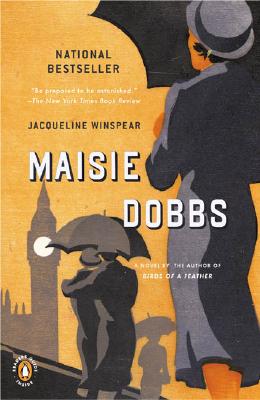
Nice to Meet You, Maisie Dobbs
Ever since I'd heard that Maisie Dobbs was a post-WWI, London-based sleuth (of sorts) written on a more literary level, my curiosity was roused. One of my book groups ended up reading it together (met earlier this week - book club outside by the pool, how fun is that?) and it was all I'd hoped it would be and more. (Actually, it was all I'd hoped Mr. Churchill's Secretary would be, which made it all the better.)
Although much of the book takes place a good decade after WWI ended, the story revolves around the war and its after-effects. I love reading about this era. Talk about generation shaping - the thought of shell-shocked young men roaming the streets of London at night, trying to come to terms with the war, and this: "Like many young women who came of age in the years 1914-18, Iris had no husband, for her sweetheart had been lost in the war." Gives my heart an insta-ache. I can't even imagine, yet I long to understand.
Maisie Dobbs is a great example of what a literary mystery can be. There is history, real characters, more than one line of suspense, paired with good writing and a touch of introspection. A book needn't be poorly written to have a good storyline. What makes this discovery even more intriguing is the fact that it is the first in a series. I generally don't think very highly of books that are drawn out into series, simply because they typically feel to be just that: one story that is drawn out for no good reason. I hate feeling like I need to read the next book just to find out what happens. But here, for the first time in recent history, I've found a book that actually makes me think I could keep reading the series and not risk disappointment. Maybe because it is a character/era driven series instead of a plot driven series? I don't know, but I'm on board. Birds of a Feather is #2 and on its way to my shelf, one way or another.
Reading Maisie Dobbs also stirred up all those sympathies and feelings about the dreadful ramifications of the Great War that left me feeling pangs of want for A Long, Long Way by Sebastian Barry. It hasn't even been a full year since I read it, and I don't often reread a book, but I need this one like I need a good long visit with an old friend. Thank you, Ms. Dobbs (& Ms. Winspear) for the experience, it was nice to meet you.
Saturday, July 7, 2012
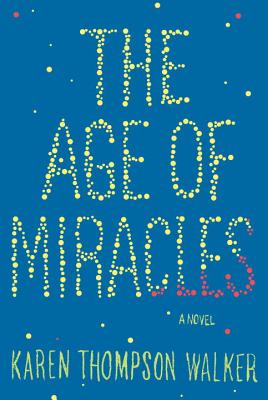
The Age of Miracles by Karen Thompson Walker
Can you believe I'm reviewing a Hot Off The Shelves New Release?? Maybe this occurrence isn't as crazy-rare as it feels, but it does feel to me like this is the first new release I've read in a while (pls excuse my exuberance).
Even if you've had your head buried in the sand (like me) you've likely heard of this book. Which explains my disappointment when I heard it was going to be featured in the next Indiespensable shipment (ugh, hype and all that jazz.) Fortunately, those kind folks did an incredible job putting together a fun package - the best one recently - beautiful hardback, purty dust jacket, lovely slipcase, "survival" goodies. Okay, maybe I wasn't miffed after all.
And now, on with the book, right? The premise is interesting: a California girl and her family try to adjust to the one global calamity they had never considered, as the earth's rotation begins to slow. Sounds science-fictiony, yet - as my husband declared - The Book Is Way Too Short To Explain Everything...it's really more about the people, how they adjust and react. Sounds like my sort of thing after all!
There was a lot that I enjoyed about this book. I found the writing to be enjoyable, the premise piqued my interest throughout the book. However, there were a lot of little things that bugged me, making this more of an "enjoyable reading experience" rather than a "wonderful book". Let's bullet-point this:
- The ages of the kids seemed incompatible with their behavior. These were 11 year-old kids acting like 14 year-olds (parties & other behavior) and I had to keep reminding myself of their ages. (And before you say that's how it is now and declare me out of touch with reality, keep in mind that I have an 8, 11, 13, and 16 year old and we live Southern California. I should be able to identify.)
- As if California didn't already have enough stereotypes...luckily the "We Californians..." sentences began to thin out as the book went on because they were about to ruin the book for me. Really. As a native Californian who has felt only 2 real earthquakes and rarely eats outside, I could rant about this for pages. It's a big, diverse state, making generalities a little silly.
- "We were Californians and thus accustomed to the motions of the earth. [...] But we Californians were no more prepared for this particular calamity than those who had built their homes on more stable ground."
- "This was California--almost everyone had migrated here from someplace else."
- "This was California--we ate outside in every season."
- People's motivations seemed non-existent or unimportant. Julia didn't seem all too upset when upsetting things happened, and why the "clock-time" people despised the "real-time" people was never really shown. So, not only did people react differently than I would have thought, but there wasn't any real explanation showing why this might be.
- Way too many blatant foreshadowing sentences for such a mellow ending. Tons of "I would learn later" and "We didn't know then" or "It was the last time" sorts of comments that ended up not really pointing to anything in particular.
Despite all those complaints, I really did enjoy reading the book. I liked that it didn't have a super tidy ending. I can't help thinking that the hype is do more to the politically-correct timing of the global disaster theme than anything else, but the ease of reading and the interesting story were enough to overshadow the lack of character development and other minor irritations for me. And besides, it's a treat to look at. That's got to count for something, right?
Sunday, June 24, 2012
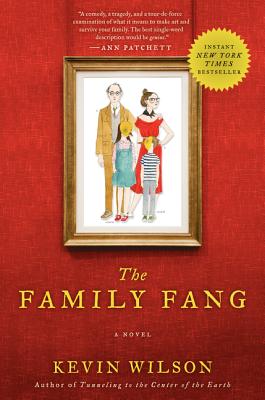
Book/Movie Pairing: The Family Fang and Moonrise Kingdom
Are you familiar with director Wes Anderson (of Royal Tenenbaums fame)? I happened to have the great pleasure of watching his new movie, Moonrise Kingdom, this weekend and I absolutely loved it. Though I've avoided it until now (who knows why?) I am now an ardent fan of his films. I actually think the only other film of his I've seen is Darjeeling Limited - which is fabulous because that means I've a good number of promising films to enjoy now that I know I love him. ;)
Succinctly put, Moonrise Kingdom is about "A pair of young lovers [who] flee their New England town, [causing] a local search party to fan out and find them." What makes it work is Anderson's impeccable sense of balance. Not only did it strike that perfect funny/sad tone, but the characters are at once quite quirky and oh-so-easy to identify with.
I loved this movie. I wanted to marry it. Well, not exactly. But I would like to find a way to plaster on my wall so I can watch it constantly and continuously. (rated PG-13, btw)
The Family Fang, (if you've read any reviews of it already you may have heard,) has a very Wes Anderson vibe. The super-quirks, the funny/sad...the ability to talk about serious subjects without being tiresome. Set against the backdrop of performance art contrasted with imperfect art of raising a family, and told through a series of rather awkward moments, Wilson left me contemplating the blind journey we each make from childhood to adulthood.
Although propulsively readable, it doesn't dip into shallow waters for a minute. I loved how, instead of spiraling into a mess of neatly-wrapped platitudes, it stayed engaging, funny, and contemplative until the very end. It left me at once feeling completely satisfied and hungry for more.
"People would call him Professor Fang, which sounded so much like a supervillain that he wasn't sure he could go through with it."
What's your opinion about funny/sad books (and movies) with quirky characters? Does that perfect balance make your heart sing like it does mine?
Tuesday, June 5, 2012
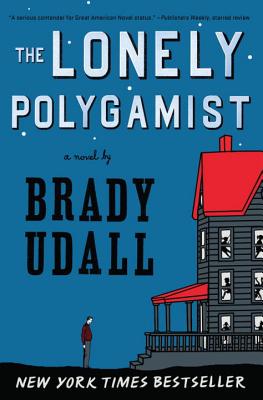
ReadThisBook: The Lonely Polygamist by Brady Udall
How hard is it to find a book that makes you laugh, consistently, all the way through, and still make your heart ache and your mind ponder?
The story told in The Lonely Polygamist--that of 45 year-old Golden Richards: husband of 4 and father of 28--wouldn't have nearly the same effect told by a different author. Brady Udall has the peculiar insight and talent for the job: necessary ingredients to turn this book into a wonderful story. I love how the book was captured in this tidbit:
"By turns laugh-out-loud funny and hauntingly sad, this novel is a big, fat, satisfying read that will make you reconsider what it means to be part of a family. Plus, it contains the naughtiest, goofiest 11-year-old boy who will ever break your heart.”
-- Roberta Dyer, Broadway Books, Portland, OR (via IndieBound)
Some of my love for this book was certainly due to the fact that it was amazing on audio. David Aaron Baker? Love him. By the time I was halfway through the book, I had to pause and search Audible for what other books he's narrated (plenty of options). He had a distinct voice for each character, which really brought them to life.
Now, I am not a fan of polygamy as a subject. It's a topic that instantly puts a pit of SAD at the bottom of my stomach. In my mind, it negates the individuality and specialness, to some degree, of each person involved. I suppose I don't understand The Principle; the ascetic ideal is one I have a hard time accepting. However. (You knew there was going to be a BUT, didn't you?) For the first time, there was a seed of sympathy, of understanding, accompanying that sadness. Udall understands the nuances, and by showing his characters in a somewhat extreme (and occasionally ludicrous) light he allows the reader to see how simply human they are.
I loved how the characters were introduced...even the houses and the dog, and eventually Roy: the atomic test weapon...each with their own little history, their own narrative flavor. I loved Rusty (poor crazy kid) and wish I'd known Glory. The references to Reno were additionally funny to me, having lived relatively near it for much of my life. I do wish the story hadn't been wrapped up quite so tidily, but since it all seemed pretty plausible (and since I'd enjoyed myself so much along the way) I can't really complain. The book was over before I was ready, leaving me with a smile still on my face and an ache in my heart.
(A warning: be prepared for some bodily functions. Many of the plights that Golden and his 11 year-old son Rusty find themselves in are a bit awkward and there is a smattering of strong language, including many mild but stereotypical 'gay' references. I found it to fit the characters he had created, but if you're sensitive to these things it could possibly affect your opinion of the book.)
Wednesday, March 28, 2012
Shaking it Up with a little Stephen King
I like to vary what I'm reading, but even so, I'll often find myself firmly entrenched in my Comfort Zone reading my Typical Genres and Very Little Else. 11/22/63 was the perfect opportunity to interject something different into my daily diet. I've read Stephen King before, typically leaving his super bizarre stuff on my husband's nightstand.
Enter 11/22/63: more history than science (or creepy stuff, rather) and that wonderful time-travel element. It feels so rare to find a time-travel-ish book that examines the idea thoroughly and doesn't seem to be a byproduct of science or sex instead. King is not only an incredible storyteller, but he's got an amazing talent for creating extremely believable worlds (of which science and sex are, of course, a byproduct, but that is much more manageable than the other way around.)
For all that the title, cover art, and synopsis declare that this is JFK-centric novel, I'd hardly describe it as such. Certainly the assassination is a pivotal component, and those with a passing fancy for Camelot may be induced to read Stephen King because of it, but it is much more a time travel novel. What really matters here is the idea of time, what holds it together, what the future holds, and the world to which you are transported in the meantime.
This book has a strong sense of place without being overly atmospheric. It has a cast of believable characters even though they aren't incredibly layered or fleshed out. The writing is fun and fluid--not encumbered with lengthy sentences and descriptive prose, nor yet distracting for being elementary or simplistic. These elements (setting, character development, writing skill, and enjoyability) may not rise to award-winning levels, but when you add in the cracking good story...well, it's really quite impressive. It made for a massively enjoyable read that still sits in my imagination, waiting for a conversation to jump into. Plus, it feels rather fabulous to blow through 800+ pages in no time, doesn't it?
Friday, March 23, 2012
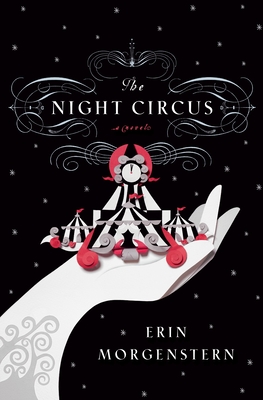
The Night Circus by Erin Morgenstern
Do you ever feel the need to make a detailed disclaimer before spouting an opinion? Or is that just my middle-child-pacifist sneaking up on me again? Let's just get this over with:
- I'm not a fan of the circus. Clowns? Side shows? Scary. A pretty circus? It's just hiding the scary.
- Fantasy settings & suspension of disbelief? Difficult for me. They aren't even pretending to be real, so why should I care?
- Atmospheric and descriptive are all well and good...if it's a sideline to a rocking plot or amazing character development. Otherwise? Yawn.
- And Now We Must Speak of HYPE. Typically, I turn away from things that are All The Rage (be it a book or something else entirely) but I knew I'd be reading this sooner or later when I found out that it was an Indiespensable selection. Then this massively publicized book made the Indie Lit Awards short list (along with four minimally hyped books) and I can tell you that it made for an interesting comparison. The hype ended up affecting me much less than my other reservations. Contrary to my seemingly negative observations, I actually enjoyed this book - certainly more than I thought I would.
You all know the premise (or you won't have to look far to find it) so the question is What Did I Think?
Right off the bat it was apparent that there had been more money put into the production of this book. The book itself was gorgeous, with the magical black and white theme carried throughout the design of the pages. My copy had a black velvet[ish] slipcase, which further enhanced the richness of the production. This sense went farther than the art design and typesetting - when compared to the other books on the short list, the writing glowed with the polished shine that evokes hard work and a dedicated editing process rather than raw talent.
Don't get me wrong - the descriptions are beautiful. Morgenstern has an imagination, no doubt about it, but that really is where her talent lies. There wasn't enough plot to keep me invested, and the main characters don't have a lot of depth. There came a point in the book where I almost wanted to skip over the descriptions because I wanted to get on to something meatier.
In the end, when comparing it to the other short list books, this book fell in the middle for me. It was more polished and enjoyable than Cross Currents and The Last Time I Saw Paris (reviewed here) but lacking the depth in characters and themes that Silver Sparrow and Dance Lessons had. I'd recommend The Night Circus to readers attracted to the magical circus setting as well as those in the mood to get their imaginations spinning.
(By the way...I don't recommend reading this book on an e-reader, simply because I had to look back at previous chapter headings all the time - what a pain on an e-reader! The reason it was necessary to flip around was the chapter heading details, which indicate time and location. Especially in the beginning, when I was still trying to figure out who everyone was and where/when they were, it was frustrating. This book convinced me that any information at the beginning of a chapter should enhance the text, not take the place of it.)
- I'm not a fan of the circus. Clowns? Side shows? Scary. A pretty circus? It's just hiding the scary.
- Fantasy settings & suspension of disbelief? Difficult for me. They aren't even pretending to be real, so why should I care?
- Atmospheric and descriptive are all well and good...if it's a sideline to a rocking plot or amazing character development. Otherwise? Yawn.
- And Now We Must Speak of HYPE. Typically, I turn away from things that are All The Rage (be it a book or something else entirely) but I knew I'd be reading this sooner or later when I found out that it was an Indiespensable selection. Then this massively publicized book made the Indie Lit Awards short list (along with four minimally hyped books) and I can tell you that it made for an interesting comparison. The hype ended up affecting me much less than my other reservations. Contrary to my seemingly negative observations, I actually enjoyed this book - certainly more than I thought I would.
You all know the premise (or you won't have to look far to find it) so the question is What Did I Think?
Right off the bat it was apparent that there had been more money put into the production of this book. The book itself was gorgeous, with the magical black and white theme carried throughout the design of the pages. My copy had a black velvet[ish] slipcase, which further enhanced the richness of the production. This sense went farther than the art design and typesetting - when compared to the other books on the short list, the writing glowed with the polished shine that evokes hard work and a dedicated editing process rather than raw talent.
Don't get me wrong - the descriptions are beautiful. Morgenstern has an imagination, no doubt about it, but that really is where her talent lies. There wasn't enough plot to keep me invested, and the main characters don't have a lot of depth. There came a point in the book where I almost wanted to skip over the descriptions because I wanted to get on to something meatier.
In the end, when comparing it to the other short list books, this book fell in the middle for me. It was more polished and enjoyable than Cross Currents and The Last Time I Saw Paris (reviewed here) but lacking the depth in characters and themes that Silver Sparrow and Dance Lessons had. I'd recommend The Night Circus to readers attracted to the magical circus setting as well as those in the mood to get their imaginations spinning.
The ground beneath her feet shifts, suddenly unsteady, but Marco puts a hand on her waist to keep her upright.The world of The Night Circus remains mysterious and magical from the beginning of the book to the end. It isn't a world with well-defined rules. Like the characters, we never find out exactly how things work or why. This ties in with the high level of imagination and creativity, but made for a somewhat detached reading experience. It is a showcase of creativity: magical, mysterious, elusive, atmospheric.
When she opens her eyes, they are standing on the quarterdeck of a ship in the middle of the ocean.
Only the ship is made of books, its sails thousands of overlapping pages, and the sea it floats upon is dark black ink.
(By the way...I don't recommend reading this book on an e-reader, simply because I had to look back at previous chapter headings all the time - what a pain on an e-reader! The reason it was necessary to flip around was the chapter heading details, which indicate time and location. Especially in the beginning, when I was still trying to figure out who everyone was and where/when they were, it was frustrating. This book convinced me that any information at the beginning of a chapter should enhance the text, not take the place of it.)
Friday, March 9, 2012
Oh Flannery, You Charmer You...
From that, you may think that these stories aren't any good, but you'd be [mostly] wrong. Admittedly, there are a few that had me thinking that one of us (either Flannery or I) was off her rocker, but for the most part these stories are all very entertaining. The problem is, they are rather dark and a bit heavy. Even the humor is dark. Reading very many stories in a row is like being smacked up-side the head with a heavy dose of hopelessness. Still, there are many more gems than duds, proving O'Connor a true champion of short stories.
Most of her characters have major issues regarding prejudice, religion, and pride. It would take some serious work to catalog the number of slack-jawed, dull-eyed folk between these covers. If you're looking for something pure, pretty, and politically correct, these stories won't suit. If you're looking for a sharp eye and witty cynicism, however, look no further.
So. Maybe I don't recommend reading straight through this collection. But I do recommend experiencing some of her writing, and there are some fabulous options here. Generally speaking, I enjoyed the stories from A Good Man is Hard to Find more than the others, but there is much to enjoy throughout. Here are some stories that were highlights for me:
A Stroke of Good Fortune
"Standing up straight, she was a short woman, shaped nearly like a funeral urn."
Instead of pitting two people against each other to illuminate their faults, this story allows the main character Ruby Hill to do it all herself in the span of time it takes her to walk up the stairs to her apartment. Ruby's particular plight is unique in that she mixes pride with a dose of hypochondria. (I've just discovered that this story later grew into her first novel, Wise Blood, so I've got more Flannery on my list.) The reader quickly ascertains Ruby's true condition, making all of her thoughts and complaints all the more entertaining. At a mere 13 pages, this story is well worth the ride.
A Good Man is Hard to Find
"The grandmother was curled up under the dashboard, hoping she was injured so that Bailey's wrath would not come down on her all at once."
I love this story. Even though the ending is absolutely horrid, it is a delight to read. The characters are so vivid (but then, that is to be expected with Flannery) and the dialogue lively. Have you ever taken a road trip with a grandmother and a cat in the vehicle? Not the most peaceful of moments. Even if you've wisely avoided such a catastrophe (terrible pun, my apologies) there's something enjoyable about seeing someone else experience it. If you want to experience a gritty story with distinct Southern character, this story is a standout.
The Lame Shall Enter First
"Grudgingly, Sheppard felt a slight return of sympathy for the boy."
What is good? What is bad? How well do you understand the motivations and thoughts of those around you? How well do you understand your own motivations? This story does more than illuminate the faults and prejudices of its characters and show the difference between people in different walks of life. It goes a little deeper--into those times when we deceive ourselves, convinced we are operating for the greater good and doing more harm in the process. Some interesting thoughts to consider.
Good Country People
"The reason for her keeping them so long was that they were not trash. They were good country people."
Like in many of her stories, this one contrasts two kinds of people, and the one that is supposed to be "better" ends up looking rather foolish. Of course, there are no "good" characters and "bad" characters, there are only human beings that have faults, whether they believe it or not. This story was a nice change of pace from some of the others because the ending wasn't as quick and drastic. If you're feeling timid about diving into Flannery O'Connor's stories and are looking for something a little more mild, this is your story.
Sunday, March 4, 2012
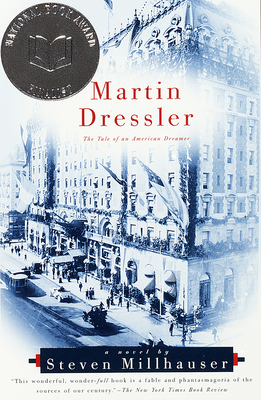
Martin Dressler: The Tale of an American Dreamer
I may never have come across Steven Millhauser's books if it weren't for seeing his name on the list of Pulitzer Prize winners for Fiction, but apparently he is very much an established author. Having been in the mood for that turn-of-the-century vibe lately, it didn't take much convincing for this book to jump off my shelf and become my next must-read (besides, I needed to get a Pulitzer read, and I love multi-tasking).
Millhauser has a very different style of story-telling, and it was quite intriguing throughout the first half of the book. Martin's opinions about life are brought to light early on, beginning with the ways he goes about improving business at his father's cigar shop and continuing when he tells an employee "You're any kind of man you damn well want to make yourself." He doesn't have an end goal for his life, like many entrepreneurs; there isn't one single accomplishment that will satisfy the yearning to get more out of life than it wants to give.
Not solely gifted with drive and ambition, there were certain things that Martin understood about people. When it came to improvements at the hotel he was working in, he knew that "People needed to be assured that they weren't missing the latest improvements, while at the same time they wanted to be told that nothing ever changed." Conversely, there were things about his own life that he did not see clearly at all. After he moves from his parents house, they are out of the picture. When women enter his life, they are seen vaguely, as if part of a dream. Even in his business projects, there is a certain mystery to his decisions; he is taken by his whims more often than not.
For all that this book is about one single person, we see his life at a distance--held away from forming a personal connection that would enable us to sympathize with his plight and rejoice in his success. By the second half of the book I was beginning to become bored. The story becomes bogged down with his building projects to some extent. As the ending spiraled into a deeper sort of magical realism, I simply didn't care anymore. Which is sad, because Martin Dressler's world was vivid, and his aspirations provided a fascinating peek into the entrepreneurial mind.
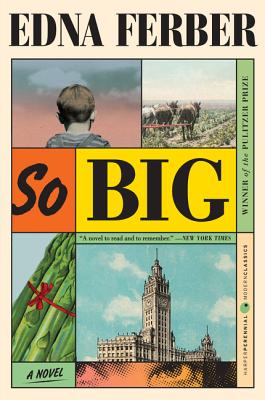
Whether you leave the book with the firm opinion that chasing your dreams is an empty pursuit or with the conviction that it takes all kinds of people to make the world go round, you won't regret having experienced the burgeoning city and the endless possibilities alongside Martin Dressler. If nothing else, you should open it up just to find the 4-page sentence. (no joke. it was quite noticeable since most of the book had pretty short chapters a moved along nicely.) My desire for turn-of-the-century cities hasn't been completely satiated, however, so I'm hoping to get to another Pulitzer soon that may help in that department: the winner from 1925, So Big by Edna Ferber. Should be an interesting comparison, no?
Millhauser has a very different style of story-telling, and it was quite intriguing throughout the first half of the book. Martin's opinions about life are brought to light early on, beginning with the ways he goes about improving business at his father's cigar shop and continuing when he tells an employee "You're any kind of man you damn well want to make yourself." He doesn't have an end goal for his life, like many entrepreneurs; there isn't one single accomplishment that will satisfy the yearning to get more out of life than it wants to give.
Not solely gifted with drive and ambition, there were certain things that Martin understood about people. When it came to improvements at the hotel he was working in, he knew that "People needed to be assured that they weren't missing the latest improvements, while at the same time they wanted to be told that nothing ever changed." Conversely, there were things about his own life that he did not see clearly at all. After he moves from his parents house, they are out of the picture. When women enter his life, they are seen vaguely, as if part of a dream. Even in his business projects, there is a certain mystery to his decisions; he is taken by his whims more often than not.
Martin knew that what attracted him wasn't the actual lunchroom, for he had no passion for lunchrooms, no special fondness for them, in a sense no interest in them; his passion was for working things out, bringing things together, arranging the unarrangeable, making combinations.
Whether you leave the book with the firm opinion that chasing your dreams is an empty pursuit or with the conviction that it takes all kinds of people to make the world go round, you won't regret having experienced the burgeoning city and the endless possibilities alongside Martin Dressler. If nothing else, you should open it up just to find the 4-page sentence. (no joke. it was quite noticeable since most of the book had pretty short chapters a moved along nicely.) My desire for turn-of-the-century cities hasn't been completely satiated, however, so I'm hoping to get to another Pulitzer soon that may help in that department: the winner from 1925, So Big by Edna Ferber. Should be an interesting comparison, no?
Friday, February 24, 2012
Extremely Loud and Incredibly Close, Jonathan Safran Foer
As it turned out, I did enjoy Everything is Illuminated quite a bit, but I'm afraid that the reverse has happened: Jonathan Safran Foer may be one of those authors whose first work read becomes the favorite. My first experience was one of wonder--everything felt fun and original, his writing, his characters, his story were all grounds for discovery. This second experience wasn't as glittery and new. The characters held a similar quirkiness to his other characters; the writing had a cadence that was no longer unique. I enjoyed it, I appreciated it, but it didn't hold quite the magic for me that the other did.
That being said, Foer does manage to present his ideas through very different people and their very different circumstances, making the way the story ties together all the more meaningful. Each person that Oskar encounters as he makes his way through New York City has a story, just as each person we pass each day has a story, but Oskar--unlike most of us--is allowed the privilege of hearing those stories and becoming (if for just a moment) part of their lives. There is something incredibly unifying about this; something brave about pushing against the profound loneliness of a crowd.
Mom told me, "It probably gets pretty lonely to be Grandma, don't you think?" I told her, "It probably gets pretty lonely to be anyone."(p. 69)Generally known as a novel of 9/11, I think it works much better when viewed as a novel of loving and loss. The idea that 'living is harder than dying' is returned to again and again throughout the book. What is living? What is love? Why do we live? Why do we love?
I promised myself I would stay until I found her, but as night began to come in, I knew I had to go home, I hated myself for going, why couldn't I be the kind of person who stays? (p.114)I love how Foer gets right down to the heart of humanity. Some of his characters have habits and opinions bordering on absurd, but through these extremes normal becomes simplified and understandable. I might not hold onto hundreds of empty envelopes, but perhaps I do hold onto empty promises, empty words. I might not keep a scrapbook of everything that's happened to me, but perhaps I do horde the inconsequential in other ways, continually looking back through those moments in my mind. I might not be dealing with grief, but perhaps I still erect walls around myself as a barrier against pain.
You cannot protect yourself from sadness without protecting yourself from happiness. (p.180)It is a call to appreciate life, to be thankful for what you have when you have it, to be brave enough to be a part of someone else's life, regardless of the drawbacks. Live life--don't let it pass you by.
"She let out a laugh, and then she put her hand over her mouth, like she was angry at herself for forgetting her sadness." (p.254)
(note: lucky for me, this book was on my wish list & counts for my wish list challenge...also, my book club will be discussing it on Monday, so I'll get more opinions on it then!)
Monday, January 30, 2012
It's Not You, It's Me: Vol. 1
Welcome to my new feature! I thought I'd start out with some books from 2011 that I never got around to posting about for one reason or another--hope you find something to enjoy!
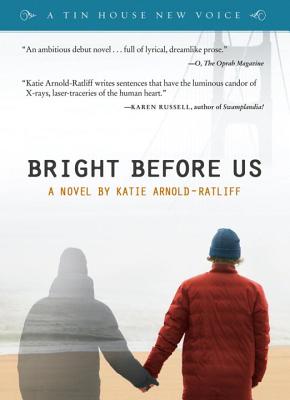
A Powell's Books Indiespensable selection in 2011, Bright Before Us had many components that should have made it a good fit for me:
- a descent into paranoia & disillusionment
- the idea of lost soul mates & the complexity of marriage
- navigating trauma in adults and children
Unfortunately, it didn't quite work for me, mostly because the main character really bugged me. I didn't sympathize with him, and wasn't curious about his story at all. Additionally, the beginning was confusing to me--somehow I didn't realize that there were actually 2 female characters. Whoops. It all made SO much more sense once I realized that the dude's wife wasn't also his childhood sweetheart. Duh.
Right, so...if the above ideas sound interesting, if you keep in mind that Francis' wife is not Norah, and you don't mind the occasional irritating character, check this new author out!
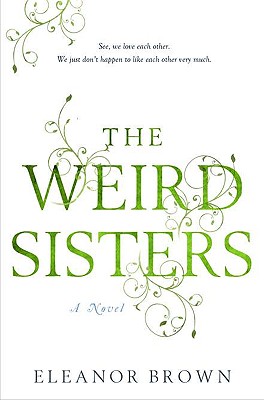
About a year ago, The Weird Sisters hit the shelves, and I was excited about the prospect of reading a story about a family of readers. The girls were named after Shakespeare characters for goodness' sake--it's got to be good!
My issues? 1: The pov didn't work for me. I've enjoyed plural-first-person in other books, but this one had too few characters & it was awkward. 2: I guess I really don't have any idea what it's like to have sisters, because the cattiness really got on my nerves. 3: The ending was a bit too tidy--I didn't think that it was wrapped up entirely realistically, and that made the characters seem more like tools than people.
BUT, if you are in the mood for a sweet little read about some modern women with Shakespearean names and don't care to get all critical like me, then give it a shot. A good vacation read methinks.
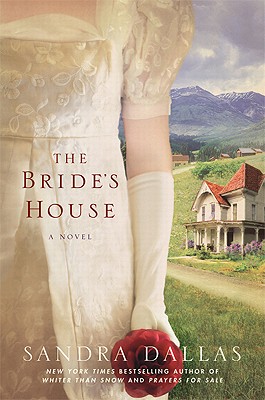
With The Bride's House, I had to wish a one-time favorite author farewell. We simply don't see eye to eye any longer. Perhaps we've both changed, but the heartwarming-heartbreak that I enjoyed in her earlier books has evaporated.
Part of the problem here was the number of main characters. The story line is meant to revolve around the house, (interesting idea,) so the fact that we see 3 generations pass through it should further that idea, not detract from it; but I was left feeling that none of the characters were fully developed.
Actually, I take that back. I loved the first character and was really stinking irritated when she only got 1/3 of the book. I didn't give a flying flapjack for the other two girls. I wish I could request a rewrite. Ms. Dallas probably wouldn't appreciate that very much though, would she?
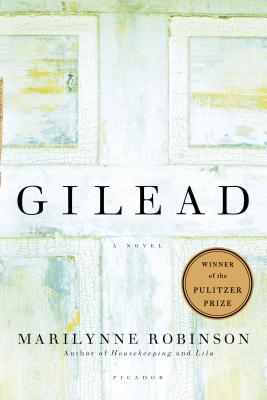
A Pulitzer Prize winner in the Fiction category for 2005, Gilead is a book that I was supposed to like.
- Pulitzer? (check)
- Character driven? (check)
- Reflective/Introspective? (check)
- Beautifully & Skillfully written? (check)
So what went wrong? I was bored. Everything took so looong (which was actually pretty realistic since it was narrated by an old man.) The parts I like the most were quotes like this:
There should be a law to prevent recipes for molded salad from appearing within twenty pages of any article having to do with religion.Funny, right? Or, maybe, more funny because the rest of the book was so even keel. It was interesting and poetic, but we didn't connect. In some ways made me think of Tinker (a more recent Pultizer Prize winner) except that Gilead took me longer to read. Much longer. So in the end, hmmm...it was alright. Well-written, but just okay.
Friday, January 20, 2012
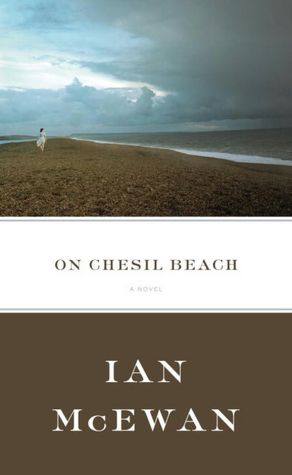
On Chesil Beach, Or: How I Came to Forgive Mr. McEwan
I haven't formally blogged about Atonement--mostly because I read it 4 years ago and wasn't book-blogging at that point--but I have made a few comments here and there about the bitterness it caused me to cultivate against Ian McEwan. I liked Atonement, until the end (I won't get into details, but it made me feel that the author was aiming derision towards the reader that completely turned me off) at which point I swore I was no longer interested in reading anything else by the author.
Of course, he's an author that pops up fairly regularly in my Google Reader. Technically, I'm supposed to like him, you see. He writes the kind of stuff I like to read about in a style of writing I enjoy. There was just this grudge thing getting in the way.
So when Sam talked about On Chesil Beach, and how it was pretty much wonderful, & recommended to anyone who has ever felt awkward, (love that! Who hasn't felt awkward? Just typing awkward is awkward.) I decided I'd be magnanimous and give McEwan another chance**.
On Chesil Beach is a small book... The-Best-Presents-Come-in-Small-Packages sort of small, and Wow--what a read*. It's rare to find an author with the ability to so perfectly put you inside the thoughts and emotions of a couple with seemingly simple language (reminded me of Revolutionary Road in that sense). Florence and Edward, a couple confined by their own sense of politeness, are engaged and married in the early 1960s. Now, I haven't been to London in the 1960s, and I haven't been British, but I have experienced the awkwardness of a relationship suffering from lack of communication. Who hasn't?
*Mr. McEwan, please accept my apologies for having held a grudge against you for so long.
**Sam, thanks for a great recommendation!
(By the way, this one is best saved for a time when you can immerse yourself in the story--reading the first half in bits and pieces didn't work so well for me.) (Also, this book counts for my Wishlist Challenge! Yay me!)
Of course, he's an author that pops up fairly regularly in my Google Reader. Technically, I'm supposed to like him, you see. He writes the kind of stuff I like to read about in a style of writing I enjoy. There was just this grudge thing getting in the way.
So when Sam talked about On Chesil Beach, and how it was pretty much wonderful, & recommended to anyone who has ever felt awkward, (love that! Who hasn't felt awkward? Just typing awkward is awkward.) I decided I'd be magnanimous and give McEwan another chance**.
On Chesil Beach is a small book... The-Best-Presents-Come-in-Small-Packages sort of small, and Wow--what a read*. It's rare to find an author with the ability to so perfectly put you inside the thoughts and emotions of a couple with seemingly simple language (reminded me of Revolutionary Road in that sense). Florence and Edward, a couple confined by their own sense of politeness, are engaged and married in the early 1960s. Now, I haven't been to London in the 1960s, and I haven't been British, but I have experienced the awkwardness of a relationship suffering from lack of communication. Who hasn't?
"And what stood in their way? Their personalities and pasts, their ignorance and fear, timidity, squeamishness, lack of entitlement or experience or easy manners, then the tail end of a religious prohibition, their Englishness and class, and history itself. Nothing much at all."I loved how McEwan sped up and slowed down the passing of time, as well as how he sort of zoomed in and out of the details, showing the big picture as well. I cringed through their wedding night, reminisced about their childhoods, got to know their families, and cried (yep, actual tears) upon looking back on what might have been. How did McEwan manage to see so much depth in these two characters, and then--on top of that--relate the whole thing in such a small amount of print? Color me impressed.
*Mr. McEwan, please accept my apologies for having held a grudge against you for so long.
**Sam, thanks for a great recommendation!
(By the way, this one is best saved for a time when you can immerse yourself in the story--reading the first half in bits and pieces didn't work so well for me.) (Also, this book counts for my Wishlist Challenge! Yay me!)
Thursday, January 19, 2012
A Look at Some Unbridled Books
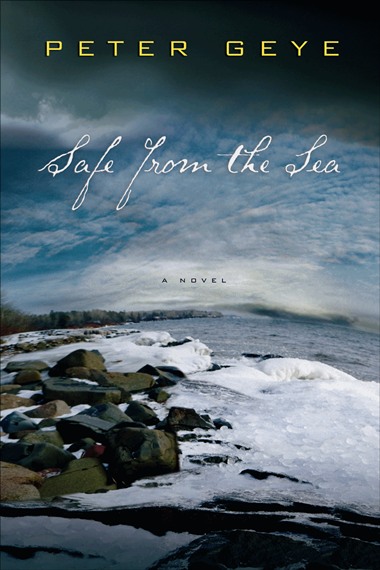
Are you familiar with Unbridled Books? I wasn't, until Safe From the Sea won the ndie Lit Award for Fiction last year. In fact, that is what really opened my eyes to small publishers in general. Are there any small publishers that have caught your attention or earned your loyalty? Often, though the books they publish aren't all the same, there is a noticeable quality or characteristic they share--making each read a new, and yet familiar, experience.
First, as I mentioned, was Safe From the Sea by Peter Geye. (see my review here) It's a little father/son estrangement/reconciliation, a little bit of history and life on the water, a little bit family/marriage and infertility, all mixed into spare, vivid writing, realistic characters, and a plot that keeps you reading. I was impressed out how balanced the book was, in the writing, characters, and plot. It really would appeal to wide audience & is one that I plan on re-reading soon.
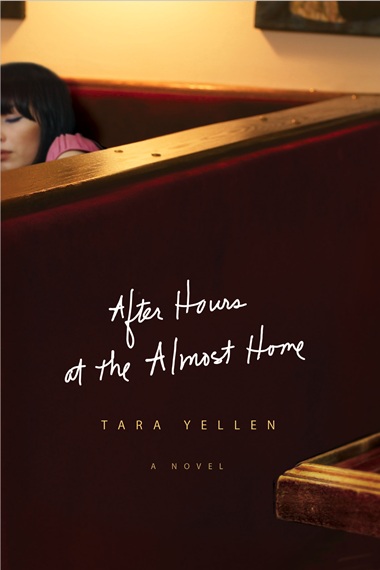
The next book I read of theirs was After Hours at the Almost Home by Tara Yellen, a title from their backlist (2008). It interested me partly because it sounded like an interesting combination of humor, quick-paced plot, and introspective character study. It was indeed a quick read, taking place in a few hours at a bar. We peek into the lives of all the employees--scattered pieces that add up to a full and complete story, reminding us that there is more to each of us than may initially meet the eye. If you appreciate some depth to a story, but are in the mood for a quick read, this is a perfect pick. As with Safe From the Sea, this is deceptively simple, quick to read, full of good writing and realistic, flawed characters.
After my second success with Unbridled Books, I was thrilled to receive Miss Entropia and the Adam Bomb by George Rabasa from LibraryThing's Early Reviewer program. (see my review here) This is one of those incredibly unique books that tells a serious, heavy, story in a lighthearted, humorous way, and manage to balance the two perfectly. Again, the writing is easy to read yet unique and beautiful, the characters have a depth that has made them occasionally pop into my memory as real people (takes me a minute or two to remember they were characters.) He explores how we define mental illness, family, and our part in society. Highly, highly recommended.

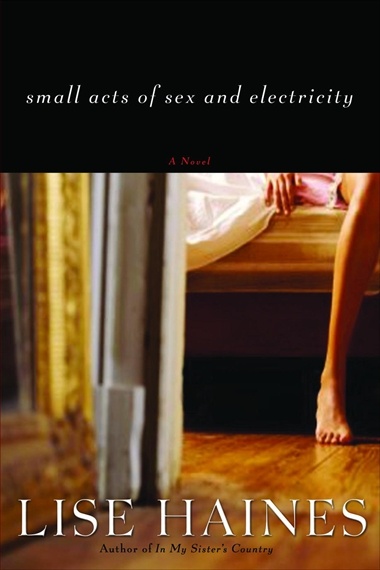
The only book I've read from my Nook books so far is Small Acts of Sex and Electricity by Lise Haines. This was the first time in a long time that I've dipped into a book so relational. I was a little nervous, to be honest, to read about a girl who steps into her best friend's life (husband and kids included) after the flaky lady skips town. It was a little more romantic and drama-oriented than what I prefer, and yet the level of writing elevated above the common fare I expected.
I have many other books of theirs that I'm looking forward to reading, and they seem to be coming out with new must-reads all the time. They seem to pick books that bridge the gap between simple and complex--they are like guilty pleasures, and yet they make you think and feel--making them a perfect choice for someone who isn't used to literary fiction, as well as those who are used to it. Perfect vacation reading for me--treat yourself to an Unbridled Book today! (and no, I'm not affliated. just a fan!)
I'd love to know what small publishers (or imprints of larger publishers) that you love and trust--or maybe just keep your eye on...what has impressed you about them? Who should I look into?
"Unbridled Books is a premier publisher of works of rich literary quality that appeal to a broad audience. We want to be able to continue our longtime discussion about what allows a novel to touch our hearts and our minds at once. And we want our readers, booksellers, and reviewers to trust that when they pick up an Unbridled book, we’re inviting them to enjoy that rarest of pleasures, a good read." (from Unbridled's site)My experience with Unbridled Books isn't as broad as I'd like--I've only known them for a year--but I have plenty of their books loaded on my Nook, and plenty more I'm interested in. This year, I've read a handful of their books that I'd like to mention.
First, as I mentioned, was Safe From the Sea by Peter Geye. (see my review here) It's a little father/son estrangement/reconciliation, a little bit of history and life on the water, a little bit family/marriage and infertility, all mixed into spare, vivid writing, realistic characters, and a plot that keeps you reading. I was impressed out how balanced the book was, in the writing, characters, and plot. It really would appeal to wide audience & is one that I plan on re-reading soon.
After my second success with Unbridled Books, I was thrilled to receive Miss Entropia and the Adam Bomb by George Rabasa from LibraryThing's Early Reviewer program. (see my review here) This is one of those incredibly unique books that tells a serious, heavy, story in a lighthearted, humorous way, and manage to balance the two perfectly. Again, the writing is easy to read yet unique and beautiful, the characters have a depth that has made them occasionally pop into my memory as real people (takes me a minute or two to remember they were characters.) He explores how we define mental illness, family, and our part in society. Highly, highly recommended.
The only book I've read from my Nook books so far is Small Acts of Sex and Electricity by Lise Haines. This was the first time in a long time that I've dipped into a book so relational. I was a little nervous, to be honest, to read about a girl who steps into her best friend's life (husband and kids included) after the flaky lady skips town. It was a little more romantic and drama-oriented than what I prefer, and yet the level of writing elevated above the common fare I expected.
I have many other books of theirs that I'm looking forward to reading, and they seem to be coming out with new must-reads all the time. They seem to pick books that bridge the gap between simple and complex--they are like guilty pleasures, and yet they make you think and feel--making them a perfect choice for someone who isn't used to literary fiction, as well as those who are used to it. Perfect vacation reading for me--treat yourself to an Unbridled Book today! (and no, I'm not affliated. just a fan!)
I'd love to know what small publishers (or imprints of larger publishers) that you love and trust--or maybe just keep your eye on...what has impressed you about them? Who should I look into?
Subscribe to:
Posts (Atom)