Showing posts with label Review. Show all posts

Sunday, August 3, 2014

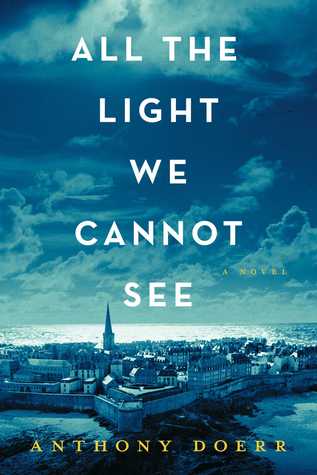
All the Light We Cannot See

Open your eyes and see what you can with them before they close forever.

I'm stingy with my 5-star ratings.  Sometimes I regret that and try to change, but then a book like All the Light We Cannot See comes along and simply deserves to stand above the rest.  If I weren't stingy with my 5, I'd have to break the rules and give this a 6 or 10 or 100 and that's a spiral I'm not ready to slide down.

Doerr's new book came to me in a Powell's Indiespensable shipment.  I didn't know much about it, except that it told the story of a blind French girl and an orphaned German boy as their lives converged during World War II. (And that it has short chapters.  I love short chapters.  Makes me feel so accomplished.)

From the start, the mood is magic.  Doerr illuminates the small thoughts and actions that create how a person or a place feels. It was familiar, and yet completely new.  The settings were vivid, and the characters were whole, genuine people. Themes run through the book so seamlessly that you can give them as little or as much attention as you want.  The writing is poetic but not heavy (nor too sparse). There is family and love, action and mystery, good and evil. There is literature, science, art, history and technology. The story switched back and forth between different times, yet remained organized and easy to follow.

It seems big enough to contain everything anyone could ever feel.

Looking back at World War II, it is easy to wonder how it was possible.  How did the Germans go along with this plan? How did people let this happen? Why didn't people stand up and object? When this question is taken out of the philosophical, however, it is easy to see how human nature compartmentalizes actions and events in order to cope with reality. From the way Marie-Laure adjusts to being blind in a city the size of Paris with only her father to help her, to Werner's ambitions to escape the fate of the coal mines that claimed his father's life, we see very real examples of how difficult it is to accurately assess the big picture and apply it to your life.

I recommend this book heartily! It's been a long time since I've read a novel as complete and filling as this.

Wednesday, February 20, 2013

A Peek Below Stairs

For the Downton Abbey fan, for the lover of history, for the memoir junky, or the behind-the-scenes aficionado: if you haven't met Margaret Powell, you're missing out.

Originally published in 1968 but only discovered by me during a recent trip into a bookstore (a woefully rare occurrence), this book ended up being the missing piece in my search to understand the history of domestic service in Britain.  Not that I'm done reading about it, mind you.

A year ago I read Up & Down Stairs: the History of the Country House Servant, and found scads of fascinating information.  What was missing, however, was the unedited opinion of the servants themselves.  While I'm certain servants' viewpoints varied as widely as personalities vary in general, there's nothing like information straight from the horse's mouth.

Margaret Powell is a spunky girl, and Below Stairs is never lacking liveliness.  From her tales about growing up poor in a small town to bold opinions and conjectures, there's always something to keep you turning the pages.  It had me laughing aloud and searching for a willing ear to pass tidbits onto.  In fact, I can't quote anything from the book because I lent it out as soon as I'd finished reading.  It was that much fun.

And now I'm torn—I want to scour bookstores for more, snatching up anything remotely related, and yet how can anything live up to a perfect experience?

Tuesday, January 15, 2013

Cashing in on Jane Austen

A year or two back, (whenever it was that Jane Austen was beginning to be extremely supremely in,) a friend and I tossed around the idea of starting a blog dedicated to reading all the knock-off/spin-off (and otherwise Jane Austen inspired) books that were being published like crazy.

And then I began compiling a list.

I stopped somewhere around number 200 (I kid you not) because regardless of whether the books would be quick to read, the project was quickly growing to a size of not funny.

Humor is a funny thing.  (Well, of course it's funny—after all that's the point, isn't it?)  What is funny to me might not be funny to you. For example, you might think that the cover of the book pictured to the left is not funny, but I think it's hilarious.  (Not saying that the story itself should be ridiculed, just that the cover art cracks me up.)

So I dropped the idea of the project (I've got a gazillion other things to do anyhow) but one book stuck in my mind.  Another book with a cover that made me giggle.  And so I put it on my Paperback Swap wishlist, and before long it came.  It's a slim epistolary exchange between two long-time friends, discussing Jane Austen's Pride and Prejudice, and Mansfield Park.

I was hoping to be as entertained throughout the book as I was by the cover, but unfortunately that didn't happen.  It was readable and enjoyable, but both of these guys liked Austen way too much for it to be exceedingly amusing.  (If it was a book about my dad reading Jane Austen, the action would be non-stop, I assure you.)

So this wasn't a huge success for me, but it's actually made me [slightly] curious regarding Regency Era bodice rippers...I think Jane might have gotten a kick out of that one.

Oh, and just in case you are interested in the list, click here to check it out!  Which titles did I miss?

Tuesday, January 8, 2013

The Famine Plot by Tim Pat Coogan

"It would have pitied the sun
to look at them"
--James Hack Tuke

I have long been interested in learning more about the Irish potato famine—its causes and effects—but haven't been up to diving into a dense, detailed history.  The solution to the problem was The Famine Plot.  In a brief 235 pages, an overview of Ireland's modern history with a focus on the popular and political opinions around the time of the Great Famine (1845-1852).

Coogan, asserting that "Irish historians as a class have not done justice to the Famine," makes some bold claims about "England's role in Ireland's greatest tragedy."  Focusing mostly on the role Charles Trevelyan played in refusing aid to the famine stricken peasants, and influencing opinion about the Irish in general, it is easy to see that the outcome of those fateful years would likely have been very different under a different influence.

I can't begin to count the number of passages I underlined, nor can I think how to properly reduce all I learned into a few inadequate sentences.  The chapter talking about souperism and the Catholic/Protestant conflict were fascinating, and I found his observations on popular opinion quite captivating in light of how enlightened we now think we are.  The truth is that there is no perfect, easy answer to such a complex, multi-faceted problem, even though it is hard for me to read such derogatory opinions about the Irish people.

His writing did get a bit repetitive towards the end, but his tone wasn't near as accusatory as I feared it might be based on the title and subtitle.  The best part is that it did such a good job at keeping me interested that I'm eager to read on and learn more.

"For our part, we regard the potato blight as a blessing.  When the Celts once cease to be potatophagi, they must become carnivorous.  With the taste for meats will grow the appetite for them; with the appetite, the readiness to earn them.  With this will come steadiness, regularity, and perseverance; unless, indeed, the growth of these qualities be impeded by the blindness of Irish patriotism, the short-sighted indifference of petty landlords or the random recklessness of Government benevolence."
The Times, September 22, 1846

Thursday, December 20, 2012

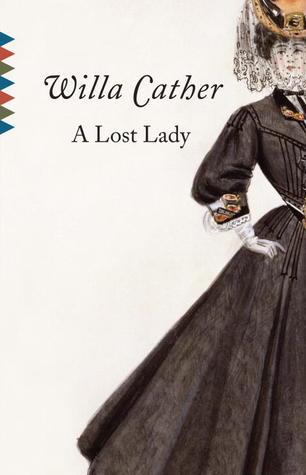
A Lost Lady by Willa Cather

"Her husband had archaic ideas about jewels; a man bought them for his wife in acknowledgement of things he could not gracefully utter."

One thing that seems to be fairly universal in Willa Cather's writing is that her strengths lie in transporting you to a certain time and place.  I am of the opinion that one major reason she is easily able to do this is because she has a gift for drawing vivid, realistic characters that fully inhabit their locale.

In A Lost Lady, as in her previous stories, we meet a character that uniquely represents the emerging American West.  Cather again looks at how the frontier came of age, (which—as a side note—Fannie Flagg also does beautifully in Standing in the Rainbow regarding the 1950s,) showing the contrast between gaining modern conveniences and the loss of innocence.

Marian Forrester hails from California, which shines as an exotic and mysterious detail of her past against the backdrop of the sedate railroad town of Sweet Water that she has come to live in with her well-off husband.  I didn't sympathize much with any of the characters, though I'm not convinced the reader is meant to.  It was apparent to me that much of Cather's personal experience (not fitting into the small town ideal) was wrapped up in this story.  Certainly it is sad to see how easily Marian was looked down upon for needing more than Sweet Water had to offer, not to mention the disdain and disappointment when she decided to follow her dream after her duty was done.

By no means Cather's best, (my vote still goes to O Pioneers!) A Lost Lady still provides a deceptively simple look into human nature and the contrast of change.

(Next up on my journey to read Willa Cather's works chronologically is The Professor's House, which I've heard many good things about.  Look for that in 2013!)

Wednesday, November 21, 2012

Hypothermia is Intriguing, Meteorology is Not.

In three minutes the front subtracted 18 degrees [Fahrenheit] from the air's temperature.   Before midnight, windchills were down to 40 below zero.  That's when the killing happened.

The Children's Blizzard is the foreboding title that came to rest upon the blizzard that raged through the American Dakotas on the evening of January 12, 1888.  The next morning, Friday the 13th as luck would have it, brought terrible news to many families.  Scores of children across the prairies had not been able to make it home from school, nor to safety anywhere.  The storm had caught them unaware and unprepared.

This book was a fascinating look into harsh pioneer winters.  From the background on why immigration was so high (hello, propoganda) to the living conditions and weather conditions, Laskin provides a clear look at the 1880s prairie.  As somehow who grew up reading Laura Ingalls Wilder, and finding The Long Winter (1881) so very, very long, I enjoyed the trip back to those days, gaining a deeper and more thorough appreciation for the trials they faced.

History is not the only topic discussed,  meteorology and hypothermia are also addressed.  My eyes glazed over during the chapters about barometers, isobars, cyclostyles, and whaaa????  {blink}  But I found the stages of hypothermia quite interesting—how the body fights for life without one's conscious thought or effort is fascinating to me.

Of course, this book is full of sad stories...but I think the title is enough to make you expect that.  Any time innocent people die it is a tragedy.  But topic aside, I did have a few issues with the construction of the book.  The writing is inconsistent:  at times poignant, at others overly complicated or vague.  Also, organization—vital in nonfiction—was not strong.  There were in-depth portions about people or things that mattered little, and fascinating points only touched upon, which resulted in an unbalanced feel.  The good news is that the 270-odd pages go by pretty quickly, even if you do read the boring parts.  If you have a passing fancy in immigrant or prairie life, this book is worth a passing glance.

Friday, November 16, 2012

Virago, you say?

"Yes, we'll have to put a stop to this bookworming.  No future in that."

Every once in a while I stumble across a treasure: a book written in fairly recent years that holds all the style and charm of a book written long ago.  This happened recently when I inadvertently came across Good Behaviour by Molly Keane (a Virago Modern Classic) while shopping at Book Depository.

It was short, sweet, and brilliant in many ways.  Published in 1981, but set in the decaying aristocracy of an Anglo-Irish family in the 1920s[ish], this book had that perfect combination of melancholy and wit that I've come to appreciate in Irish literature.

It was a wonderfully vivid story.  Plus, the cover art is terrific, am I right?  Our main character, Aroon St. Charles, doesn't know half of what you, as the reader, will catch on to, which is both terribly intriguing and terribly sad.  You see, Aroon isn't the most attractive or astute character you'll meet, though through her you will discover a vivid, distinguished world that she wishes she belongs in...and there is humor to boot (what more could I ask for?)

So, you veterans of Virago, tell me:
  • what you love about Virago
  • why I should read more
  • whether this book is characteristic of what I can hope to expect
  • where I go next!

Monday, September 17, 2012

Oscar Fingal O'Flahertie Wills Wilde

I don't know if I like Oscar Wilde so much simply because he writes amazingly witty lines, or because I feel so bad for him having to do prison time and want to give him hugs.  I've only read two of his plays (The Importance of Being Earnest, and most recently, Lady Windermere's Fan) but they've convinced me that I need to read more.

I've heard that The Picture of Dorian Gray (his only published novel) tends toward the dark and depressing—have you found that to be true?  I bought a copy & plan on reading it anyhow, but like to know what the general consensus is before I jump in. (Just the overview, not the details...no spoilers!)

Lady Windermere's Fan is a play about a young married couple in the upper echelons of London society that find themselves (and their marriage) being challenged by rumors and a lack of proper communication.  As you may expect, it is filled to the brim with his characteristic wit and humor.  Not only is it entirely entertaining, however, but it is thought-provoking as well: a perfect combination and definitely recommended (it's super quick to boot.)

Not only does Wilde's writing spur the imagination, but his name does as well.  In Patrick Taylor's An Irish Country Doctor, one of the main characters is named after Wilde—an homage paid to Irish literature in general, and a tribute to those Irish authors, such as Wilde, who may not have received such honors during their lifetimes.

An Irish Country Doctor is the beginning of a series, and is a cozy read for those days when you wish you were back in Ireland (or wait, is that just me?) Filled with humorous anecdotes and endearing characters, the town of Ballybucklebo will be one you'll love visiting (especially with the audio version read by John Keating—love that accent!)

Wouldn't it be fantastic to see one of Oscar Wilde's plays performed live?  I've decided that's one of my goals in life.  :)  How have your Wilde experiences been?  Any other works (of his or about/inspired by him) that I should put on my list?  (As an aside, did you see these 10 interesting facts about Wilde?)

Saturday, August 25, 2012

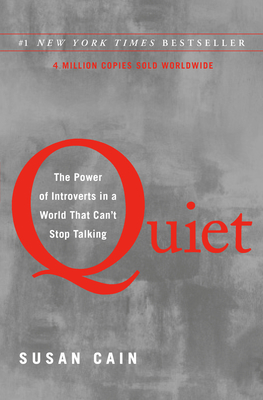
Quiet by Susan Cain

I realize it's not true that I'm no longer shy; I've just learned to talk myself down from the ledge.  By now I do it so automatically that I'm hardly aware it's happening.  When I talk with a stranger or a group of people, my smile is bright and my manner direct, but there's a split second that feels like I'm stepping onto a high wire.

Boy can I identify with that statement.  I wasn't always shy: until I was 6 or 7 years old I remember being joyful and outgoing—part of the crowd.  By the time I entered 2nd grade, however, I'd had too many embarrassing situations (by my own unknowingly-introverted estimation) and found it was much safer to be quiet, to retreat from large social groups and unfamiliar situations (in fact, the thing I remember most about 2nd grade is the classroom's windows.)

I had a few years where I was painfully shy (to the point of having a difficult time talking to my parents) but I've grown out of most of that.  Though I scored 20/20 on the introvert/extrovert quiz (see the bottom of this article) I don't experience the agonizing guilt and shame that I used to feel regularly in social situations.  That doesn't mean that I like them necessarily, but I've become adept at "talking myself down from the ledge."

Although it may be impossible to read this book and not compare the experiences to your own, there really is more to this book than commiseration and self-justification.  It would be a valuable read for introverts and extroverts alike.  My favorite part was the first section, which addressed the history of how we came to value personality over character, as well as what constitutes quality leadership, and how modern Christianity has been shaped by the extrovert ideal.  I love learning about social history, and how so many things are interconnected.  

Did you know that public speaking is the number one fear in America?  Or that the number of Americans who considered themselves shy increased from 40% in the 1970s to 50% in the 1990s, (probably because we measured ourselves against ever higher standards of fearless self-presentation.)  Did you know that some parts of the world are overall more extroverted than others (would it surprise you that America is an extroverted extremist?)

As the book progressed it began to feel more anecdotal and self-help-ish to me and didn't have as much interesting information [in my opinion]. Still, worth reading.  I'm glad to see a book that provides this much-needed perspective hitting wide release; it's nice to have the vocabulary and background information to better negotiate our differences.

Sunday, August 19, 2012

Appalachian Stories - Recommendations Wanted!

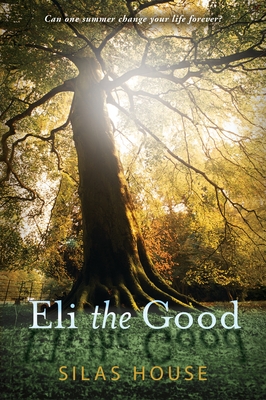
I recently read another book by Silas House which reminded me of how much I connect with his settings.  Eli the Good wasn't quite as Appalachian as his others, but Nature still weighs heavily in the story.

In addition to being his first foray into young adult literature, this book also happens to be great Independence Day reading.  It takes place in 1976, and follows 10-year-old Eli through the course of one summer.

Although the setting felt thoroughly American, the themes are universal.  What defines family?  Why is honesty a vital component of communication?  How do we show—or feel—love and concern?

Absolutely recommended, (although the epilogue didn't quite feel organic to the story,) especially for those who enjoy the coming-of-age aspect.  My enjoyment of the story ended up leading me to a book of short stories that has been on my shelf since August 2004. (Crazy, that.)  Chris Holbrook's Hell and Ohio: originally acquired because I'd enjoyed Silas House's other books.  At that time, newly entrenched in caring for a new infant (for the 4th time, hello) and therefore lacking in extra brain cells, I read only the first story and felt that it was a little slow.  Nothing special.  Reading it again 8 years later, I am entranced.  (I'm guessing that at least part of the reason is that I've taken measures to appreciate short stories, so I simply have more familiarity with the form.)

In the nine stories, coal mining (land development/destruction) is a common theme, as are manners, alcohol, religion. All themes that rang true to me...perhaps because I grew up in a small mountain town (admittedly it was in Northern California's Sierra Nevadas as opposed to the Appalachians, but the lumber mill and logging industry had a similar heavy presence in some respects to the coal mines).  I grew to enjoy feeling "a little closed in by all the trees and mountains on every side."

All the stories are wonderful, skillful, and worth reading.

(As a side note - I had the most visceral reaction (to The Lost Dog) I've ever had to a written work.  My first thought after reading the story was that it didn't say anything, but then immediately I was flooded with memories from my childhood that mirrored the story, and began to get choked up (something I don't often do, especially to the extreme I did) thinking about the fact that somebody else understood, perfectly, those feelings. I just had to stop and cope for a few minutes, I couldn't think about or look at anything else until I'd taken a few deep breaths. Pretty crazy experience!)

Recommendations?
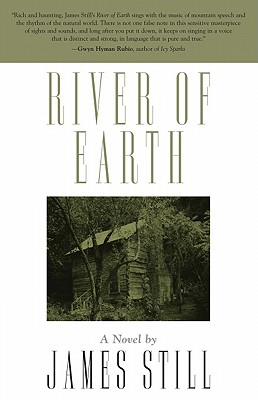
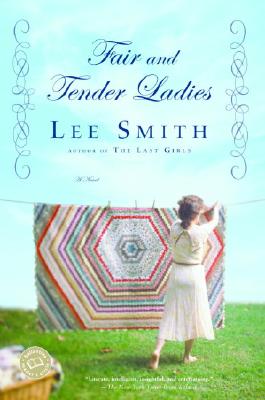
I'd like to put a few books on my wishlist that would be good places to go from here.  Any suggestions?  I think I might have a copy of River of Earth by James Still from back in 2004 when I was on the hunt for Appalachian stories.  I enjoyed Lee Smith's Fair and Tender Ladies a couple years back...that's all I've got.  What've you got?  Recommend me!

Wednesday, August 15, 2012

One of Ours by Willa Cather

Life was so short that it meant nothing at all unless it were continually reinforced by something that endured; unless the shadows of individual existence came and went against a background that held together.

Willa Cather's novels are my definition of literary comfort food.  Having been a while since I'd read one of her novels for the first time, (the last few have been rereads,) I'd forgotten what a wonderful experience it is.  True to form, the characters and setting were vivid and the writing easy to appreciate.  In each book of Cather's that I've read, she uses character sketches as a tool to help the reader get a wonderful sense of the nuances in each personality.  She's so adept at this that it never gets old.  In just a few sentences, we learn an incredible amount about four different people.

Claude knew, and everybody else knew, seemingly, that there was something wrong with him.  He had been unable to conceal his discontent.  Mr. Wheeler was afraid he was one of those visionary fellows who make unnecessary difficulties for themselves and other people.  Mrs. Wheeler thought the trouble with her son was that he had not yet found his Saviour.  Bayliss was convinced that his brother was a moral rebel, that behind his reticence and his guarded manner he concealed the most dangerous opinions.

If there is such a thing as a peaceful book about war, One of Ours is it exactly.  Published in 1922, only a few years after the Great War ended, this book seems to put the senseless loss into perspective in some ways.  The story follows the life of Claude, an idealistic young man, and shows how he found purpose in his life.  In a time when so many things were changing, (the book also addresses Prohibition, woman's role in society, transportation, and the Spanish Influenza to name a few,) such a massive loss of youth must have been impossible to understand.  Claude's story seeks to bring healing and soothe the heart.  It isn't a perfect novel—it's a bit too sentimental for that—but it's easy for me to see why it won the Pulitzer when it did.

She told off on her fingers the many ingredients, but he believed there were things she did not name: the fragrance of old friendships, the glow of early memories, belief in wonder-working rhymes and songs.  Surely these were fine things to put into little cakes!

Coincidentally, I picked this book up with perfect timing.  I'd just finished reading about Prohibition, and was longing for some prose about WWI, so it was a perfect tie-in.  This was the 5th book of Willa Cather's that I've read this year—marking completion of my 2012 goal in that regard—but I certainly haven't tired of her yet.  I've now read the first 8 of her 19 published works, and I'm greatly looking forward to the stories to come.

Tuesday, July 31, 2012

On the Road by Jack Kerouac

I've officially done it!  Wallace's read-along for Kerouac's On the Road is complete and I can now say that I Have Read This Book.

I discovered that many of my fuzzy notions about this book were actually sizable misconceptions.  For example, I was rather worried about the rumours of stream-of-consciousness and hard-to-follow writing.  In actuality, Kerouac's writing was one of the things that made this book enjoyable.  I adored this (from page 8) which was just about as "streamy" as it got:

They rushed down the street together, digging everything in the early way they had, which later became so much sadder and perceptive and blank.  But then they danced down the streets like dingledodies, and I shambled after as I've been doing all my life after people who interest me, because the only people for me are the mad ones, the ones who are mad to live, mad to talk, mad to be saved, desirous of everything at the same time, the ones who never yawn or say a commonplace thing, but burn, burn, burn like fabulous yellow roman candles exploding like spiders across the stars and in the middle you see the blue centerlight pop and everybody goes "Awww!"

I loved this description: “His excitement blew out of his eyes in stabs of fiendish light.”

Apart from being a little bit in love with Kerouac himself, I also loved the clear picture of America and Mexico in the late 1940s.  It was like getting a real glimpse of history, rather than a retelling.  Unfortunately, the novelty of traveling and visiting places familiar and strange wore off the more Dean Moriarty (aka Neal Cassidy) was in the picture.  That guy is just a super-stressball (compounded by the fact that I know someone who (in some ways) is very much like him.  So much that I've actually heard the same defense for said person as Kerouac did for Dean:)
I longed to go and put my arm around Dean and say, Now look here, all of you, remember just one thing: this guy has his troubles too, and another thing, he never complains and he's given all of you a damned good time just being himself, and if that isn't enough for you then send him to the firing squad, that's apparently what you're itching to do anyway...
Another misconception I held before reading the book was that it was all only sex&drugs.  Certainly there is a lot of sex&drugs, (one scene in Mexico stands out in my mind,) but for the most part, Kerouac's insights and observations made it apparent that post-WWII America was a little lost and trying to figure out exactly what life was all about.  The problem was the lack of hope.  Seeing a group of people not be able to move on, or grow out of, such behaviors is sad.  Although I appreciated the historical importance, and enjoyed Kerouac's writing, most of this book ended up leaving me somewhat ambivalent.  Dean was stressful, and everyone's inability to be content was depressing.

I am glad I read it though, both for its significance in literature, and because I no longer have those misconceptions I began with.  It was easy to read in many respects, but a growing experience at the same time.  Kerouac had many acute observations, even in the midst of dizzying jazz and exhilarating car rides, that made my time with the book much more enjoyable that it might have been otherwise.  I'll leave you with one I especially liked.
Dean took out other pictures. I realized these were all the snapshots which our children would look at someday with wonder, thinking their parents had lived smooth, well-ordered, stabilized-within-the-photo lives and got up in the morning to walk proudly on the sidewalks of life, never dreaming the raggedy mess and riot of our actual lives, our actual night, the hell of it, the senseless nightmare road. All of it inside endless and beginningless emptiness. Pitiful forms of ignorance.

Monday, July 23, 2012

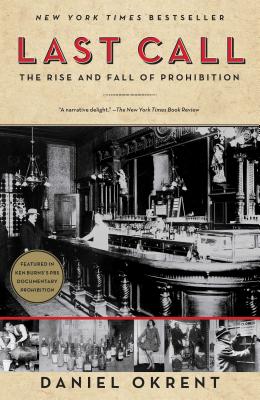
Last Call: The Rise and Fall of Prohibition

I don't usually blog mid-book, (I guess I'm a completed-project kind of girl,) but I did talk about this one midway because there was too much fascinating information to keep it all to myself.  So much, in fact, that I've worked this book into just about every conversation I've had in the last 2 months.  Because of this, I've had to make a smidge of an exception in my final rating (usually I reserve my 5-star ratings for books that I can't find any fault with, but the conversation application was like super-extra-credit here and nothing less than 5 stars would be accurate.)

My complaint is minor, actually: in a perfect world, a few of the pages about political machinations would have been swapped for more info about the more titillating descriptions of speakeasies, flappers, and social life (these aspects were addressed, just not in the ratio I yearned for).  Admittedly, Okrent is not ignorant of this: "The most familiar legacy of Prohibition might be its own mythology, a body of lore and gossip and Hollywood-induced imagery that comes close enough to the truth to be believable but not close enough to be...well, true."

What it is, if not the source for all the gossip and lore surrounding the 14 years Prohibition lasted, is the most thorough and engaging history of the era when America transitioned from rural to urban (and all the changes that entailed) that I've come across.  I loved discovering how many different issues were tied into this thing that we label, simply, Prohibition.  There's the conflict between rural and urban lifestyles, federal government's role in the individual's life, women's suffrage, the federal budget and income tax, immigration and racism, classism, religion, continuing resentment from the Civil War, - the list goes on and on.  This book is the WHY that always seems so out of reach, and the amazing thing is how enjoyable and attainable the author has made it.

If you hold the slightest interest in American history, you won't regret setting aside a little time for this book.  Highly researched, well organized, and a joy to read, this is what history should be.  You'll meet forgotten famous people like Wayne Wheeler and Mabel Willebrandt; you'll discover the origins of powder rooms, booze cruises, Las Vegas, NASCAR, and tourism in the Bahamas.  I could talk about it for days, but instead I'll leave you with a few brief excerpts and a strong encouragement to check it out for yourself.
"The connection between liquor and politics was not a new one.  When twenty-four-year-old George Washington first ran for a seat in the Virginia House of Burgesses, he attributed his defeat to his failure to provide enough alcohol to the voters."
"The booming prescription trade had been accompanied by a dawning realization among America's physicians that alcoholic beverages were in fact useful in treating twenty-seven separate conditions, including diabetes, cancer, asthma, dyspepsia, snakebite, lactation problems, and old age."
"It was a later edition of the KKK that focused its venomous loathing on black people; this version had a special hatred for Jewish and Catholic immigrants.  The Klan, which supported woman suffrage in behalf of Prohibition, in turn supported Prohibition as a weapon against the immigrants. [...] In many towns there was little distinction between membership in the Klan and in an ASL (American Saloon League) affiliated church."
"Wrote newspaperman Malcolm Bingay, 'It was absolutely impossible to get a drink in Detroit unless you walked at least ten feet and told the busy bartender what you wanted in a voice loud enough for him to hear you above the uproar.'"
"It was one thing for Pennsylvania legislature--any legislature, really--to give militant drys the laws they wanted, but quite another to provide the funds necessary for their enforcement."
"In 1925, when The Great Gatsby was published, the meaning of "drug-stores" was as clear as gin."

Thursday, July 19, 2012

Perhaps I Like Short Stories After All...

This year, one of my personal goals was to read three poetry collections and three short story collections.  This was definitely a challenge for me, as these are both forms that I'm trying to learn to appreciate.  I'll save the poetry for a later discussion, because it's the stories that are forefront on my mind right now.

In my mind, the purpose of the short story is to make the reader respond in some way.  The first two collections I read did an okay job at that, (The Complete Stories of Flannery O'Connor suffered only in that there were an incredible number of stories and it took me years to complete. Youth and the Bright Medusa by Willa Cather was good, but wasn't as magical for me as O Pioneers! or Song of the Lark) but they didn't really change my perspective about short stories.  They were [mostly] good, interesting, stories, but (with a few exceptions) left me feeling like they weren't complete somehow.  They ended too abruptly perhaps, or seemed too formulaic, or maybe I was never fully invested in the story to begin with.

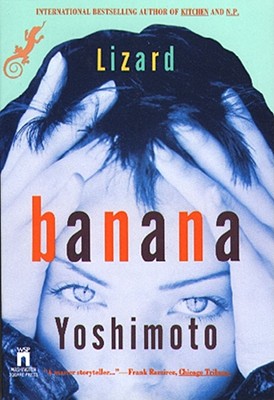
In any case, these problems vanished when I began reading short stories to prepare for my son's high school English course.  I chose Lizard by Banana Yoshimoto because my son is infatuated with Japanese culture (and I thought Haruki Murakami might be too slow for him at this point) and Tunneling to the Center of the Earth by Kevin Wilson because I loved The Family Fang and thought it might be just the right sort of quirky.  Turns out, I really enjoyed both of these collections.  Where the two collections I read earlier this year suffered from too many similar stories, these did not.  They felt fresh throughout, and kept me wanting to read more.  None of the stories felt too long.  In fact, most of them had me wishing that they were longer.  (As Jane Austen said, "but for my own part, if a book is well written, I always find it too short.")

From what I understand, both of these authors were in their early 20s when they wrote these stories, which explains the What Do I Do With My Life vibe that runs throughout both collections.  It happens to be perfect for what my goal is, but I found them enjoyable even apart from that.

Lizard has a distinct Japanese flavor, which makes observing that transition to adulthood all the more interesting. The stories are high interest and easy to read, but at the same time they dig deep into themes of hurt, memory, love and loss, with growing as a person and figuring out who you are and why. It isn't just all surface action, the characters make you think and feel.

Kevin Wilson has a quirky writing style that might not work for everyone, but seems to work quite well for me.  Where Aimee Bender's (and Jonathan Safran Foer's) magical realism is too off-the-wall to really engage me, Wilson's surreal realism (is that even a thing?) hits me just right.  These stories often start off with an attention grabber: "First of all, we were never tunneling to the center of the earth.  I mean, we're not stupid."  Or: "It took me damn near a week to convince Sue-Bee to come watch this guy shoot himself in the face."  The themes revolve around loneliness and family and love - things that you'll recognize if you've read The Family Fang.

Not only did I find success in my attempt to gather required reading for my 11th grade son (he'll be reading Blood & Water from Yoshimoto and the title story from Wilson) but I enjoyed myself along the way.  Perhaps my short-story-ennui had more to do with finding the right balance of authors than anything else.  I'm not confident I'll be able to say the same thing about poetry, but I'm not giving up hope yet.

Friday, July 13, 2012

Nice to Meet You, Maisie Dobbs

Ever since I'd heard that Maisie Dobbs was a post-WWI, London-based sleuth (of sorts) written on a more literary level, my curiosity was roused.  One of my book groups ended up reading it together (met earlier this week - book club outside by the pool, how fun is that?) and it was all I'd hoped it would be and more.  (Actually, it was all I'd hoped Mr. Churchill's Secretary would be, which made it all the better.)

Although much of the book takes place a good decade after WWI ended, the story revolves around the war and its after-effects.  I love reading about this era.  Talk about generation shaping - the thought of shell-shocked young men roaming the streets of London at night, trying to come to terms with the war, and this: "Like many young women who came of age in the years 1914-18, Iris had no husband, for her sweetheart had been lost in the war."  Gives my heart an insta-ache.  I can't even imagine, yet I long to understand.

Maisie Dobbs is a great example of what a literary mystery can be.  There is history, real characters, more than one line of  suspense, paired with good writing and a touch of introspection.  A book needn't be poorly written to have a good storyline.  What makes this discovery even more intriguing is the fact that it is the first in a series.  I generally don't think very highly of books that are drawn out into series, simply because they typically feel to be just that: one story that is drawn out for no good reason.  I hate feeling like I need to read the next book just to find out what happens. But here, for the first time in recent history, I've found a book that actually makes me think I could keep reading the series and not risk disappointment.  Maybe because it is a character/era driven series instead of a plot driven series?  I don't know, but I'm on board.  Birds of a Feather is #2 and on its way to my shelf, one way or another.

Reading Maisie Dobbs also stirred up all those sympathies and feelings about the dreadful ramifications of the Great War that left me feeling pangs of want for A Long, Long Way by Sebastian Barry.  It hasn't even been a full year since I read it, and I don't often reread a book, but I need this one like I need a good long visit with an old friend.  Thank you, Ms. Dobbs (& Ms. Winspear) for the experience, it was nice to meet you.

Saturday, July 7, 2012

The Age of Miracles by Karen Thompson Walker

Can you believe I'm reviewing a Hot Off The Shelves New Release??  Maybe this occurrence isn't as crazy-rare as it feels, but it does feel to me like this is the first new release I've read in a while (pls excuse my exuberance).

Even if you've had your head buried in the sand (like me) you've likely heard of this book.  Which explains my disappointment when I heard it was going to be featured in the next Indiespensable shipment (ugh, hype and all that jazz.)  Fortunately, those kind folks did an incredible job putting together a fun package - the best one recently - beautiful hardback, purty dust jacket, lovely slipcase, "survival" goodies.  Okay, maybe I wasn't miffed after all.

And now, on with the book, right? The premise is interesting: a California girl and her family try to adjust to the one global calamity they had never considered, as the earth's rotation begins to slow.  Sounds science-fictiony, yet - as my husband declared - The Book Is Way Too Short To Explain Everything...it's really more about the people, how they adjust and react.  Sounds like my sort of thing after all!

There was a lot that I enjoyed about this book.  I found the writing to be enjoyable, the premise piqued my interest throughout the book.  However, there were a lot of little things that bugged me, making this more of an "enjoyable reading experience" rather than a "wonderful book".   Let's bullet-point this:
  • The ages of the kids seemed incompatible with their behavior.  These were 11 year-old kids acting like 14 year-olds (parties & other behavior) and I had to keep reminding myself of their ages. (And before you say that's how it is now and declare me out of touch with reality, keep in mind that I have an 8, 11, 13, and 16 year old and we live Southern California.  I should be able to identify.)
  • As if California didn't already have enough stereotypes...luckily the "We Californians..." sentences began to thin out as the book went on because they were about to ruin the book for me.   Really.  As a native Californian who has felt only 2 real earthquakes and rarely eats outside, I could rant about this for pages.  It's a big, diverse state, making generalities a little silly.
    • "We were Californians and thus accustomed to the motions of the earth. [...] But we Californians were no more prepared for this particular calamity than those who had built their homes on more stable ground." 
    • "This was California--almost everyone had migrated here from someplace else." 
    • "This was California--we ate outside in every season."
  • People's motivations seemed non-existent or unimportant.  Julia didn't seem all too upset when upsetting things happened, and why the "clock-time" people despised the "real-time" people was never really shown.  So, not only did people react differently than I would have thought, but there wasn't any real explanation showing why this might be.
  • Way too many blatant foreshadowing sentences for such a mellow ending.  Tons of "I would learn later" and "We didn't know then" or "It was the last time" sorts of comments that ended up not really pointing to anything in particular.
Despite all those complaints, I really did enjoy reading the book.  I liked that it didn't have a super tidy ending.  I can't help thinking that the hype is do more to the politically-correct timing of the global disaster theme than anything else, but the ease of reading and the interesting story were enough to overshadow the lack of character development and other minor irritations for me.  And besides, it's a treat to look at.  That's got to count for something, right?

Sunday, June 24, 2012

Book/Movie Pairing: The Family Fang and Moonrise Kingdom

Are you familiar with director Wes Anderson (of Royal Tenenbaums fame)?  I happened to have the great pleasure of watching his new movie, Moonrise Kingdom, this weekend and I absolutely loved it.  Though I've avoided it until now (who knows why?) I am now an ardent fan of his films.  I actually think the only other film of his I've seen is Darjeeling Limited - which is fabulous because that means I've a good number of promising films to enjoy now that I know I love him. ;)

Succinctly put, Moonrise Kingdom is about "A pair of young lovers [who] flee their New England town, [causing] a local search party to fan out and find them."  What makes it work is Anderson's impeccable sense of balance.  Not only did it strike that perfect funny/sad tone, but the characters are at once quite quirky and oh-so-easy to identify with.

I loved this movie.  I wanted to marry it.  Well, not exactly.  But I would like to find a way to plaster on my wall so I can watch it constantly and continuously.  (rated PG-13, btw)


The Family Fang, (if you've read any reviews of it already you may have heard,) has a very Wes Anderson vibe.  The super-quirks, the funny/sad...the ability to talk about serious subjects without being tiresome.  Set against the backdrop of performance art contrasted with imperfect art of raising a family, and told through a series of rather awkward moments, Wilson left me contemplating the blind journey we each make from childhood to adulthood.

Although propulsively readable, it doesn't dip into shallow waters for a minute.  I loved how, instead of spiraling into a mess of neatly-wrapped platitudes, it stayed engaging, funny, and contemplative until the very end.  It left me at once feeling completely satisfied and hungry for more.

"People would call him Professor Fang, which sounded so much like a supervillain that he wasn't sure he could go through with it."

What's your opinion about funny/sad books (and movies) with quirky characters?  Does that perfect balance make your heart sing like it does mine?

Saturday, June 16, 2012

Mary Shelley's Frankenstein

There I was: heading for the couch with purpose, book in hand.  It was time to get some serious reading done.  Mary Shelley's Frankenstein hadn't captured my attention thus far, so I knew I needed to concentrate and focus focus focus.  But wait, perhaps I'd better check my email before diving in?  Five minutes later I was contentedly absorbed...in a game of Plants vs Zombies.

Have I mentioned that I am a master procrastinator?  My responsible side has gotten better at fooling my procrastinatory side (who is in turn trying to fool my responsible side in the first place...at what point does this qualify as a mental problem?) and I finally buckled down and plowed through the rest of  the book.

I liked the story of Frankenstein and the monster he created.  The mystical-science aura reminded me a bit of Jules Verne (that was fun) and there is certainly plenty of food for thought presented.  However, the biographical portion of the introduction was much more interesting to read.  Shelley's super-introspective, emotional, memory-flavored sentences bored me to distraction (as noted above).

Last August I read Shelley's novella, Mathilda and adored it.  I loved how her writing perfectly exuded the emotions she was trying to portray.  Her writing style wasn't necessarily any different in Frankenstein, but it did lack the passion that I felt in Mathilda.  Without the great force of feeling, I found the writing to be too flowery and sentimental for my taste.

Can you believe that I've never watched an adaptation of Frankenstein?  I imagine there must be an assortment to choose from, and I'd like to see how it translates into film.  Any suggestions?


Sunday, June 10, 2012

More Stories by Willa Cather

Youth and the Bright Medusa was published in 1920 and contained a collection of eight short stories that revolve around themes of fame and fortune, and the great price they extract.

Four of the stories had been previously published in The Troll Garden (Paul's Case, A Wagner Matinee, The Sculptor's Funeral, and A Death in the Desert) so I won't rehash them here (you can see my post about them if you like.)  Of these four, Paul's Case seems to be the most popular, although I infinitely preferred A Wagner Matinee, as it contains that real warmth of spirit and nostalgic reflection that I loved about Cather.

The four other stories had been published in various magazines before appearing in this collection, and are very much opera star/famous girl centered, a little too concentrated a topic for me.  While Cather's writing here is polished, I didn't connect with the characters or the theme as I thought I would, based on how much I loved Song of the Lark - ostensibly about the same topic.

Coming, Aphrodite!
The first story in the collection was my favorite of the four I hadn't yet read.  It was full of vivid scenes, and the characters were unique and interesting, with personality quirks and distinct motivations.  Don Hedger, and unknown painter, finds himself with a new neighbor, Eden Bower, who quickly disrupts the peace and patterns Hedger and his dog had previously enjoyed.  They get to know each other in a rather jolting, awkward manner, trying to get past their differences of temperament.

I enjoyed the trip to Coney Island, and liked Hedger's devotion to his dog...not that I'm a huge dog person, but it added nice dimension to the story.  I didn't much like the whatever happened to so-and-so? way the story ended, simply because Cather seems to like to fall back on that format (similar to how Flannery O'Connor likes to make something terrible happen to her characters at the end of her stories) and I was hoping for something different.  However, that's a minor complaint for a story that was so full and interesting.

The Diamond Mine
Okay, I liked this story too.  It's a rather sad story of a girl who worked her patootie off, finally succeeding at becoming a famous singer, only to be unappreciated and taken advantage of by all of her family, husbands and child included.  When Cressida Garnet happens to be on the same ship as a cousin of her first husband, we are allowed a picture of her her trials as well as a brief spot of happiness she looks back on fondly.

It is sad, but easily conceivable, to see how hard it might be for a hugely famous person to find true, loyal friendship.  Even when Cressida found someone who didn't seem to care so much about her money for once, things didn't turn out well in the end.  And yet she somehow retained hope, through all her family's selfishness and the absence of love or friendship, she may have been tired and hurt, but she didn't become jaded.  Could she have acted differently and still protected her tender heart?  It's nice to think she could have, but I'm not so sure.

A Gold Slipper and Scandal
Both of these stories involve Kitty Ayrshire, an opera singer.  The first relates the story of a disgruntled husband that is coerced in to hearing Kitty perform despite his general dislike for people such as he imagines Kitty to be.  He has to come to terms with his stereotypes and prejudices later when he ends up inadvertently escorting Kitty on her train ride after the show.  In the second story, we get to reflect with Kitty and her friend about a scandal of sorts that had happened years earlier in New York.

I didn't fall in love with either of these stories, but did enjoy the brief discussion in the first story about Leo Tolstoy's "What is Art?" and I discovered that "Scandal" was a favorite story of F. Scott Fitzgerald...a tidbit I found interesting.  I suppose that ties into his interest in the shenanigans of the upper crust?


Youth and the Bright Medusa was the 7th of 19 books in my Chronological Willa Cather Challenge, and 3 of the 4 I wanted to get read this year.  Next up in this challenge is her Pulitzer Prize Winner: One of Ours.

Tuesday, June 5, 2012

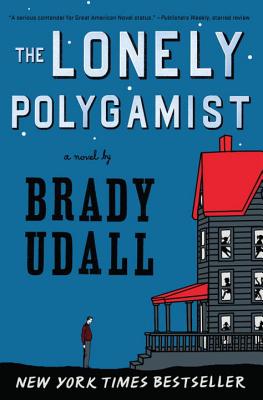
ReadThisBook: The Lonely Polygamist by Brady Udall

How hard is it to find a book that makes you laugh, consistently, all the way through, and still make your heart ache and your mind ponder?

The story told in The Lonely Polygamist--that of 45 year-old Golden Richards: husband of 4 and father of 28--wouldn't have nearly the same effect told by a different author.  Brady Udall has the peculiar insight and talent for the job: necessary ingredients to turn this book into a wonderful story.  I love how the book was captured in this tidbit:

"By turns laugh-out-loud funny and hauntingly sad, this novel is a big, fat, satisfying read that will make you reconsider what it means to be part of a family. Plus, it contains the naughtiest, goofiest 11-year-old boy who will ever break your heart.”
-- Roberta Dyer, Broadway Books, Portland, OR (via IndieBound)

Some of my love for this book was certainly due to the fact that it was amazing on audio.  David Aaron Baker?  Love him.  By the time I was halfway through the book, I had to pause and search Audible for what other books he's narrated (plenty of options).  He had a distinct voice for each character, which really brought them to life.

Now, I am not a fan of polygamy as a subject.  It's a topic that instantly puts a pit of SAD at the bottom of my stomach.  In my mind, it negates the individuality and specialness, to some degree, of each person involved.  I suppose I don't understand The Principle; the ascetic ideal is one I have a hard time accepting.  However.  (You knew there was going to be a BUT, didn't you?)  For the first time, there was a seed of sympathy, of understanding, accompanying that sadness.  Udall understands the nuances, and by showing his characters in a somewhat extreme (and occasionally ludicrous) light he allows the reader to see how simply human they are.


I loved how the characters were introduced...even the houses and the dog, and eventually Roy: the atomic test weapon...each with their own little history, their own narrative flavor.  I loved Rusty (poor crazy kid) and wish I'd known Glory.  The references to Reno were additionally funny to me, having lived relatively near it for much of my life.  I do wish the story hadn't been wrapped up quite so tidily, but since it all seemed pretty plausible (and since I'd enjoyed myself so much along the way) I can't really complain.  The book was over before I was ready, leaving me with a smile still on my face and an ache in my heart.

(A warning: be prepared for some bodily functions.  Many of the plights that Golden and his 11 year-old son Rusty find themselves in are a bit awkward and there is a smattering of strong language, including many mild but stereotypical 'gay' references.  I found it to fit the characters he had created, but if you're sensitive to these things it could possibly affect your opinion of the book.)