Showing posts with label Commentary. Show all posts

Tuesday, September 25, 2012

Huck Finn: Robotic Edition


I couldn't resist: I ordered the Robotic Edition of Huckleberry Finn.  I felt inclined to experience this culturally corrected edition, seeing as how it does the opposite of what the kerfuffle-edition did (changing every race-oriented-derogatory-term to 'slave').  Instead of making it tamer, less offensive, less about what it's about, this edition makes the point of the story that much more poignant.  By changing every offensive racial term to "robot", not only do we create some smiles, but we tell an important story in a way that has much more of the original impact for this day and age.  After all, our opinion regarding the humanity of robots is quite similar to the previously prevailing opinion about the real intelligence (etc.) of slaves.
Um...I mean...I'm of the opinion that the last version didn't go far enough in its censorship, and this version is best so that no one is uncomfortable and no point is made.

But that's just me.


An excerpt from the introduction:
'Banned from the Concord Public Library shortly after its first publication in eighteen hundred and something, "Adventures of Huckleberry Finn" was criticized in the Boston Transcript by members of the library committee for being "rough, coarse, and inelegant, dealing with a series of experiences not elevating, the whole book being more suited to the slums than to intelligent, respectable people." 
Ouch. 
While we have not taken the time to actually do the research to back up our claim, it is easy to infer that the sympathetic depiction of the African American character Jim as a human being worthy of freedom was one of the "rough, coarse, and inelegant" elements of the book to which many critics objected.  Which is ironic considering modern criticism has shifted to calling the book racist because of Twain's use of the word "n-word" more than 200 times throughout the text. 
Granted, that a lot of n-bombs—but Twain scholars (and other people who understand the book) counter it is actually an indictment of racism: the book shows a young boy's emotional growth from conforming to a racist society's values to gradually learning to think of people with higher levels of melanin production by the melanocytes in the basal layer of their epidermis as actual people.  But that argument has not stopped schools and libraries from keeping the book off shelves and out of classrooms.'

Good stuff, right?  
Robots are people too.
(Find out more here.)

Wednesday, August 22, 2012

My Favorite Classic

I've been pondering the monthly prompt from The Classics Club, waiting to see if any other classic could top the one that instantly claimed first place.  That hasn't happened.  In fact, the more I think about it the more sure I am.  There are many classics that I adore, and fewer that I'm passionate about; but there's only one that I could reread yearly and still be in love:  Jane Austen's Persuasion.


What makes this book so incredibly dear to me?  It's a combination of things, of course, but it boils down to how understood it makes me feel.  I am not alone when I read this book.  It's how Austen expresses the balance between passion and duty, it's the emphasis on the value of deep feeling and true friendship, it's the desire to be interesting and special & fearing you are not, it's the gift of hope when all hope is gone.  So many observations and commiserations seen through Austen's characteristic wit make this book a perennial reread.

This is one of those books whose worth, for me, is greater than the sum of its parts.  When I take apart the story individually, I don't find elements ensuring a perfect fit.  There's the love story, which I think is a rather good and true one, especially considering the times, but outside my choice of genres all the same.  There's the bit of intrigue with her cousin that wasn't fully developed, and there's the classic Austen abrupt ending, (which worked for me okay here, but didn't so much in her other books.) But it has that spark of literary magic - of human understanding - that speaks to me whenever I read it, and that's what it's all about.

Another classic that affects me the same way is Willa Cather's Song of the Lark.  It is so much more than just a story to me.  No matter how much I adore Tolstoy's philosophy or Wilde's humor, it's those deep, personal connections that make a book come out on top.

Saturday, August 11, 2012

Sunday Salon: Packing Up Books

How disheartening.

Books are my friends—we've been places together, they've helped me grow.  Books I haven't yet read represent new adventures, new insight.  I get all mushy and sentimental when I have to put them away into boxes.

We're moving in a few weeks' time.  Boxing up books for a simple move is one thing—there's the anticipation of setting them up again, organizing them in any fashion that appeals to you—but my impending move is not a simple one.  We are vacating our home for a year or so while it gets some major cosmetic work done, and will be living in a smaller place in the meantime.  This means that many of my books are facing a dismal prospect: storage.  [cue pouting face]

Filling up the file boxes...
The books that have won the privilege of sleeping indoors are mostly those that I haven't read yet.  All others have to wait patiently until the new library is revealed.

Have you had any experience with storing books?  Any suggestions or precautions?  I'd really hate to incur any damage.  We do live in Southern California, so many weather/critter related issues aren't quite as concerning as they'd be elsewhere.

Any ideas on how to refrain from going on multiple book-buying-binges to compensate my relative lack of bookish surroundings?

Sunday, April 29, 2012

The More I Read...

...the more I realize I'll never be able to read all the books I'd like to.

It's been one of those months:  in spite of the fact (or perhaps because of it?) that I've been extremely busy, I've been doing a lot of reading.  And somehow, it seems that that the faster I finish books the more discontent I become with my mortality.  All the more reason to slow down, you might say, but I'm finding it rather impossible.  Reading is my escape from all the things that need doing.  Give it up? Slow it down? Impossible.

I'm fairly certain that my current bibliovore status, (the number of books I'm flying through, opposed tho the amount of blogging I'm doing about it,) has much to do with the type of busy I am.  It isn't that I have a tremendous amount of engagements filling my time, although I do have more than usual.  It is more a matter of my brain being saturated by a large quantity of transitive items.

The biggest mind-melter is the impending house remodel we are undertaking.  We have a large mid-century modern split-level home that we've been planning (for a couple years now) to do a major facelift on.  We've been working with an architect on the design, and now that our plans are approaching approval by the city, it's crunch time.  The interior design decisions are heavily underway (thankfully we have a wonderful interior designer to work with); we are in the process of selecting a landscape architect (hoping option #2 is miles better than option #1); deciding where we will live during the remodel (though we aren't yet sure of the timetable); and soon we will be looking at contractor bids as well.  Daily life combined with the knowledge that we'll be needing to move out of the house shortly is crazy enough, wanting to make sure that the remodel results in perfection is icing on the cake.

And then there's school.  Deciding on the best schooling options for each of my kiddos has been an unending source of internal debate over the years.  Public school, private school, home school - all are possibilities for us.  I love having my kiddos home with me, having the opportunity to really connect with them, having the privilege of seeing them learn and understand...even though the idea of being responsible for their education and having them with me all the time scared me to death to begin with, it really has been an incredible experience.  However, it hasn't always been the best choice for each child each year.  And right now, as the school year winds to a close, is the time when I really weigh the pros and cons of the last year and decide what next year is going to look like.  I'll come to a decision eventually, but for now it's one of those things that sits in my brain until I use a book to shush it for a while.

There's more, as there always will be, but to return to the point at hand, it is all this busy-ness that makes me feel that I'm running out of time.  Not just to read, (or quilt or knit or write or blog,) but to breathe and think and enjoy the life I'm so blessed to have.  No matter how much I fit in, there is that much more still waiting for me.  There may always be an abundance of things that need doing, and I may (or may not) get to them all eventually, but when obligations press in I retreat to the basics: family and reading.  It's been a light month on the blogging end and I'm missing it, but I'll get back to it.  Craziness will ebb, perspective will return, and I'll have time to bother you all mercilessly about all my bookish thoughts.  You've been warned.


Thursday, March 15, 2012

thoughts on How It Was: 1920

The earlier part of the 20th century: I can't get enough of it.  I want to know more than stories and facts; I want to understand.  Coming across the line quoted below (from the 1925 Pulitzer Prize winner) made me stop and consider as I may not have if I hadn't just read Willa Cather's The Song of the Lark.  It's a peek into society: one of those mood-setting, reaction-dictating nuances of a culture that is too current to seem altogether foreign, and too far in the past to be completely familiar.

Passion was a thing no woman possessed, much less talked about.  It simply did not exist, except in men, and then was something to be ashamed of, like a violent temper, or a weak stomach.
from page 69 of So Big by Edna Ferber (1924)

The Song of the Lark was published in 1915, 9 years before So Big, but they both address this societal change from angle that would be easy to trivialize, (or to seemingly miss or ignore altogether, as in Millhauser's more recent Pulitzer, Martin Dressler,) looking at it from this late date.  The Song of the Larks is about art, about passion.  Cather does a wonderful job at fleshing out such personal experiences, and yet reading it twice wasn't enough for me to receive the full impact of her message.  It took this cross-referencing to really be brought to light.

Harsanyi rumpled his hair irritably and shrugged his shoulders. “Her secret? It is every artist’s secret” --he waved his hand-- “passion. That is all. It is an open secret, and perfectly safe. Like heroism, it is inimitable in cheap materials.”
from page 429 of Song of the Lark by Willa Cather (1915)


Of course, I knew that the Victorian era had a very confining effect on women--in America as well as Britain--but getting a clear picture of the transition from that to something more modern can be difficult.  Anyhow, that was my brain-expanding moment for the week.  Thoughts?


Thursday, January 26, 2012

What It's Like to Read a Classic

How large is your vocabulary?  Do you find that the more you read, the larger it grows?

Do you remember reading a Classic for the first time and having to trudge your way through the vocabulary and sentence structure?

Like most people, I read some classics in high school.  Like most people, I didn't enjoy them as much as I could have.  But then time passes, and wonder of wonders: I somehow got used to reading the more complex language that is often found in those older books.  The first time I read Pride and Prejudice it took some work.  Then I watched the film, and amazingly, the language began to make sense.  So much has to do with your familiarity, doesn't it?  If you know the story, the language is easier to absorb; if you know the language, the story is easier to absorb.

Here's an entertaining example:

It really isn't that the classics are always so much more difficult, it's that they are often unfamiliar territory.  (True, they do stir up the grey matter a bit more, but that's a good thing isn't it?  Move those brains!)  This is why, if you are just getting started with the Classics, it can be immensely beneficial to pick something with more accessible writing (Gone With the Wind, The Good Earth, To Kill a Mockingbird) or with a story you are familiar with (A Christmas Carol, Adventures of Sherlock Holmes, Peter Pan).  This is also why I have no problem watching an adaptation first--get familiar with the story line, and then jump in and enjoy the story-telling.

Once you get past that first hurdle, you may be surprised to find that reading the classics is more a matter of taste than difficulty.

Sunday, December 4, 2011

How to Organize Your TBR Shelf in a Guilt-Free Fashion

This year I've been lamenting the fact that most of my reading lately has been obligatory.  That isn't to say that everything I've read has been uninteresting, but rather that there is a reason I'm reading it beyond my mood.  Declaring that my reading needed to be more whim-tastic, I immediately instituted a two-pronged approach.

Not sure if this balancing act could be solved by
rearranging my bookshelf...though I'd still try!
(photo credit)
First, the books I took on my impending vacation were not allowed to be "guilt" books (need to read, obligatory books for whatever reason) I could only take books that I had a bubbling interest in reading (I ended up cheating a little bit by taking Anna Karenina, which ended up being quite difficult to read in the Caribbean--duh).

Second, I did what I always do when I need to get my life in order: reorganize by bookshelf.

For many readers, acquiring books is a balancing act.  It starts with the realization that there are more books being put on the list than are being crossed off the list.  For some people that isn't a problem: they are blessed with the ability to view bookcases of unread books as opportunities rather than responsibilities.  Others fear that the mood or the interest will pass and so begin feeling antsy or guilty.  And then there's always that mysterious breed that is so moderate they don't even understand the concept of book hoarding.  We'll not be talking about those people. Nor the first group.  We're here to discuss those that feel guilt when the unread books they own seem to be multiplying on their own in the dead of night.  This is about justification, people.  Own more books, guilt free!

Before:
Me, furrowed brow, reloading my TBR pages on Goodreads and Librarything to see if the number of books I haven't read has changed since I looked at it an hour ago.  Quickly scrolling through the list, I keep an eyebrow cocked on the lookout for a book I've read--a stowaway silently undermining my mission.  HUNDREDS of books.  How did we get here?

After:
Curled up on a couch, steaming coffee in hand, cozy blanket wrapped around my legs, quietly traveling to another time, another place.  There is no other book in the world than the one I'm reading.  Life is organized, under control.  The days of the sagging TBR shelves are a thing of the past.

Wait, how did that happen?
It's all in the organization.  Looking at the shelves filled with books you haven't yet read and organizing them alphabetically isn't going to do anything to soothe your conscience.  Sorting them according the colors of the covers might be a fun puzzle and pleasing to the eye, but won't be much help beyond that.  Maybe you don't keep your unread books apart from the ones you've read, on a shelf of their own, but if you do (or want to) this is how I go about it.

Start here:
The main step, (and it may be a large one,) is deciding on some general types of To Be Read books you have.
  • Nonfiction: are you planning to read it straight through? or is it a coffee-table book? a reference book?  Unless you specifically plan on reading the whole thing from front to back, get it off your TBR shelf.
  • Collections: 
    • Type 1--sometimes I acquire books more for the beauty and collectability than for the simple fact that I'm dying to read it.  I don't do this as often as I would like, but it happens.  These books should be on your beautiful-books-shelf, not your TBR-shelf.
    • Type 2--personal goals/interests/challenges may not consist of a predetermined collection of books, but they should be grouped as one nonetheless.  Whether it's my growing collection of Willa Cather books or Pulitzer books, these need to be separated from the general TBR riff-raff.
  • Obligatory:  Chances are, some of the books you "need" to read are not books that you've bought for yourself.  They might be ARCs or book club selections, they might be books loaned/given to you my a friend or family member.  These need a special spot on your shelf to help with prioritizing and deciding on your next read.
  • Genres: I may be nit-picking, but I like to separate my books a bit further.  All of my classics are on their own shelf, (not shown below,) whether I've read them or not.  For me, they are like a collection of their own.  The craving to read a classic is different than a craving to read nonfiction or current adult fiction.  In the picture below you can see how I've done this: Junior Fiction on the bottom shelf, Collections and NonFiction on the 2nd shelf, followed by Adult Fiction, and the top shelf is for the more transient books: those lent to me, those needing to be returned, and obligatory reads.  (I have to be honest and say that I have more books TBR than just these...but they are at a different house right now--something I do not recommend! How am I supposed to read them if they aren't even around me??)

Simultaneously:
With your super-stealthy multitasking balancing mega-powers, as you are sorting your books, why not take the time to cull some unwanted books?  I actually do this quite often, which--I'm discovering--makes it quite difficult to build a massive library.  BUT, it has the side affect of not becoming an "extra stuff" burden.  Some of the books on my TBR shelf are there for some really flimsy reasons. (Most often they were passed on to me by a well-meaning friend or family member, and I kept them out of obligation, not interest--if you aren't interested in it, get rid of it!)

How does that feel?
I may be a bit more nuts-o about organizing my shelves than you, (it's okay, you can laugh,) but having my books properly sorted makes such a huge difference for me!  My TBR books seemed to go from an entire bookcase down to one measly shelf (the Adult Fiction is the genre I feel guiltiest about for some reason...those are the ones I worry about my tastes changing.)  A whole bookcase full of books I haven't read is overwhelming, but I can handle a shelf.

What books seem to be the most guilt-inducing for you?  Do you have any special tricks for preventing over-whelm-ation?  The end of the year, as you are putting together goals and ideas for next year's reading, is the perfect time to do some decluttering and reorganizing.  And I'm not just saying that because I love to organize.  :)

Saturday, September 24, 2011

She's Been Hanged

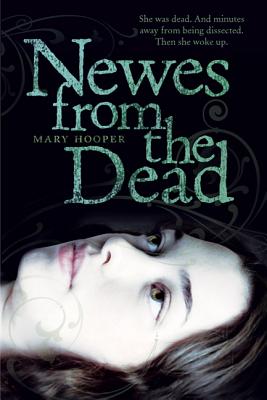
Last night I was telling my husband that I'd just finished reading Newes From the Dead: the YA title based on the true story of a girl who, in 1650, revived after being hung for infanticide.

My husband replied, "Hanged."

I stopped.  Looked at him.  Raised my eyebrows in a well-practiced demand for explanation.

He explained, "When you are speaking of a person who has been killed, they've been hanged, not hung."

"What?"  I was incredulous.  Never heard of that one...but this guy--he's always pulling crazy things like that out of his hat.  He may not plow through books like I do, but he's pretty much brilliant...and honestly has a better brain for remembering grammar terms than I do.

I continued, "I don't think I like that."

He shrugged.

"Anyhow," I said, "she was hung because she gave birth to a stillborn baby when she was 5-6 months pregnant and was accused of murder."

We smiled and went on to discuss the story briefly, as well as scientific theories of the 17th century...both pretty interesting topics.  Then this morning, after spending a little bit of time with my friend Google, I informed him of my findings.

I have no problem admitting that, generally speaking, my husband is right.  He usually is.  I'm resigned to that fact.  When speaking of executions, the word is hanged; everything else gets hung.  We could leave it at that (thank you very much for stopping by, have a nice day,) but I wanted to know if it was a RULE or if it was, like so many things in English, a trend, preference, or even a choice.  My favorite commentaries on the matter were the about.com page, and Grammar Girl's Quick and Dirty Tips.

About.com had me from the first two words.  It said, "For centuries," and I knew I was going to find more than the simplified rule.
"For centuries, hanged and hung were used interchangeably as the past participle of hang. Most contemporary usage guides insist that hanged, not hung, should be used when referring to executions."
Mm, interesting already.  I love finding out the etymology behind the words we use.  English is such a mish-mash of adopted and stolen vocabulary that it is rarely plain and simple.  I loved the example this page cited from Merriam-Webster's 1994 Dictionary of English Usage:
     "Our evidence shows that hung for hanged is certainly not an error. Educated speakers and writers use it commonly and have for many years. . . . " Hanged is, however, more common than hung in writing. It is especially prevalent when an official execution is being described, but it is used in referring to other types of hanging as well. . . .
     "The distinction between hanged and hung is not an especially useful one (although a few commentators claim otherwise). It is, however, a simple one and easy to remember. Therein lies its popularity. If you make a point of observing the distinction in your writing you will not thereby become a better writer, but you will spare yourself the annoyance of being corrected for having done something that is not wrong."
Just my style. (Cue evil grin.  Initiate renegade-grammar-usage sequence.)  Grammar Girl supports this, and also mentions where the word "hang" came from, just in case you are interested. (The emphasis above, by the way, was mine.)

So, while I'm still trying to decide whether to continue saying FebRUary, (because saying FebUary makes me feel like I'm saying Libary, but that R makes me feel like I'm mumbling,) I will also continue practicing the difference between lie/lay (don't know why that one still holds me up) and happily continuing to spell GREY with an E, I will add the task of mulling over this question:  whether being a grammar renegade is worth the "annoyance of being corrected for having done something that is not wrong."

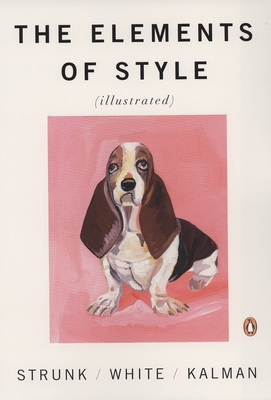
What thinkest thou?  Is it worth it? Are you all just laughing in befuddlement that a person who reads as much as I do could have been ignorant of such a basic thing?  Never fear, I've pulled out my illustrated Elements of Style, and hope to become obnoxiously intelligent shortly.  Or maybe I'll shoot for intelligently smug instead.  Although, I have to admit, blissfully ignorant has its attractions as well.

Sunday, June 26, 2011

Sunday Salon: Turns out it's OK to be Me

Any shy or introverted people out there?  The two things are very different--I used to be painfully shy (it still pops up now and again) but mostly I'm just introverted.  I need some quiet solitude to recharge my batteries and let all of my observations settle down into organized thoughts (as opposed to my husband and youngest daughter who claim that there is only one circumstance in which they prefer to be alone--I'll leave you to puzzle out when that might be).  My life--with a husband that loves to be social and four children that are...well, children--provides continual opportunities to stretch myself and grow, but there are some innate characteristics that one simply doesn't grow out of.

There was a fascinating opinion piece in the New York Times today that discussed how our society tends to think of shyness as an illness.  Prompted by a Zoloft ad, (that seeks to illuminate the difference between being shy and having social anxiety,) the author discusses how our society tends to disfavor introverted or shy personality traits, and points out why this ought not to be.  Introverted people have played a big role in human history (from Moses to Darwin, Proust to Einstein) and yet the idea still prevails that shy people should become more outgoing.  Why this may be is a whole other discussion; I'm just glad to see the issue brought to light.  I'm generally not surrounded by other people who love to discuss the things they are reading, writing, or creating, so this article gave me a morsel of hope, and a renewed appreciation for the book blogging community.  I'm definitely not the most social book blogger around, but I'm okay with that.

As a side note, my family will be exploring the Great Outdoors this week--camping in the Sequoias (south of Yosemite) so it might be pretty quiet around here until next weekend.  Actually, I should have said "camping" because it's not like I'll be in a tent or anything.  I'll be clean, comfy, and cozy in a hotel bed a few miles away from where my parents and my kiddos will be camping.  But it'll be all "Great Outdoors" during the day.  Turns out, I'm okay with that too.

Thursday, June 16, 2011

Art of the Novella (and other Summer Goals!)

Have you seen this challenge?  I'm at least fascinated, perhaps even captivated...and trying to find an excuse (and the momentum) to be an unstoppable bibliomaniac.


Curious – Read 1 novella
Fascinated — Read 3 novellas
Captivated – Read 6 novellas
Passionate — Read 9 novellas
Mesmerized – Read 15 novellas
Obsessed – Read 21 novellas
Fanatical – Read 27 novellas
Unstoppable — Read 33 novellas
Bibliomaniac — Read all 42 novellas

They're cute, they're short, they're written by great authors, (go look at all the titles here,) they're accompanied by prizes, and August sounds like a great month for reading, don't you think?  :)  I'm going to join the challenge, but I'm going to resist going whole hog.  For now.


Other Summer Goals:
Since wrapping up May's reading, I've been trying to decide what my reading goals for the summer should be.  Of course, I'll never reach them, but I love to have something to aim for.  

Today I was sorting through some bookshelves, and am really feeling the need to get through/get rid of some of the Junior Fiction on my shelves.  For the most part, my kiddos aren't interested in Newbery-type JF unless I've read it and highly recommend it.  Which means that my bookshelves are full of books that will never be read unless I read them first...and kids grow quickly, so I'm running out of time.  Since reading through some of these books will help me accomplish two of my other goals (reading the books on my shelves, and reading the Newbery winners) I'm thinking this is a good plan.

There are some other books (for challenges) that I want to have read before school ramps up again after Labor Day:  - Alexander's Bridge,  O Pioneers (Willa Cather Challenge) and Gone With the Wind (Back to the Classics Challenge) at least.

Wish me luck...let summer officially begin!

Sunday, June 12, 2011

Sunday Salon: E-Reading Refined

The e-reading forces converged on me this week, and I am pleased with the results.

Setting the stage was the rise and fall of Amazon and Borders (respectively) and the looming issues about big/small business,  print/virtual books, and the change in how the publishing industry is working in general.  I've been a customer of Amazon's since the dark ages (well, 1997) and have been a fan of the discounted prices and prime shipping, but the more they've grown, the more I've grown disenchanted (and the more my children grow, the more brain cells I have to be able to put towards conscious shopping decisions, which--as it turns out--is a good thing).

Second,  I finally signed up for NetGalley--something I'd resisted because I have enough books on my TBR as it is, but decided to do in order to increase my chances for getting ARCs I'd actually enjoy (a problem I seem to somewhat plagued with)--and realized that I might run into some problems with Kindle compatibility.  Reading on my computer screen really isn't an option for me.  My eyeballs get tired enough as it is.

Third, Unbridled Books, one of my favorite small presses, teamed up with independent booksellers this last weekend and offered 25 e-books for 25 cents each.  I couldn't resist, unsurprisingly, but was so excited that I didn't do my research before buying the e-books, and discovered that Google E-books, (when in encrypted, non-PDF form,) are not compatible with the Kindle. Grr.  It really isn't about the $6.25 I spent on 25 books I wouldn't be able to read...it's irritation that a company as huge as Amazon would seemingly have their customers a bit lower on the priority list than the all-important dollar.

And THEN: Barnes & Noble released their Simple Touch Reader--an e-ink, touch-screen, e-reader that has not only addressed all the issues that made Kindle a better product than the previous Nook, but has done so at a very reasonable price.  I've had my Kindle2 for 2 years, and got to experience a friend's 1st Edition Nook in March, and I have to say that Kindle was far better for usability and battery life.  In the Simple Touch Reader, however, the battery life has been improved, the touch-pad response time is much quicker, and the unit is much more compact (while retaining the same screen size).

The straw that broke the camel's back was Belle.  She mentioned on my post about the Unbridled Book Sale that she was thinking about buying a Nook, even though she already owned a Kindle, and the rest--as they say--is history.  I simply couldn't think of a reason why I shouldn't.  My household is very technology minded, and my husband has been known to upgrade computers and game systems fairly regularly, so why can't the e-readers get in on the action as well?

It wasn't the easiest thing in the world to figure out how to get my Google e-books onto my new Nook, but before long, it was loaded, and I was up-and-reading.  I'm supposed to be reading Beloved (for my book club which is hopefully not tomorrow night) but couldn't not read something on my new toy, so I started reading Small Acts of Sex and Electricity by Lise Haines (not brilliant so far, but entertaining nonetheless).

I'm itching to get off the computer and do some more reading, but before I bail I thought I'd make a quick list of the features that have finally caught the Nook up to Kindle in my estimation:
  - the battery life: it looks like it is now actually comparable to the Kindle
  - weight: the Nook is no longer the heavier option
  - full touchscreen/e-ink combo: best of both worlds (& the e-ink is crisper than the Kindle2)
  - page turning is not only quicker, but done with less effort--a simple touch or swipe on the screen
  - highlighting, adding notes, and using the dictionary are now much quicker and simpler
  - more text options: fonts, sizes, margins, line spacing--personalize it!

After one day of reading, I'm fully aware that I may still be in the honeymoon phase, but so far I am very impressed with the new Nook.  I love the smaller size and the simpler, quicker navigation.  Not to mention that I now have options for obtaining books.  I still adore seeing books on my shelf (and nightstand, and end tables, and anywhere else I can stack them up) up the Simple Touch Reader is a great way to read.  It made for a pretty fun weekend, too. :)

Thursday, June 9, 2011

Outside Influences (Literary Blog Hop)

Literary Blog HopThis week, The Blue Bookcase presents this question for the Literary Blog Hop:

What other outside influences affect your reading experience? Do you think these influences enhance or detract from the experience?


The main outside influence that affects my reading experience is discussion about the book.  This can have both negative and positive effects, depending on the circumstance.

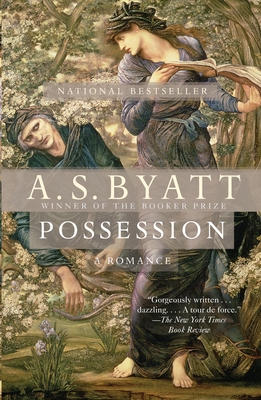
If book-talk comes in the form of hype over a book I haven't read, I'm generally negatively affected...although this tends to diminish if I put enough time between the excitement and when I read it.  If a book has been hyped up, my expectations are elevated to a standard that is hard to reach.  That's why I try to wait before reading super-popular books (part of the reason I've delayed reading Possession...I want to approach it with an open mind!)

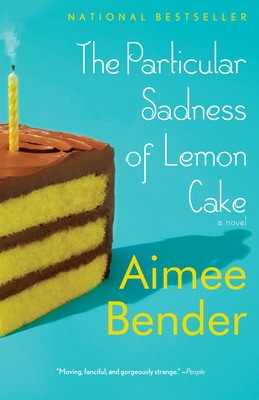
On the other hand, I occasionally read a book that I didn't know much about, and have rather conflicting thoughts on.  This is when a book club or lively blog discussion is really rewarding.  Being able to bounce your thoughts off of someone else, and getting to hear how they interpreted it is a fabulous way to really think it through.  A perfect example of this was when I read The Particular Sadness of Lemon Cake.  I was torn between ambivalence and interest until my book club discussion really helped me think about some of the underlying themes.

So, suffice it to say that I like being able to come to my own conclusions about a book, but I equally enjoy seeing if someone else can change my mind.  Not in a you-can't-change-my-mind-because-I'm-SO-stubborn sort of way...rather, I just love the process of trying on another person's thought process.  Book discussion is tops, don't you think?

Thursday, May 26, 2011

The Reading Life

The last few months have been laced with craziness for me, so I have subsequently found my reading comfort in smaller, quicker books.  A couple of months back I put the classics on the sidelines, and since then have read more regular old Adult Fiction than I have in a very long time.  A lot of that is changing now, however, as work is becoming less stressful and school is nearing completion.  Books that would have seemed refreshing last month are tiring this month.  I think I've actually read too many books this month.  Shocker.  

So I've decided it is a good time to slow down on the speedy books and allow myself some slower reads--something I like to transition into for the summer months anyhow.  Summer break gives me the mental space to be able to put more thought into what I'm reading, as well as spend a bit more time with it.  Here are the books that have been floating around my house lately:

Currently Reading:
Gilead: A Novel
Gilead by Marilynne Robinson
Pulitzer Prize winner that I've been meaning to read for quite a while.  I'm about halfway through, and it is much quieter than I expected.  Still, it continues to pull me in.

Recently Finished:
The Weird Sisters
The Weird Sisters by Eleanor Brown
Didn't enjoy it as much as I was hoping to.  I just couldn't seem to bring myself to care about the characters.  I think I may be biased against books set in the present day.  :(
That Night
That Night by Alice McDermott
An alternate book club selection--some beautiful language/thoughts, but the plot felt somewhat incomplete.

Next Up:
Revolutionary Road
Revolutionary Road by Richard Yates
At least this is what my mood is aiming for at the moment...looks good, doesn't it?
The Stolen Village, Baltimore and the Barbary Pirates
...and maybe this one too--I'm about ready for another NonFiction book, and this one is about Ireland. I can read it and dream of going back. :)

Wednesday, May 11, 2011

Contemplating Success

Defining "success" is not as simple as looking it up in the dictionary.  My dictionary (so hefty it has its own stand) says this:

succeed: to prosper
successful: turning out to be as was hoped for
success: a favorable or satisfactory outcome or result

You see, it's all relative: prosperity, hope, favor, satisfaction.  These are all things that are individually interpreted and personally defined.

I've thought about success before--quite often, actually--but the kicker is that even your own personal definition is likely to be different depending on the context.

As a mother, I base my success on whether I have loved and nurtured to the best of my capability.  As a wife, I feel successful if my husband feels appreciated and valued.  In finances, I think success relates to what you do with what you've been given (not just monetary stewardship, but also time, education, and talent.)

For me, success is intertwined with continued growth and effort.  It is less about the goal than it is about the journey.  Of course, the little bonuses are always nice: a car or house, a happy family, etc. and I'm not discounting those, but there needs to be a balance...you can't base everything on tangible rewards.

One area in which I haven't solidified my opinion of success is in regards to writing.  I love to write--to create in general--but I'm constantly torn between wanting to create for the artistic experience alone, and striving for outside validation.

Ordinary Genius: A Guide for the Poet WithinI was flipping through Ordinary Genius: A Guide for the Poet Within today and ran across this question:
What is your definition of success as a writer?

I had to stop and think about it.  As a writer?  Well, I'd love to be published.  Of course I would.  But that is only one measure of success.  We all know that there is amazing work that remains unpublished, just as well as we know that there is published work that is undeserving.

And there is part of me that feels like I don't want anything less than my best published...and since I'm still growing, still learning, still experimenting with my preferred medium, I may never reach my best.  I waffle...thinking about that goal makes it harder for me to enjoy the journey, makes it easier for that doubt to creep in (the last line from the movie Doubt has been surging through my head lately: Meryl Streep cries, "I have doubts. I have such doubts.")  At which point I force myself to look back and remind myself that it is less about the goal than it is about the journey.

My definition of success as a writer, or as a reader, must be the same as anything else I devote time to: continued growth and joy in the journey.  Perhaps, at some point, the validation and other little bonuses are part of that process...perhaps at some point I am happy enough with my work to seek publication...perhaps at some point I get published.  But perhaps I don't.  And perhaps it is okay to feel successful either way.  

How do you define success in your reading or writing?  Do you work more on tangible goals than I do?  I'd love to hear another perspective--what works for you?
The guide words in my dictionary explain everything:
"succeed" is on the same page as "suck" ...which is why
it is so easy to waffle between the two!

Thursday, April 28, 2011

Swooning for the Literary Blog Hop

Literary Blog HopI'm looking forward to the discussion that emerges from this week's Literary Blog Hop (brought to us by The Blue Bookcase--thanks Ingrid!)  Discuss your thoughts on sentimentality in literature.  When is emotion in literature effective and when is it superfluous?

One of the big reasons I gravitate towards literary fiction rather than general, popular fiction is because the sentimentality and emotion--when present--often feel much more genuine.  One thing that really bugs me in books is manipulation of emotions, (which is funny because in my late teens I absolutely loved Victoria Holt, Danielle Steel, and Mary Higgins Clark whose main purposes--if I remember correctly--were to do exactly that.)  If the emotion and sentimentality in a book does not feel like a genuine portrayal, an artistic expression so to speak, then it's pretty much guaranteed I won't like the book.  Perhaps I just had too much of it and just can't stomach it any longer?  Perhaps that phase in my life is over (the hormones have settled down and so have I?)

My least favorite books last year all had an element of the insincere or implausible, or in some way felt like it was more about the author than the characters...the emotions in them (whatever type of emotions they might be) felt superfluous: Gods in Alabama, The Five People You Meet in Heaven, The Alchemist, 13 Reasons Why.

My most favorite books last year managed to strike me as very genuinely felt, more concerned with expressing emotional feelings than instigating emotional reaction: A Tree Grows in Brooklyn, A Star of the Sea, Speak, The Good Earth.

I don't mind emotion and sentimentality, but it seems rare to find a book that really pulls it off.  Without a personal connection, emotion and sentimentality have no lasting value...feelings are fleeting.  There are enough dramatics and emotional roller coasters in real life...inside a book is where I find the comfort of some intelligent conversation and humor, beautiful language and interesting observations.

Wednesday, April 20, 2011

Coachella 2011

Coachella is a music festival, and has nothing to do whatsoever with books...apart from the fact that it is what kept me from reading, writing, and blogging this last weekend.  It is a music festival that tens of thousands of people attend.  Not only was it crowded, but it was ridiculously hot.  It's by Palm Springs, so I suppose it is fairly normal to be hot, but nature exercised its sense of humor last weekend and temperatures spiked solely for the three days we were there.  Which means that there were tens of thousands of sweaty people there.  Sound fun yet?

I got to see some favorites: Mumford and Sons, The Swell Season, and Freelance Whales, find some new favorites: Flogging Molly, Gogol Bordello, and !!!, as well as listen to many others that are popular right now.  Really there are too many to mention...we managed to see around 40 bands in the 3 days, and I decided that music festivals are best left to the extroverts of the world.  On the bright side, it inspired me to write 3 poems. :)
At the end of the 3 days, Nature apologized for the horrid
heat by rewarding everyone with a spectacular sunset.
As far as books go, I've read some great ones recently that I'm eager to write reviews for.  I'm not sure how much blogging I'll get done before Easter, but I'm crossing my fingers.

I usually keep my language geekishness to myself somewhat, because I'd hate for people to feel like I was making fun of them, but seeing this sign repeatedly (at the vacation rental we stayed at during the festival) finally did me in and I posted it on Facebook.  Something so simple as misspelling "handle" really shouldn't be so entertaining, right? But I just can't help thinking about what poor Handel would think about it.

I hope you all had a great weekend (at much cooler temperatures than the festival's high-90s F) with plenty of reading opportunities.  Enjoy what bits of spring you can find this week!