Showing posts with label Young Adult. Show all posts

Sunday, August 19, 2012

Appalachian Stories - Recommendations Wanted!

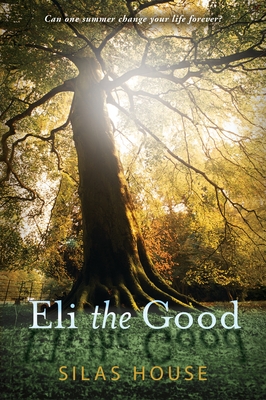
I recently read another book by Silas House which reminded me of how much I connect with his settings.  Eli the Good wasn't quite as Appalachian as his others, but Nature still weighs heavily in the story.

In addition to being his first foray into young adult literature, this book also happens to be great Independence Day reading.  It takes place in 1976, and follows 10-year-old Eli through the course of one summer.

Although the setting felt thoroughly American, the themes are universal.  What defines family?  Why is honesty a vital component of communication?  How do we show—or feel—love and concern?

Absolutely recommended, (although the epilogue didn't quite feel organic to the story,) especially for those who enjoy the coming-of-age aspect.  My enjoyment of the story ended up leading me to a book of short stories that has been on my shelf since August 2004. (Crazy, that.)  Chris Holbrook's Hell and Ohio: originally acquired because I'd enjoyed Silas House's other books.  At that time, newly entrenched in caring for a new infant (for the 4th time, hello) and therefore lacking in extra brain cells, I read only the first story and felt that it was a little slow.  Nothing special.  Reading it again 8 years later, I am entranced.  (I'm guessing that at least part of the reason is that I've taken measures to appreciate short stories, so I simply have more familiarity with the form.)

In the nine stories, coal mining (land development/destruction) is a common theme, as are manners, alcohol, religion. All themes that rang true to me...perhaps because I grew up in a small mountain town (admittedly it was in Northern California's Sierra Nevadas as opposed to the Appalachians, but the lumber mill and logging industry had a similar heavy presence in some respects to the coal mines).  I grew to enjoy feeling "a little closed in by all the trees and mountains on every side."

All the stories are wonderful, skillful, and worth reading.

(As a side note - I had the most visceral reaction (to The Lost Dog) I've ever had to a written work.  My first thought after reading the story was that it didn't say anything, but then immediately I was flooded with memories from my childhood that mirrored the story, and began to get choked up (something I don't often do, especially to the extreme I did) thinking about the fact that somebody else understood, perfectly, those feelings. I just had to stop and cope for a few minutes, I couldn't think about or look at anything else until I'd taken a few deep breaths. Pretty crazy experience!)

Recommendations?
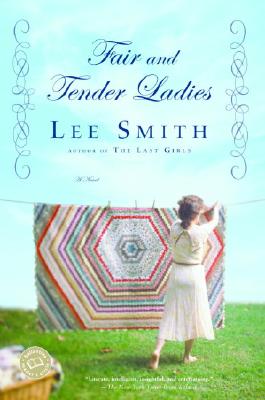
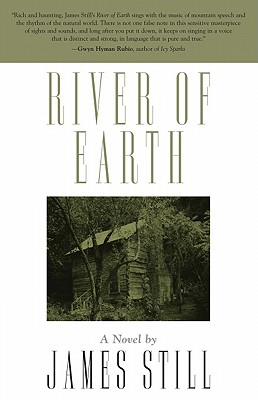
I'd like to put a few books on my wishlist that would be good places to go from here.  Any suggestions?  I think I might have a copy of River of Earth by James Still from back in 2004 when I was on the hunt for Appalachian stories.  I enjoyed Lee Smith's Fair and Tender Ladies a couple years back...that's all I've got.  What've you got?  Recommend me!
Friday, May 11, 2012

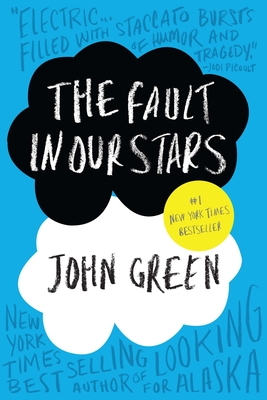
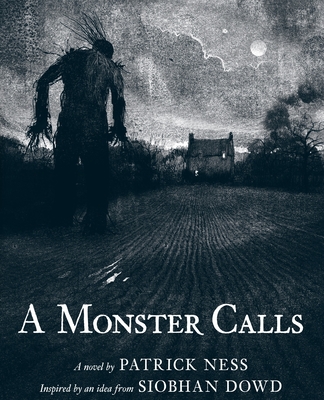
The Fault in Our Stars and A Monster Calls: a Literary Pairing

  • both are books geared towards younger-than-adult people, 
  • both are written by authors whom I hadn't before experienced,
  • both were recommended by fellow bloggers, 
  • both are about cancer and dealing with loss, 
  • both approach the subject from very different, non-traditional directions,
  • both are books that I loved.

The Fault in Our Stars: A Synopsis (via GoodReads)

"Diagnosed with Stage IV thyroid cancer at 12, Hazel was prepared to die until, at 14, a medical miracle shrunk the tumours in her lungs... for now.

Two years post-miracle, sixteen-year-old Hazel is post-everything else, too; post-high school, post-friends and post-normalcy. And even though she could live for a long time (whatever that means), Hazel lives tethered to an oxygen tank, the tumours tenuously kept at bay with a constant chemical assault.

Enter Augustus Waters. A match made at cancer kid support group, Augustus is gorgeous, in remission, and shockingly to her, interested in Hazel. Being with Augustus is both an unexpected destination and a long-needed journey, pushing Hazel to re-examine how sickness and health, life and death, will define her and the legacy that everyone leaves behind."

A Monster Calls: A Synopsis (via GoodReads)

"At seven minutes past midnight, thirteen-year-old Conor wakes to find a monster outside his bedroom window. But it isn’t the monster Conor’s been expecting — he’s been expecting the one from his nightmare, the nightmare he’s had nearly every night since his mother started her treatments.

The monster in his backyard is different. It’s ancient. And wild. And it wants something from Conor. Something terrible and dangerous. It wants the truth.

From the final idea of award-winning author Siobhan Dowd — whose premature death from cancer prevented her from writing it herself — Patrick Ness has spun a haunting and darkly funny novel of mischief, loss, and monsters both real and imagined."

Despite all the similarities listed above about these two books, they are very different stories, and provide very different reading experiences.

John Green lets you know right from the get-go that things are not going to end up well for Hazel and Augustus.  He is blunt about the crappy hand that those with cancer have been dealt, without getting sentimental.  Showing the practical side of the ordeal isn't as depressing at it would seem to be, however, because Green's writing deftly incorporates that other side of humanity: humor.  His characters can be quirky, treating their conditions almost irreverently, but it is exactly that perspective that illuminates the gravity of the situation and connects you to the characters.

Patrick Ness, on the other hand, approaches the subject from an almost opposite angle.  Instead of being all, "Oh hi! I'm a cancer book!" this one sucks you into Conor's internal anguish from the very first words.  As the story unfolds, pieces of the story start to come together and begin to build on each other, telling a fairly simple story in an incredibly layered way.  There's a surprising amount of depth here, making it all the more amazing that it is a gripping, very readable story.  It isn't overtly about cancer, it's about fear and love and being distinctly human.

Green sneaks up on you - making you surprised that you are so invested by the end since you were having fun all along.  Ness captures you from the first word, the first picture - making it impossible to look away.  Green's story encompasses how other lives are affected by cancer - not only the one whose body is playing traitor, but also the family, friends, acquaintances.  Ness shines a light on the pain and confusion that hover beneath consciousness when coming to terms with an unfortunate reality.

While cancer touches many lives on a daily basis, hurt and fear have touched us all.  The wonder of literature is the power it has to touch those hurts and fears and offer some comfort and companionship, whether you're in the midst of it or not.

(Note on Content:  The Fault in Our Stars contains some boyfriend/girlfriend interaction and angst that would make it more of a YA level, while A Monster Calls is suitable for all ages.  My 6th grader adored it to bits and pieces and immediately sold her teacher, librarian, and fellow students on it.)

Wednesday, February 22, 2012

Reading Roundup: Teen Fiction

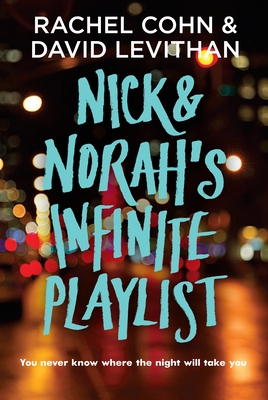
Nick and Norah's Infinite Playlist, Levithan & Cohn
No, I haven't seen the movie, but I did happen to count how many times the lovely little word f**k appeared in the book.  My count may be off, because I was getting a little blurry-eyed, but I can tell you that my copy of the book earned it's very own permanent bookmark.  Not that I care ever so much, but when the book is 183pp, and the count of any four-letter word is over 250...it's a little distracting.

...and this bookmark shall serve to
remind us of the contents therein...
The story is quite good, actually.  It starts when Nick asks Norah to be his girlfriend for five minutes, and continues--in alternating chapters--to show how one [very long] night can be enough to change your focus on life.  I liked the picture of the New York music scene through the eyes of these teens, and I liked seeing them reassess their view on life, but the 'conversational' tone didn't work for me so much.  Levithan does seem to have a gift for story-telling, though, and I will be reading more of his ventures and collaborations in the future.

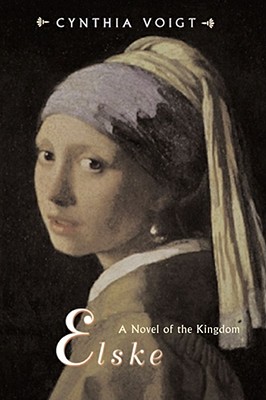
Elske, Cynthia Voigt
Mmm, I love Cynthia Voigt.  Did you read Dicey's Song or Homecoming when you were young?  I remember reading those books and thinking that they were very serious books to be read by so young a person.  Not just because of the topic--Voigt has a special talent for making young people feel important and intelligent.

The "Kingdom" series begins with Jackaroo, though each book stands alone and needn't be treated as a series.  They combine fairy-tale fantasy with a Middle Ages flavor, all the while telling a meaningful, exciting story.  The characters are about as real as you can get, especially considering the Robin-Hood-esque nature of the setting.  Each story is so well told that it feels more like historical fiction than fantasy.

Best part?  She's written a gazillion books, so there's more where this came from.

The Invention of Hugo Cabret & WonderStruck, Brian Selznick
 

Selznick's books are something special.  They're simple, yet complex, quick to read while still feeling like an accomplishment.  I actually read Wonderstruck first, and decided that both of these books were perfect examples of the kind of younger-reader-book that would be a joy to have on my shelf regardless whether I have kiddos living with me or not.  The size of the book, the quality of the art, the magnetism of the story, and the relatively short time commitment leave you with a sense of magic and wonder regardless of your age.

The historical component in Hugo was captivating, especially how it was tied in with the drawings--and how interesting to see it turned into a film.  Have you seen Hugo yet?  My family is both curious and a little afraid it won't live up to the experience of the book (really, how could it?)  Wonderstruck was not quite as good, perhaps, but still unique and very enjoyable. 

Saturday, September 24, 2011

She's Been Hanged

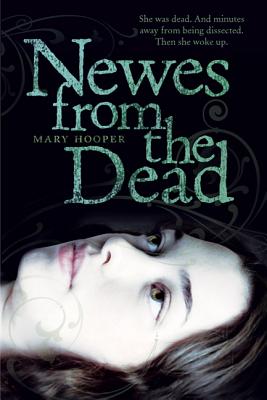
Last night I was telling my husband that I'd just finished reading Newes From the Dead: the YA title based on the true story of a girl who, in 1650, revived after being hung for infanticide.

My husband replied, "Hanged."

I stopped.  Looked at him.  Raised my eyebrows in a well-practiced demand for explanation.

He explained, "When you are speaking of a person who has been killed, they've been hanged, not hung."

"What?"  I was incredulous.  Never heard of that one...but this guy--he's always pulling crazy things like that out of his hat.  He may not plow through books like I do, but he's pretty much brilliant...and honestly has a better brain for remembering grammar terms than I do.

I continued, "I don't think I like that."

He shrugged.

"Anyhow," I said, "she was hung because she gave birth to a stillborn baby when she was 5-6 months pregnant and was accused of murder."

We smiled and went on to discuss the story briefly, as well as scientific theories of the 17th century...both pretty interesting topics.  Then this morning, after spending a little bit of time with my friend Google, I informed him of my findings.

I have no problem admitting that, generally speaking, my husband is right.  He usually is.  I'm resigned to that fact.  When speaking of executions, the word is hanged; everything else gets hung.  We could leave it at that (thank you very much for stopping by, have a nice day,) but I wanted to know if it was a RULE or if it was, like so many things in English, a trend, preference, or even a choice.  My favorite commentaries on the matter were the about.com page, and Grammar Girl's Quick and Dirty Tips.

About.com had me from the first two words.  It said, "For centuries," and I knew I was going to find more than the simplified rule.
"For centuries, hanged and hung were used interchangeably as the past participle of hang. Most contemporary usage guides insist that hanged, not hung, should be used when referring to executions."
Mm, interesting already.  I love finding out the etymology behind the words we use.  English is such a mish-mash of adopted and stolen vocabulary that it is rarely plain and simple.  I loved the example this page cited from Merriam-Webster's 1994 Dictionary of English Usage:
     "Our evidence shows that hung for hanged is certainly not an error. Educated speakers and writers use it commonly and have for many years. . . . " Hanged is, however, more common than hung in writing. It is especially prevalent when an official execution is being described, but it is used in referring to other types of hanging as well. . . .
     "The distinction between hanged and hung is not an especially useful one (although a few commentators claim otherwise). It is, however, a simple one and easy to remember. Therein lies its popularity. If you make a point of observing the distinction in your writing you will not thereby become a better writer, but you will spare yourself the annoyance of being corrected for having done something that is not wrong."
Just my style. (Cue evil grin.  Initiate renegade-grammar-usage sequence.)  Grammar Girl supports this, and also mentions where the word "hang" came from, just in case you are interested. (The emphasis above, by the way, was mine.)

So, while I'm still trying to decide whether to continue saying FebRUary, (because saying FebUary makes me feel like I'm saying Libary, but that R makes me feel like I'm mumbling,) I will also continue practicing the difference between lie/lay (don't know why that one still holds me up) and happily continuing to spell GREY with an E, I will add the task of mulling over this question:  whether being a grammar renegade is worth the "annoyance of being corrected for having done something that is not wrong."

What thinkest thou?  Is it worth it? Are you all just laughing in befuddlement that a person who reads as much as I do could have been ignorant of such a basic thing?  Never fear, I've pulled out my illustrated Elements of Style, and hope to become obnoxiously intelligent shortly.  Or maybe I'll shoot for intelligently smug instead.  Although, I have to admit, blissfully ignorant has its attractions as well.

Friday, January 7, 2011

Books for Christmas and my Intro to Graphic Novels

I always get my kiddos at least one book for Christmas, whether they like it or not (they usually do).  Since I want them to actually read the book, I do my best to find something that they wouldn't necessarily choose, but will be interested in all the same.

Skippyjon Jones in the DoghouseMy 6 year-old daughter has recently been introduced to SkippyJon Jones, so she received SkippyJon Jones in the Doghouse.  This little Siamese cat has a huge imagination and is convinced he is a chihuahua.  These books make for some fun reading for any age, my girls especially like the pet names that Mama Junebug Jones calls her little ones.

The Name of this Book Is Secret (Secret Series)My 10 year-old daughter and my 11 year-old son are at pretty different reading levels.  She has difficulty really focusing when reading silently, and I probably should have considered that a little more when choosing her book.  I picked The Name of This Book is Secret, (which I haven't yet read,) and it seems that the size of the book, at  384 pages--something I neglected to notice when shopping online, shame on me--is slightly intimidating to her.  In addition, she is having a hard time getting into the writing style.  I may have to read it aloud to her, or simply pre-read it so I can help her process it by answering any questions.  It looked like the humor and mystery would be right up her alley...I have yet to see.

J.R.R. Tolkien Boxed Set (The Hobbit and The Lord of the Rings)My 11 year-old son, on the other hand, just finished reading The Lord of the Rings and the Hobbit.  Wait, let me repeat, I don't think you realize how impressed I am with this guy: My 11 year old just read The Lord of the Rings!!  How cool is that?  And you know what he said when I asked him what he was going to read next?  He got a little teary and said he just wanted to read it all over again, that it felt like he'd lost a friend.  Is that the sign of a good book, or what?  Makes me ashamed of myself: when I was assigned to read the Fellowship of the Ring in high school I only made it through about 40 pages before I was bored to tears.  Guess what he's started reading now?  Robinson Crusoe.  He says that it was a little boring to begin with, but still he pushes on.  He was talking to me today about the similarities it has to Swiss Family Robinson, so we got to do some research on that end (turns out, SFR was inspired by Crusoe...was actually the author's way of telling his children the stories in Robinson Crusoe while adding some spiritual/moral guidance.)  My little guy amazes me.
Millions
Anyhow, while he is a great reader, with a great attention span, vocabulary, and comprehension skills, it is somewhat difficult to get him interested and convince him to read a specific book in the first place.  For him I chose Millions.  He'd read Cosmic, also by Frank Cottrell Boyce, earlier this year and loved it.  That was enough to convince him he'd enjoy this book.  And he did, in one night.  He insists I need to read both books.  I probably should.

My 14 year-old son is a good reader, but his eyes are bigger than his stomach.  He loves to have a book collection, but actually buckling down and reading them all kind of fades into the more important matters of playing guitar and chatting on Facebook.  So instead of getting him a big fat book for his collection, I thought I'd introduce him (and thereby myself as well) to the world of graphic novels (outside of manga, which he occasionally enjoys).  After scouring book blog recommendations and Amazon suggestions, I settled on two titles: Gray Horses and Smile.
Gray Horses
Gray Horses is really about the art.  The story is a quiet one, about a French Exchange student in America.  The illustrations are all two-color, which gives it a more serious, artsy feel, and the story is almost more imagined than told.  I loved how the girl's thoughts (which were in French, because, well, she was French) were translated into English.  It was simple, a slim 112 pages, but inspiring.

SmileSmile, on the other hand, has full color illustrations, is longer (at 224 pages,) but still pretty quick to read.  The illustrations are more cartoon like (almost like Fox Trot comics) but very expressive and well done.  There is much more detail in the story-line, and provided a great contrast to Gray Horses.  While Gray Horses was interesting, and an interesting study in art and graphic novels, Smile was more widely sought and appreciated by my family.  The only one who didn't pick it up and read it straight through was my 6 year-old...and, well, that's understandable.  Everyone enjoyed it, even my husband (shocker!  he must have really been on vacation if he found the time to sit down and read!).  This book actually convinced my 10 year-old daughter that she didn't want braces after all, even if she does think they look neat.

My foray into graphic novels was enjoyable.  I liked seeing the two very different examples of what's out there.  While I don't see how one could exist on graphic novels alone, I can understand the allure.  They provide a quick, engaging escape, and are by no means necessarily less thought out than other fiction.  Have you read any graphic novels lately?

Wednesday, January 5, 2011

The Absolutely True Diary of a Part-Time Indian by Sherman Alexie

The Absolutely True Diary of a Part-Time IndianTitle: The Absolutely True Diary of a Part-Time Indian
Author: Sherman Alexie
Pages: 288
Published: 2009 Little, Brown & Co. (orig. 2007)
My Rating: 4 stars

I didn't really know what I was getting into with this book, I just knew that: 1.) I'd seen some great reviews of it from a couple different book bloggers, 2.) it looked entertaining, and 3.) I was inside a book store (which means, of course, that I had open arms: hoping that more books would manage to jump into my arms than the specific titles I was there to buy.)  This little spur-of-the-moment escapade paid off, as the book turned out to be not only entertaining, but also held a good balance of humorous prose and thought-provoking circumstances.  It does seem difficult to find funny books that are written well and leave you mulling about them afterwards, doesn't it?

Classified as Young Adult, reading this book felt more like being in my 14 year-old son's head than any other book I've read, or movie I've seen.  This made it a bit uncomfortable for me at moments--I'm a girl, I'm a mom, I don't want to visualize my son's personal, private thoughts and actions--but the fact of the matter is that the portions of the book with potential to make an adult uncomfortable are the very parts that teens will identify with, allowing them to consider the other things the book is saying with more openness and trust.  I can easily see how some of the content in this book could cause controversy, making some moms reluctant to put this book in the hands of their teens, but I think that it is important to recognize that a parent's discomfort does not necessarily equal inappropriate material.  (The books mentions masturbation, racial comments and prejudice, and what could seem a shallow look at eating disorders and other domestic problems.  I'm just saying, consider the source, the audience, and the intent.)

The Absolutely True Diary of a Part-Time Indian is largely autobiographical, which makes the observations about life on an Indian reservation all the more interesting.  If you've ever wondered how life is for an Indian in America today, this shows a vivid picture of the loyalty and community contrasted with the self-destruction and stagnancy that life on a reservation entails.  Junior, the 14 year-old main character, goes through many difficult things, but manages to retain some vision and humor.  One of the charming things about this book is being able to see Junior's sketches and drawings.  These are his way of coping and expressing himself, and they make the book that much more unique and enjoyable.

The book doesn't go out with a bang, it has a pretty quiet ending, but I think it worked well.  There is so much going on in the book, that the soft ending allows your mind to drift into thought instead of directly moving on to something else.  Overall I was entertained, impressed, and inspired to look into more of Sherman Alexie's work.  And willing to put this into my 14 year-old son's hands.

Sunday, October 17, 2010

Prisoners in the Palace by Michaela MacColl

Prisoners in the Palace: How Princess Victoria became Queen with the Help of Her Maid, a Reporter, and a ScoundrelTitle: Prisoners in the Palace
Author: Michaela MacColl
Pages: 352
Published: 2010 Chronicle Books
Read For: LibraryThing Early Reviewers
My Rating: 3.5 stars

Hey, what a pretty cover!  I'm so glad that this historical novel has an illustration rather than a photo on the cover--those photo covers bug me.  Better than that, however, is that its beauty is more than skin deep.  It is, admittedly,  "A Novel of Intrigue and Romance" geared toward the Young Adult audience, but it is also well researched and generally well written.

This is the story of Liza, who lost her chance for a debut into London society in 1836 when she was left orphaned and penniless in one fell swoop.  She has the good fortune to become Princess Victoria's personal maid in what turns out to be the year before Victoria becomes Queen.  It's a great little introduction to Queen Victoria for those who are unfamiliar (and aren't up to reading a vapid nonfiction account.)

It has a nice balance of elements as far as Young Adult Historical Fiction goes.  The intrigue isn't too vile or intense and  the romance isn't completely unrealistic and mushy-gushy, while at the same time it keeps you turning pages.  There is a good amount of historical information enmeshed, while the action keeps going.  (Except for an extremely conspicuous comment about Boxing Day--which shall remain unquoted--the history behind the story was largely unobtrusive. And there are notes and resources in the back, which was a great addition.)

The Young VictoriaThe character and plot developments were somewhat weak.  At some point I realized that while it was a page-turner, I wasn't really waiting for any great payoff or discovery.  Likewise, the characters were interesting, but I wasn't really wrapped up in their dilemmas.  It even took me awhile to realize that the main love interest was just that--I viewed him as a boy instead of a man of qualifying age and status. Still, it is an entertaining, interesting book, one that I enjoyed a bit more than I thought I would.  If you enjoyed The Young Victoria, (I kept picturing the actors in this film while reading the book) or are interested in Queen Victoria in general, this book is a nice diversion.

Thursday, October 14, 2010

The Goose Girl by Shannon Hale

The Goose Girl (Books of Bayern)Title: The Goose Girl
Author: Shannon Hale
Pages: 383
Published: 2003 Bloomsbury
My Rating: 3 stars

Are you a fan of fairy tales?  Have you ever heard the Brothers Grimm tell the story of The Goose Girl?  Whether you have or have not, if you enjoy hearing a fairy tale retold, you will likely enjoy The Goose Girl.  Although the storyline is quite predictable, even without prior knowledge of the story, it remains a captivating tale.  Shannon Hale is a wonderful storyteller, this book being similar to Gail Carson Levine's or Jessica Day George's fairy tale books.

There are other books following The Goose Girl, continuing the series: Enna Burning, River Secrets, and Forest Born.  Assuming these three are similar to the first, I would say that these are just about perfect for the older Junior Fiction reader.

The reason I picked this book up is two-fold.  I knew that Shannon Hale had won a Newbery for Princess Academy (which I've not yet read) and I love Alison Jay's artwork.  Beautiful!  The Goose Girl was a great, must-finish-tonight type of book, one that I'll be sharing with my daughters someday.

ABC: A Child's First Alphabet BookListen, Listen!Red, Green, Blue: A First Book of ColorsIf Kisses Were ColorsPicture This...: A Child's First Picture BookThe Nutcracker