Showing posts with label Historical. Show all posts

Sunday, August 3, 2014

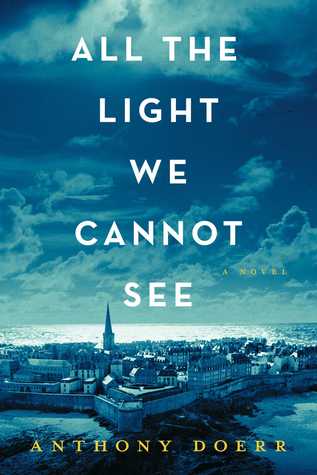
All the Light We Cannot See

Open your eyes and see what you can with them before they close forever.

I'm stingy with my 5-star ratings.  Sometimes I regret that and try to change, but then a book like All the Light We Cannot See comes along and simply deserves to stand above the rest.  If I weren't stingy with my 5, I'd have to break the rules and give this a 6 or 10 or 100 and that's a spiral I'm not ready to slide down.

Doerr's new book came to me in a Powell's Indiespensable shipment.  I didn't know much about it, except that it told the story of a blind French girl and an orphaned German boy as their lives converged during World War II. (And that it has short chapters.  I love short chapters.  Makes me feel so accomplished.)

From the start, the mood is magic.  Doerr illuminates the small thoughts and actions that create how a person or a place feels. It was familiar, and yet completely new.  The settings were vivid, and the characters were whole, genuine people. Themes run through the book so seamlessly that you can give them as little or as much attention as you want.  The writing is poetic but not heavy (nor too sparse). There is family and love, action and mystery, good and evil. There is literature, science, art, history and technology. The story switched back and forth between different times, yet remained organized and easy to follow.

It seems big enough to contain everything anyone could ever feel.

Looking back at World War II, it is easy to wonder how it was possible.  How did the Germans go along with this plan? How did people let this happen? Why didn't people stand up and object? When this question is taken out of the philosophical, however, it is easy to see how human nature compartmentalizes actions and events in order to cope with reality. From the way Marie-Laure adjusts to being blind in a city the size of Paris with only her father to help her, to Werner's ambitions to escape the fate of the coal mines that claimed his father's life, we see very real examples of how difficult it is to accurately assess the big picture and apply it to your life.

I recommend this book heartily! It's been a long time since I've read a novel as complete and filling as this.

Wednesday, June 19, 2013

The Worst Hard Time and The Dust Bowl

"All those short lives..."
-- my 8 year old's reaction to The Dust Bowl by Ken Burns

I've been on a big early-1900s kick lately, from Prohibition and the Great War to the Dust Bowl, the Jazz Age and the Great Depression.  It's been great fun so far - I'm learning so many things! I'm reading The Grapes of Wrath for the first time (no idea how that happened) and always keeping my eyes out for more must-read literature from the years around the 1920s.

One of the most accesible sources I've come across is the PBS documentary, The Dust Bowl.  Ken Burns did a wonderful job giving an intriguing and picturesque overview of the catastrophe.  It left me shocked and amazed, and hungry for more information...some of those pictures and videos are simply unbelievable.

The film wasn't enough for me, so I then read The Worst Hard Time by Timothy Egan.  This book is about the people who stayed behind, the people who "hunkered down out of loyalty or stubbornness, who believed in tomorrow because it was all they had in the bank."  I have two sets of grandparents that lived through the Dust Bowl and came to reside in Northern California and Oregon, so the struggles described were rather personal for me.
"Nothing that you see or hear or read will be likely to exaggerate the physical discomfort or material losses due to these storms.  Less emphasis is usually given to the mental effect, the confusion of mind resulting from the overthrow of all our plans for improvement or normal farm work, and the difficulty of making other plans, even in a tentative way."
-Caroline Henderson, 1935
One thing that surprised me (for some reason) was the pervasive prejudice.  The book didn't dwell on it, but it's always surprising to me to learn how deep-rooted and equal-opportunity this prejudice is.  Was there ever a time when America was actually the embracing, welcoming, free country that I like to imagine it was?  The 1930s were full of spite for many different groups of people:
  • Black Americans (of course...signs in/near Oklahoma read "Black Men Don't Let the Sun Go Down on You Here") 
  • Native Americans (no surprise...the bison were exterminated "as a way to ensure that no Indian would ever wander the Texas Panhandle") 
  • Volga Germans (others tried to "pass an ordinance prohibiting the language from being spoken in the city limits") 
  • Jews (people said they were "to blame for the bad times - that they did not belong in this country") 
  • Italians ("the 'low grade races' of southern Europe" were a "threat to civilization")
  • Mexicans ("cities were shipping Hispanics out of the country") 
  • the People Who Stayed ("They are simply, by God's inscrutable will, inferior men" -H.L. Mencken)
  • the People Who Left ("Okies and Dogs Not Allowed Inside")
Surprisingly, I don't think the Irish or any Asian countries were mentioned...but then again, this was only one book.

I was impressed by how well The Worst Hard Time was organized.  Continuity and clarity are vital in nonfiction, and Egan does it well.  Not only that, but the people were easy to remember and follow, and the facts were interesting and well-presented.  It's hard to ask for more out of non-fiction!

There are too many interesting things to start talking about all of them (such as the dangers of wind-generated static electricity and dust pneumonia) so I'll just say that if you have a passing interest in the Dust Bowl, both Ken Burns and Timothy Egan have done a great job with such a dry topic. Next up for me (other than Grapes of Wrath) is Whose Names are Unknown by Sanora Babb - excellent reading so far!

Monday, July 23, 2012

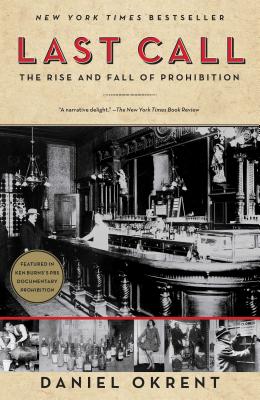
Last Call: The Rise and Fall of Prohibition

I don't usually blog mid-book, (I guess I'm a completed-project kind of girl,) but I did talk about this one midway because there was too much fascinating information to keep it all to myself.  So much, in fact, that I've worked this book into just about every conversation I've had in the last 2 months.  Because of this, I've had to make a smidge of an exception in my final rating (usually I reserve my 5-star ratings for books that I can't find any fault with, but the conversation application was like super-extra-credit here and nothing less than 5 stars would be accurate.)

My complaint is minor, actually: in a perfect world, a few of the pages about political machinations would have been swapped for more info about the more titillating descriptions of speakeasies, flappers, and social life (these aspects were addressed, just not in the ratio I yearned for).  Admittedly, Okrent is not ignorant of this: "The most familiar legacy of Prohibition might be its own mythology, a body of lore and gossip and Hollywood-induced imagery that comes close enough to the truth to be believable but not close enough to be...well, true."

What it is, if not the source for all the gossip and lore surrounding the 14 years Prohibition lasted, is the most thorough and engaging history of the era when America transitioned from rural to urban (and all the changes that entailed) that I've come across.  I loved discovering how many different issues were tied into this thing that we label, simply, Prohibition.  There's the conflict between rural and urban lifestyles, federal government's role in the individual's life, women's suffrage, the federal budget and income tax, immigration and racism, classism, religion, continuing resentment from the Civil War, - the list goes on and on.  This book is the WHY that always seems so out of reach, and the amazing thing is how enjoyable and attainable the author has made it.

If you hold the slightest interest in American history, you won't regret setting aside a little time for this book.  Highly researched, well organized, and a joy to read, this is what history should be.  You'll meet forgotten famous people like Wayne Wheeler and Mabel Willebrandt; you'll discover the origins of powder rooms, booze cruises, Las Vegas, NASCAR, and tourism in the Bahamas.  I could talk about it for days, but instead I'll leave you with a few brief excerpts and a strong encouragement to check it out for yourself.
"The connection between liquor and politics was not a new one.  When twenty-four-year-old George Washington first ran for a seat in the Virginia House of Burgesses, he attributed his defeat to his failure to provide enough alcohol to the voters."
"The booming prescription trade had been accompanied by a dawning realization among America's physicians that alcoholic beverages were in fact useful in treating twenty-seven separate conditions, including diabetes, cancer, asthma, dyspepsia, snakebite, lactation problems, and old age."
"It was a later edition of the KKK that focused its venomous loathing on black people; this version had a special hatred for Jewish and Catholic immigrants.  The Klan, which supported woman suffrage in behalf of Prohibition, in turn supported Prohibition as a weapon against the immigrants. [...] In many towns there was little distinction between membership in the Klan and in an ASL (American Saloon League) affiliated church."
"Wrote newspaperman Malcolm Bingay, 'It was absolutely impossible to get a drink in Detroit unless you walked at least ten feet and told the busy bartender what you wanted in a voice loud enough for him to hear you above the uproar.'"
"It was one thing for Pennsylvania legislature--any legislature, really--to give militant drys the laws they wanted, but quite another to provide the funds necessary for their enforcement."
"In 1925, when The Great Gatsby was published, the meaning of "drug-stores" was as clear as gin."

Thursday, April 19, 2012

A Second Round of Junior Lit

I have so many books that I want to talk about, (and yet, ironically, haven't been blogging much lately,) but I thought I'd better to a recap of the Junior Lit I read last week...especially as I've decided to put that challenge on hold midway through.  I'm planning on completing it next month, but just really needed to mix up the length and complexity of my reading diet!

I already talked about Lincoln: A Photobiography by Russell Freedman - an enticing overview of Lincoln's life that I'm going to follow up with Team of Rivals.  Thanks for the suggestions!  I read 4 others before I threw in the towel and sank into My Antonia instead:

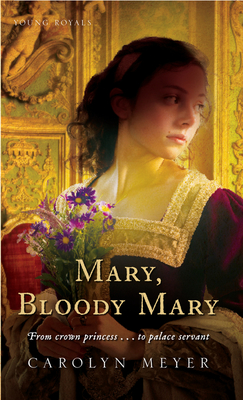
Mary, Bloody Mary by Carolyn Meyer

We know the story of Henry VIII from just about every angle, but we get to hear Mary's side of the story in this piece of Junior Historical Fiction.  Mary's voice was strong and true, and she told her story in such a way that I couldn't help but identify with her.

The drastic change from being her father's pet to being ostracized and disowned, withheld from her mother and everything she held dear, left Mary wounded and vowing to one day become who she was born to be: the queen of England.

Not only would this be a good introduction to how thoroughly the king ruled in that day and age, but it's a plausible and enjoyable look at a familiar story from a less popular point of view.  I'm no great expert on Tudor history, but all the bits of information jived with everything else I've read. (4 stars)
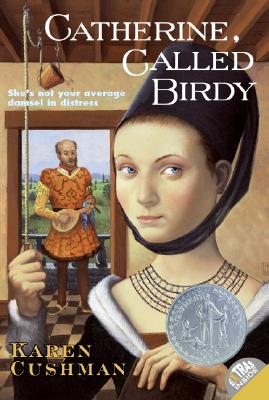
Catherine, Called Birdy by Karen Cushman

I was surprised to realized that this was the 3rd book I'd read by Karen Cushman.  First was The Midwife's Apprentice (a delightful Middle Ages tale) followed by The Ballad of Lucy Whipple (California Gold Rush era).  Unfortunately, the delight and novelty didn't survive past my first encounter.

Reading Catherine, Called Birdy seemed to be the dowdy, lesser-developed version of The Midwife's Apprentice.  I liked that it gives you a fun overview of how life worked for the daughter of a lord, and there were some funny parts throughout, but I didn't find it as enjoyable.  After reading Cushman's other stories, Catherine was a rather typical heroine.

Still, for a humorous, somewhat irreverent romp through castle life in the Middle Ages, this quick book is worth the read. (3.5 stars)
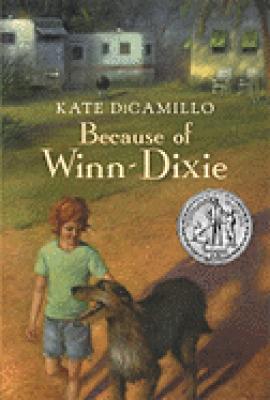
Because of Winn-Dixie by Kate DiCamillo

Here's another title that happens to be the 3rd book I've read by the author, and what a different experience than the one above!  I've loved everything of DiCamillo's I've read.  They combine easy-to-read writing with deep themes and characters that are easy to identify with, all within a high-interest plot.  Additionally, all three books of hers that I've read have been rather different in structure and tone - they aren't formula stories.

I'm sure you've heard of this title, but if you haven't read it, I'd recommend giving it a few minutes of your time (it won't take much more than that).  Or better yet, curl up on the couch and read it aloud to a kiddo or two.  I think there's something to enjoy at a variety of ages.  It's a nostalgic,  heartwarming tale grounded in reality. (4 stars)
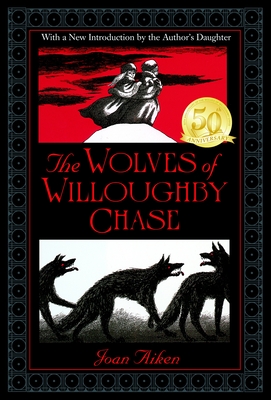
The Wolves of Willoughby Chase by Joan Aiken

For some reason I always thought this book took place in Russia.  The fur caps, the wolves, and the snow seemed like a perfectly Russian combination.  It doesn't take place there, however, (unless Russia used to be quite easily reachable by train from London, an alternate history that's fun to imagine,) but once I came to terms with that I found a very enjoyable story.

An old-fashioned (meaning there are orphans involved) sort of children's mystery (meaning it's straightforward and not always entirely plausible), this tale kept the interest high throughout.  I enjoyed reading about the places and people involved, even though it was a very black & white/good vs. bad sort of struggle.  It held the magical innocence of A Little Princess and the independent adventure of the Boxcar Children - I would have loved it as a child.  As an adult, it was a bit too simple or innocent or something, but definitely fun enough to have earned a spot on my Junior Lit shelf.  It's one I'd be more than happy to recommend to kiddo or two. (3.5 stars)

Sunday, April 15, 2012

Sunday Salon: Lisa See & Abraham Lincoln

Lisa See and Abraham Lincoln might be a bizarre combination, but those are two of the people currently lurking in the literature side of my brain.  I need some help sorting it all out and getting suggestions...what do you think? Are you up for helping me out?

My dilemma with Lisa See is simple.  I've refrained from reading her because she seems to be so popular, and the topic didn't pique my curiosity.  However, Dreams of Joy is the next pick for book club.  So now I need to know: should I read Shanghai Girls first?  Dreams of Joy is the sequel, right?? I actually own Shanghai Girls (someone passed it on to me) so the answer should seem obvious, but then enters my moderate lack of interest and my limited time frame...decide for me??


I'm currently in the middle of a personal Junior Lit challenge, and I think I need a break from quick books.  They're making me impatient!  That seems a little backwards to me, but there it is.  I read enough on a topic to get me interested, and then it's over and I'm off to the next book.  I read The Wolves of Willoughby Chase, and it reminded me of the story about  wolves in My Antonia...next thing you know, My Antonia is on my nightstand begging to be read.

Likewise with Abraham Lincoln.  I read Lincoln: A Photobiography by Russell Freedman and really enjoyed it.  The information was familiar to me, but I loved how it was written, and the photos were a wonderful bonus.  I'd recommend this for children wanting to learn about Lincoln, as well as adults interested in a peek beyond the legend.  However, it was so good that it left me wanting to know more, more, more!

Do you have a book (fiction or nonfiction) about Lincoln that you would recommend to me?  I've read (a couple times) Love is Eternal by Irving Stone: a biographical novel about Abraham and Mary Todd Lincoln, and that also left me wanting more.  I recently bought Lincoln: Life Size, which will help stall my urge a bit, but I'd like something meatier.  Suggestions?


I may change the structure of my Junior Lit challenge...instead of plowing through all 15 books in April, perhaps I'll pause to add in some extension reading and then finish in May.  The more I think about that idea, the more I like it.  Rereading My Antonia....mmmm...sounds good to me.


Sunday, February 5, 2012

Unbroken and MAUS: WWII Nonfiction

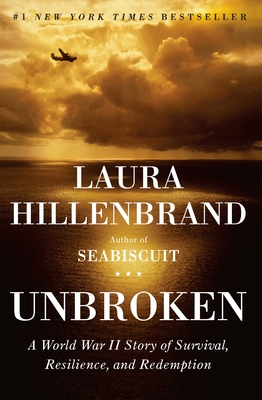
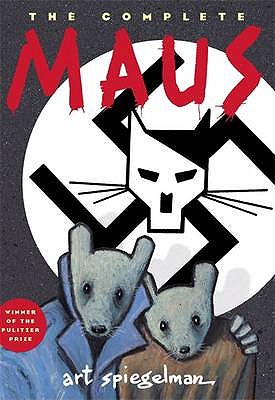
I seem to have found myself on a kick of WWII nonfiction, starting the year with Unbroken, and quickly following that with The Complete MAUS, and eager to begin Night.  Unbroken and MAUS address different parts of the war, the Pacific theater and the Holocaust, making for an interesting, well-rounded perspective.
I wasn't planning on reading Unbroken.  It was one of those books that had gotten so many amazing reviews that I instantly felt skeptical.  That didn't stop me, however, from giving the book to my dad for Christmas.  His dad had flown in the same type of plane (B-24) in WWII as Louis Zamperini (albeit in a different location) which made the story all the more interesting to him.  He began reading it and telling me how interesting it was at about the same time I found out that Zamperini would be coming to my son's high school to speak.  That was something I didn't want to miss out on.  Not only did I buy the book, but I also started an Audible.com trial: when I couldn't read, I listened; when I couldn't listen, I read.

Unbroken is quite a page-turner.  I had to keep reminding myself that these were actual events.  Some of the events in the Pacific Ocean reminded me of Life of Pi as far as the implausibility, but this was real.  Unbelievable, except that there's a guy who lived to tell about it.

Not a great photo, but that was Louie in
the wheelchair--a fab fellow!
If you've hung around me enough, you may remember that I'm not a big memoir person, nor am I an ocean person.  Fortunately, these weren't the slightest factors while reading the book.  Of course, it isn't a memoir, but it doesn't even reek of the touchy-feely vibe I occasionally get from memoirs.  And the ocean? Maybe it was because there weren't a bunch of nautical terms, maybe because he was enduring it instead of enjoying it, but I wasn't bothered at all.

There were a couple of points that I was afraid the writing was going to bog down, (I thought that his childhood and the POW sections were both a tad longer than they needed to be,) but it never once got to the point that I wanted to set the book down.  It's a book that I'd recommend to all but the most sensitive readers.

Seeing Louis Zamperini and hearing him speak was such a good experience.  He just turned 95, but he is still so quick and funny. He talked of his youthful shenanigans, of meeting Hitler at the 1936 Olympics in Berlin, and his too-eventful time in service.  He told of a time when he was asked if his time as a POW had any positive outcomes, and he remarked that it certainly had--it had prepared him for 55 years of marriage!

I heard about The Complete MAUS sometime last year when I saw it on a list of "must-reads" for high school students.  My eldest is in 10th grade this year, and so my ears were wide open for more engaging books on important topics (his school's required reading seems to be very Shakespeare oriented--which is fine except for the fact that the imbalance means the kids are missing out on so many other wonderful experiences.  It's up to me to make up for that!  Good news for me is that my influence doesn't end after his senior year!)  I'm still trying to get my 15 year-old to read this, but my then 12 year-old did read it and was greatly impacted.

Perhaps it is inevitable, more than 50 years after the Holocaust, to feel like you've heard it all before--though the story doesn't get old, when MAUS is lumped together with all the other books about the topic, this one doesn't feel quite as shocking, quite as big--but it is important nonetheless.  To stop reading about the Holocaust is to say that these people's stories don't matter, that the people themselves don't matter.  By keeping the story alive, and making it new for each generation, you are honoring the lives of all those affected by the trauma.

(photo credit/more about Spiegelman)
Seeing the story through my son's eyes reminded me what it was like to hear of Auschwitz for the first time.  While MAUS deals with the generational affects of the Holocaust almost more than with the events themselves, it gives a very realistic picture of Nazi Germany as well as the lasting consequences.

If you haven't ventured into graphic novels, this is a good place to start....combine some history with a new format and see what happens.  The story is full of things to think about--more contemplative than shocking, more layers and depth than you might think.

Friday, October 28, 2011

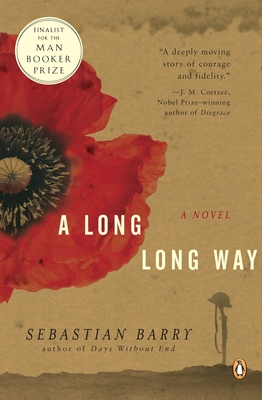
A Long Long Way by Sebastian Barry


He was born in the dying days.

And so opens this amazing story of young Willie Dunne.  This may be the most important novel I've ever read; it's certainly one of the best.  Awarding my own 5 measly little stars makes light of the experience, since I still get teary whenever I think about the book.  It doesn't seem fair that I have no one to discuss this book with, so I'm hoping one of you has read it!

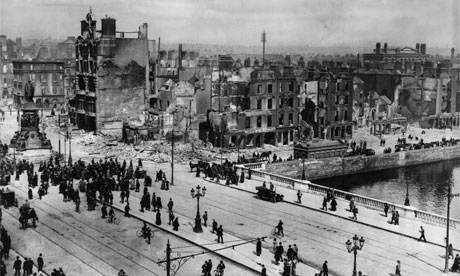
It is a book of the Great War: the First World War: a war of horrific scope and tragedy that is often overshadowed by WWII.  This isn't about the entire war, though, it focuses on the Irish boys that fought and died in it.  At the time, Ireland was controlled by England, and internally struggling with opinions about autonomy, which resulted in Easter Rising (see the photo and link below for more info). So Willie Dunne from Dublin, unable to follow his father's footsteps as a policeman because he didn't reach the height requirement, decides to volunteer to fight for England: a decision that becomes quite controversial as time passes.

I don't know about you, but when I think about "war books" I automatically groan inside.  I know from the get-go that there's going to be some rough spots, and dread reading it because I'm afraid it will be all action-movie-gruesome, lacking any introspection or emotional connection.  It was immediately apparent that this wasn't going to be the case with this book.  Here's a great example of the writing, setting the stage on the second page:
Those millions of mothers and their million gallons of mothers' milk, millions of instances of small-talk and baby-talk, beatings and kisses, ganseys and shoes, piled up in history in great ruined heaps, with a loud and broken music, human stories told for nothing, for ashes, for death's amusement, flung on the mighty scrapheap of souls, all those million boys in all their humours to be milled by the mill-stones of a coming war.
Devastation on Sackville Street, Dublin, where it crosses the River Liffey, due to the Easter Rising of 1916
Read some of the history about WWI and Easter Rising @ the guardian
What was surprising to me was how Barry managed to write a book that mostly takes place on the front lines, and yet avoid repetitive boredom.  Not to mention the fact that I'm baffled as to how he survived writing such an emotional journey in the first place.  It really is about so much more than just War, although you will be there like you've never been there before.

The prose was stunning. It ranged from simplistic to poetic, which helped to keep interest high and packed more power in the punch.  The pace and plot were thoughtful and engaging. It alternated from action to introspection with perfect timing and balance, and covered a fair amount of time, yet didn't feel rushed or dreary.  The setting and characters were vivid yet spare. Not overly descriptive, yet strong enough to feel you are there. Familiar, normal people just like those all around us.  Some we know more of, some less.  Some stir compassion, others incite frustration.

Read this when you are in the mood for a deep conversation with a good friend--that's what I felt I'd experienced when I closed the covers.  Read it with an expectation to learn, to grow, to see beauty, to remember, to feel.

A bit of background: I was introduced to Sebastian Barry during my trip to Ireland this year in March.  I went into the Clifden Bookshop to buy Joseph O'Connor's Ghost Light (which I somehow haven't posted about) and asked the bookseller for other Irish author recommendations.  She handed me The Secret Scripture by Sebastian Barry.  I enjoyed that very much, and picked this one up at the library on a whim.  I'm so glad I did; looking forward to reading Barry's other novels.

Title: A Long Long Way
Author: Sebastian Barry
Pages: 304
Published: Penguin (orig. 2005)
My Rating: 5 stars

Monday, October 10, 2011

Jumping into Junior Fiction

Like Non-Fiction, I haven’t read near the amount of Junior Fiction this year as I have in past years, but I did go through a short spell a month or so back where I read a few of those titles on my JF TBR shelf.  There's another handful that I'm planning on reading before the end of the year, but I figured now was as good a time as any to share these ones.  They range from one extreme (historical fiction specifically for learning purposes) to the other (magical fiction for fun and imagination).

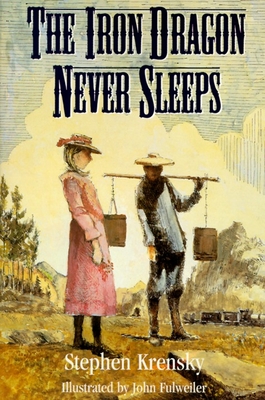
The Iron Dragon Never Sleeps by Stephen Krensky
This is a small book that I picked up when I was planning a unit on California history for my kiddos last year. It isn’t your typical Gold Rush era story, which is both good and bad. On the down side, this story definitely has the feel of existing so that a lesson can be taught. The characters are somewhat thin, and the plot is a bit stilted. However, I think that, in the right situation, the positives outweigh the negatives. It teaches much about the competition that went into the construction of the Transcontinental Railroad, as well as the mistreated Chinese workers that helped to build it. This book turns a blot in California’s history into regret for the past and hope for the future. I’d so much rather learn from mistakes and build compassion than cover them up to save face. This may not be award winning fiction, but it does provide an interesting perspective, and is much more fun to read than a textbook.


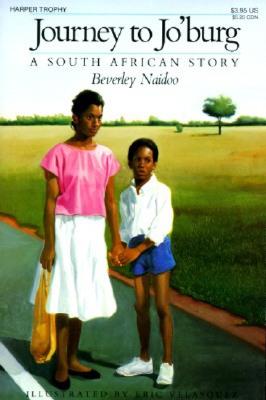
Journey to Jo’Burg by Beverly Naidoo
Another title that I purchased to go along with school studies, this is a quick story that serves as a great introduction to South African history and the apartheid regime. The author, born and raised in South Africa, has first hand experience with trying, at a young age, to process the inhumanity surrounding her. I think that she does a beautiful job of showing the difference in culture at an appropriate level for grade school children. The main characters, being children, make this story especially touching. Simple story, complex themes, and a worthwhile read.


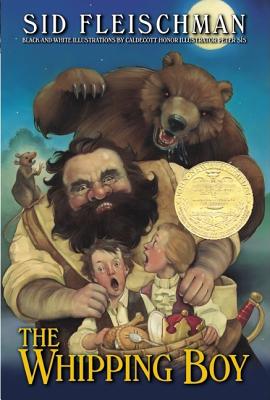
The Whipping Boy by Sid Fleischman
I'm coming to think of Sid Fleischman as a new favorite author.  I loved Bandit’s Moon and By the Great Horn Spoon! (talk about great perspectives on California history!) so I was excited to read his Newbery Award winning novel. I love his characters, how he interjects humor and adventure into his stories, and how he makes the historical settings seem like a normal part of life. This is Historical Junior Fiction at its best. The Whipping Boy tells the story of Prince Brat and the boy who takes the physical brunt of the prince’s punishments. It was fun, teaches a great lesson on humility, and—while I don’t think it was quite as good as the others of his I’ve read—was simply a lot of fun.

Magic in the Park by Ruth Chew
This book came home with my eldest daughter from school when she was in 2nd grade, and she loved how the magical creativity set her imagination going. Originally published in 1972, it has that lovely Nancy-Drew-ish vintage flavor. The kids go play in the park by themselves and run around the city all by themselves and are never missed, fun stuff like that. That’s not the point of the story though, the point of the story is to find out what is going on with the old man in the park that feeds the birds…and why a mysterious looking tree seems to change locations. For young readers (or listeners) it is a great adventure, though the older ones may find it a bit silly. It made me miss the days as a kid when I used to read mysteries like they were going out of style. There’s something happy about vintage literature, (not classic, necessarily, just somewhat aged,) whether it’s for children or adults. Something that sets that old imagination back on fire.


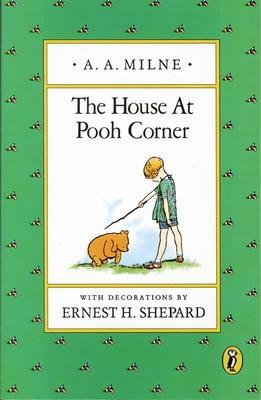
The House on Pooh Corner by A.A. Milne
I grew up with Pooh stories, and my kiddos grew up watching Pooh movies, but I don't think I'd ever read any of it in Milne's actual words.  I was missing out!  My 7 year-old and I were both enchanted with the wording, and with the bear of very little brain.  She had never before been interested in hearing or seeing anything to do with Pooh, but this book changed all that.  As a girl whose stuffed-with-fluff friends spend each night on her bed, this is a story that she could relate to.  What sweet characters; what gentle storytelling.  Just as the end was beginning to be too sad to bear, what with Goodbyes and all, Milne refocuses on the bright side, leaving a sweet comforting memory of your time in the Hundred Acre Wood.

Tuesday, April 12, 2011

Wench by Dolen Perkins-Valdez

Wench: A Novel (P.S.)Are you still enjoying the last vestiges of winter? Or is it time for some of those summer reads yet?  A book that grabs you and won't let go?  Something that doesn't require huge concentration and does some of the work for you?  Wench, for me, felt like a summer read in that sense.

That is not to say that the subject matter is light and fluffy, for it is anything but.  In this book we peek into the lives of four slave women who are their masters' mistresses in the mid-1850s.  Their experiences--thoughts, feelings, hopes--are all vastly different from each other, but they are united by their shared sense of injustice and the complexity of their situations.

It wasn't so much that individual portions of the book were emotionally difficult to digest (although there were a couple of parts that were somewhat rough) but rather the fact that they kept happening and kept happening.  Which I suppose is one of the points the author was trying to make.  Some slave owners were kind, and some slaves really weren't mistreated horribly, but regardless of the degree of horror in circumstance, one of the really horrid things about slavery is that it is ongoing.  Forever.  With no real hope in sight.

Considering the heavy subject matter, Wench still managed to feel like a light read to me.  I was reading to find out what was going to happen, rather than to stop and ponder the situation...which is interesting because there were definitely enough things to stop and consider.  The story really seemed to flow until it ended quite abruptly, with the last couple of paragraphs becoming all poetic.  I don't think it was a book that absolutely hinged on the ending, though, so the last page was forgivable.  The fact that it was inspired by an actual resort made it all the more interesting.  While not necessarily a favorite, it was an above average read.

Title: Wench
Author: Dolen Perkins-Valdez
Pages: 304
Published: 2011 Harper Collins (orig. 2009)
My Rating: 3.5 stars

Monday, April 4, 2011

The Secret Scripture by Sebastian Barry

The Secret Scripture: A NovelThe Secret Scripture is one of the books I brought home with me from Ireland.  It was recommended by a bookseller that shared my enthusiasm for Joseph O'Connor's Star of the Sea.  I went into the shop to find a copy of his Ghost Light (Dublin's One City, One Book choice, being read this month) and ended up asking her for other recommendations.

The synopsis the bookseller gave me was intriguing.  All she told me was that it was a book about Ireland's unfortunate tendency, in the past, to commit women to insane asylums for moral issues and convenience rather than any mental instability.

This is a book told from two points of view.  The first is Roseanne's: as she approaches 100 years of age she reflects on the early years of her life: those before her long years spent in an asylum, those that shed light on the things that determined the fate of her life.  The second is Dr. Grene's, the hospital's psychiatrist, who is tasked with deciding whether any of the residents are suited for life outside, and who finds himself intrigued with Roseanne's story.

And who can blame him?  The main events in Roseanne's life take place against the backdrop of the World Wars, and more immediately significant: Easter Rising in 1916, War of Independence in 1919-1921, and the Irish Civil War in 1922-1923.  Roseanne grows up in Sligo, and the words that Sebastian Barry uses to describe  her perceptions of this place are magical.

The prose strolls through memory, collecting pictures and stories as if they were flowers in a garden, presenting them for inspection and contemplation.  Once I slowed myself enough to listen to the language, I found that it moved rather quickly.  The plot (to me) seemed in danger of being rather sensational--I was a little afraid that it might put every sordid detail in so bright a light that it would no longer seem real--but what I found were characters so lifelike that it was more like uncovering your family's hidden secrets than reading a novel.  The simplicity and quietness in which details were revealed had more impact on me than they would have if they were pumped up and dramatized.  Sometimes a humble acceptance of misfortunes makes more of an impression than a volley of protests.

As a side note, I was scrolling through my Amazon wishlist after returning home from Ireland, and I was shocked to discover that I'd put this book on there back in August 2010.  Here I'd thought that I'd never heard of it before, when I obviously had.  It must have been a book blogger recommendation, which makes me excited to read the other books I've placed on my wishlist based on blogger rec's.  You all haven't steered me wrong yet!

Title: The Secret Scripture
Author: Sebastian Barry
Pages: 312
Published: 2007 Faber and Faber (orig. 2006)
My Rating: 4.5 stars

Tuesday, February 22, 2011

Remarkable Creatures by Tracy Chevalier

Remarkable Creatures: A NovelTitle: Remarkable Creatures
Author: Tracy Chevalier
Pages: 320
Published: 2010 Plume (orig. 2009)
Photo Credits: Courtesy of Wikipedia
My Rating: 4 stars

For a book that has been on my wishlist since it was first released, the story came as quite a surprise.  I think I saw "Tracy Chevalier" and stuck it on my wishlist.  If I'd known that it had so many other things to make me enjoy it, I certainly wouldn't have waited until I saw it on a shelf in Target to pick it up.

First, the time period.  This takes place during Regency Era Britain (a well known era for fans of Pride and Prejudice).  I like the time period because it seems to balance old and new.  It is the era of the gentleman and the servant, before the growth of middle class yet after new advancement in many fine arts.  Technically, Regency Era only lasted from 1811 to 1820, while George IV was the Prince Regent, although in terms of trends and styles it covers 1795-1837, from the Georgians to the Victorians.  Obviously the era had its problems, don't they all?  There were wars (with Napoleon and elsewhere) and lavish spending in the aristocracy brutally contrasted the squalor of the poor.
Assembly Rooms provided entertainment for many.
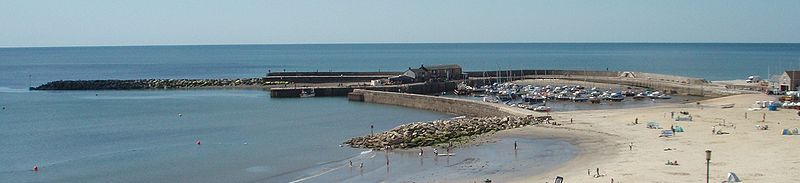
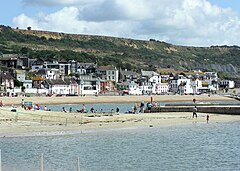
Next, the location.  Lyme Regis (nicknamed The Pearl of Dorset) is a place that has struck my fancy since first reading Persuasion.  It is well known for The Cobb (a harbor wall first found mentioned in 1328), and plays a vital role in that book, and is also a setting for The French Lieutenant's Woman by John Fowles.
A view of the Cobb with boats grounded at low tide.
A view of Lyme Regis from the Cobb.
Third, the characters.  Although I didn't know anything about Mary Anning or Elizabeth Philpot before reading this book, I wish that I'd known that Remarkable Creatures is more than historical fiction, it is closer to a biographical novel (or as some say, historical FACTion) and reminded me of Irving Stone (a good thing!)  It seemed to be a fair representation, and was definitely a good story.  As unmarried women (a.k.a. spinsters) they provided an interesting point of view on this time period, especially due to Mary's involvement in the scientific community (which, due to her gender, wasn't what it should have been.)
Mary Anning with her dog Tray.
Finally, the topics.  Lyme Regis and Mary Anning are known for the discovery of fossils.  As a child, Mary would collect "curies" on the coast to sell to tourists, helping to support the family from a young age.
The "Jurassic Coast" at Charmouth,
where Anning made some discoveries.
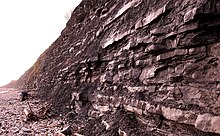
The ocean and the coastline play quite a role in this book, not only because this is where fossils were searched for, but because it really shaped the tone and meter of life in the area.  From Elizabeth Philpot's laments that her hands were stained from digging through the Blue Lias clay, to the danger of landslips, (contrasted by the opportunity a landslip provided for discovering previously hidden fossils,) the town and the coast make the setting a big part of the book.
Blue Lias cliffs at Lyme Regis...easy to
imagine this clay staining your hands!
Landslip, east of Lyme Regis.
Small fossils, like ammonites, didn't cause much of a stir, since they'd been around a while, and were thought of as coiled up snakes.  The discovery of some of the larger fossils, however, spurred some disturbing thoughts for many in terms of what science says about God and the bible.  At the time, considering an interpretation of the bible apart from traditional beliefs was a dangerous thing, and could see you ostracized from society.
Saint Michael's Church, the parrish church.
The established opinion was that God created the world in 6 literal 24-hour days, and since God is perfect, he created the world perfectly--he made no mistakes.  This necessarily means that everything which is in the world is God's perfect creation, the corollary being that since creation was perfect, everything that was in the world at the time of creation remains the same today.  The idea of extinction was a novel, renegade idea.  To believe that creatures could become extinct was to entertain the idea that God made a mistake.  It was fascinating to peek into such a pivotal time as far as world-view.  Something that I take for granted: being able to consider, interpret, and believe as I choose, was almost unheard of then.
Anning's Plesiosaurus

Ichthyosaurus skull
I hope you've enjoyed my little tour through the history that I wish I'd known before reading the book.  I think Tracy Chevalier does a fabulous job at bringing history to life, in a very readable, accessible manner.  If you enjoy grounded historical fiction (meaning, not romantic or idealistic but something that feels fully historical as well as being a good story,) Chevalier is a great find.  Her books include the following (info taken from her website):
  • The Virgin Blue (1997) American woman searches for French ancestors and uncovers more than she’d bargained for.
  • Girl With a Pearl Earring (1999) Modest Dutch maid becomes poster girl for the painter Johannes Vermeer.
  • Falling Angels (2001) Two families love and feud among the gravestones of London’s Highgate Cemetery.
  • The Lady and the Unicorn (2003) Love is blind among the weavers of a lavish set of medieval tapestries.
  • Burning Bright (2007) Two pre-teens bond with radical painter-poet William Blake in 18th-century London.
  • Remarkable Creatures (2009) Two eccentric women search for fossils on English beaches.