Showing posts with label 5 stars. Show all posts

Sunday, August 3, 2014

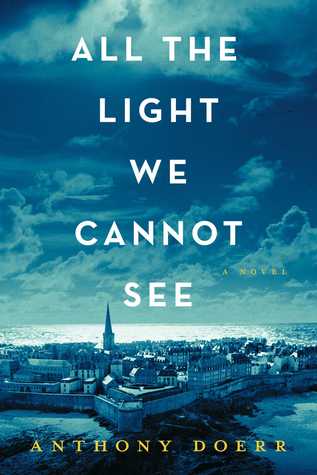
All the Light We Cannot See

Open your eyes and see what you can with them before they close forever.

I'm stingy with my 5-star ratings.  Sometimes I regret that and try to change, but then a book like All the Light We Cannot See comes along and simply deserves to stand above the rest.  If I weren't stingy with my 5, I'd have to break the rules and give this a 6 or 10 or 100 and that's a spiral I'm not ready to slide down.

Doerr's new book came to me in a Powell's Indiespensable shipment.  I didn't know much about it, except that it told the story of a blind French girl and an orphaned German boy as their lives converged during World War II. (And that it has short chapters.  I love short chapters.  Makes me feel so accomplished.)

From the start, the mood is magic.  Doerr illuminates the small thoughts and actions that create how a person or a place feels. It was familiar, and yet completely new.  The settings were vivid, and the characters were whole, genuine people. Themes run through the book so seamlessly that you can give them as little or as much attention as you want.  The writing is poetic but not heavy (nor too sparse). There is family and love, action and mystery, good and evil. There is literature, science, art, history and technology. The story switched back and forth between different times, yet remained organized and easy to follow.

It seems big enough to contain everything anyone could ever feel.

Looking back at World War II, it is easy to wonder how it was possible.  How did the Germans go along with this plan? How did people let this happen? Why didn't people stand up and object? When this question is taken out of the philosophical, however, it is easy to see how human nature compartmentalizes actions and events in order to cope with reality. From the way Marie-Laure adjusts to being blind in a city the size of Paris with only her father to help her, to Werner's ambitions to escape the fate of the coal mines that claimed his father's life, we see very real examples of how difficult it is to accurately assess the big picture and apply it to your life.

I recommend this book heartily! It's been a long time since I've read a novel as complete and filling as this.

Tuesday, May 14, 2013

The Illusion of Separateness by Simon Van Booy

I've seen Van Booy's name around the interwebs...it's an interesting name; it lodges in one's brain.  Every time one of his books popped to the forefront, however, I pushed it away: dismissing it as one in a crowd of inordinately popular pieces of fluff.

Boy was I wrong.

Little did I know when I opened my Indiespensable box and saw the unassuming galley lying there that I was about to be exposed to utter exquisiteness.  The writing, the characters, the story—all were wonderful.  From the first words I was hooked.

I've read books before that create a novel from a mix of seemingly unrelated short stories, but none done as beautifully, delicately, and organically as this.  Each sentence urged me to read the next, as if there were a shimmer of wonder cloaking each thought.

Plus, the title is fabulous.  It really serves as a basis for the over-arching theme of the book.  So many times we read (or hear) stories from different times and different places, and we look at them as isolated, confined experiences, but this book challenges the reader to look beyond, to wonder, to strive to be a part of a bigger story - one in which we are all connected whether we realize it or not.

This title is set to be released in June, and it is worth keeping in mind until then.  I'm going to need to buy a copy to loan out, a copy to keep as back-up, etc. etc.   I'm also going to need to read everything else he's every written.  In fact, I chose a collection of his short stories for my book club to read (The Secret Lives of People in Love) and while it wasn't quite as marvelous as The Illusion of Separateness, I still had that conflicting want-to-read-it-all-right-now/don't-want-it-to-ever-end thing happening.  Have you read anything of his?  What do you think?

Monday, April 8, 2013

Benediction by Kent Haruf

I believe I've read two previous novels by Kent Haruf.  One, Plainsong, I loved.  The other, (title unfortunately forgotten,) I remember loving until the ending—at which point it earned itself a spot at the bottom of the Caribbean.*  Benediction has redeemed my opinion of Haruf.

For being a story packed with things that could [quite plausibly] have been antagonistic or offensive, (the roles of religion, sex, and other beliefs and needs,) the book is surprisingly gentle, warm, and embracing.  Well, from my point of view at least.  I'm curious to see how it would hit others.**

Haruf uses beautifully fleshed out characters to explore the gap between our ideas and our actions.  What is good? What is bad? Why?  Do we believe (and live by) the ideas we profess?  What do our words and actions show our priorities to be?

This passage addresses what very well may be the crux of the problem:
People don't want to be disturbed.  They want assurance.  They don't come to church on Sunday morning to think about new ideas or even the old important ones.  They want to hear what they've been told before, with only some small variation on what they've been hearing all their lives, and then they want to go home and eat pot roast and say it was a good service and feel satisfied.

I am a Christian because I believe in Jesus Christ and his teachings.  The point and purpose is to improve my life and those around me by changing my actions to align with his. This takes thought.  This takes action.  This takes making difficult choices and challenging my built-in thought processes.  These are good things.  What on earth is the point of floating around in a little bubble of platitudes?  Why bother with the tremendous effort of keeping up appearances when you could be getting all the benefits that come with actually living out your beliefs?

Benediction represents one of the larger reasons I love to read.  It expands my horizons and exposes me to different ideas that I can bounce off my own—it allows me to see the world through different eyes and prevents me from becoming complacent.  I loved the complexity of the characters, the beautiful simplicity of the writing, the way it pulled me through in a few hours' time.  The characters seem to belong to their setting in the way that Willa Cather's are one with theirs: without effort, but with a vitality that makes the story that much more real.
_______________________

* It wasn't me who put it there.  Rather, my husband, himself inflamed at my griping, tore it from my hands and fed it to the fishes.  True story.

** It got me thinking.  Why wasn't Benediction offensive to me when Flight Behavior was?  In a way, they both took a small town setting to address some big issues...yet Flight Behavior felt smug and preachy, while Benediction felt compassionate and peaceful.  The subject of Flight Behavior (global warming) isn't as personal to be as the subject of Benediction (beliefs etc) so it seems that my reaction should be opposite...unless Benediction was in fact written with more respect, more peace, more compassion.  I'm compelled to think it must be so.

Saturday, January 26, 2013

Persuasion: Wrapping it Up

"As she spoke, she felt that Captain Wentworth was looking at her; the consciousness of which vexed and embarrassed her, and made her regret that she had said so much, simple as it was."

I've had a marvelous time with this reread, but now it is time to wrap it up.  I never want the end to come, lovely though it is, because it's the anticipation and anguish that thrills me.  Endings are so...final.

A conversation between Mrs. Musgrove and Mrs. Croft about the preference of a short engagement to a long engagement made me stop and muse for a while.  I was engaged to be married for 8-9 months, and it was only that long because we had to graduate from high school before getting married (a stipulation put forth by the judge!)  We were an unusual case to say the least.  What is your own opinion about the length of an engagement?  Had a couple better go ahead and get married once they decide to do so?  Or had they better wait and make sure they are financially secure first?

"Place it before Anne."
(Find more photos at Molland's)
Jane Austen begins the last chapter of this book with a note about the moral of the story.  In an age where (as Anne herself mentions at Lyme) novels were expected to support the notion of morality and encourage one on the path of duty, she admits that her argument for love over prudence might be "bad morality to conclude with, though she also asserts that she believes it to "be truth."  One of the compelling things about the Regency Era is how pivotal it was in many ways, including women's role in society, and preference to the individual's desires over the status quo.

Reading it this time around made me realize even more that the reason I love this book is largely because of how closely I identify with Anne.  I just feel the whole book--feeling overlooked and undervalued, convincing yourself to accept your lot in life and giving in to other people's opinions, not fitting in with the 'norm' and wanting more out of life, etc.  Because I feel like that pretty much all the time, I never really know when it's important to stand up for myself.  Putting that on paper makes it sound a little silly to my ears, but there it is.  Again, I feel like Anne: regretting that I "said so much, simple as it was."

This was my 3rd? 4th? time reading this book, and it never fails to disappoint me.  How could it when it makes me feel so understood?

If you wish to follow my whole journey through Persuasion, follow these links!

Sunday, August 19, 2012

Appalachian Stories - Recommendations Wanted!

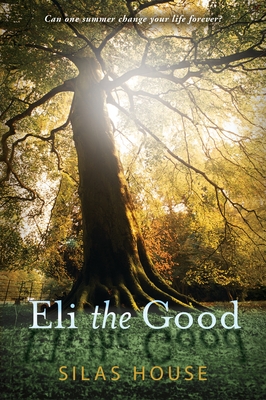
I recently read another book by Silas House which reminded me of how much I connect with his settings.  Eli the Good wasn't quite as Appalachian as his others, but Nature still weighs heavily in the story.

In addition to being his first foray into young adult literature, this book also happens to be great Independence Day reading.  It takes place in 1976, and follows 10-year-old Eli through the course of one summer.

Although the setting felt thoroughly American, the themes are universal.  What defines family?  Why is honesty a vital component of communication?  How do we show—or feel—love and concern?

Absolutely recommended, (although the epilogue didn't quite feel organic to the story,) especially for those who enjoy the coming-of-age aspect.  My enjoyment of the story ended up leading me to a book of short stories that has been on my shelf since August 2004. (Crazy, that.)  Chris Holbrook's Hell and Ohio: originally acquired because I'd enjoyed Silas House's other books.  At that time, newly entrenched in caring for a new infant (for the 4th time, hello) and therefore lacking in extra brain cells, I read only the first story and felt that it was a little slow.  Nothing special.  Reading it again 8 years later, I am entranced.  (I'm guessing that at least part of the reason is that I've taken measures to appreciate short stories, so I simply have more familiarity with the form.)

In the nine stories, coal mining (land development/destruction) is a common theme, as are manners, alcohol, religion. All themes that rang true to me...perhaps because I grew up in a small mountain town (admittedly it was in Northern California's Sierra Nevadas as opposed to the Appalachians, but the lumber mill and logging industry had a similar heavy presence in some respects to the coal mines).  I grew to enjoy feeling "a little closed in by all the trees and mountains on every side."

All the stories are wonderful, skillful, and worth reading.

(As a side note - I had the most visceral reaction (to The Lost Dog) I've ever had to a written work.  My first thought after reading the story was that it didn't say anything, but then immediately I was flooded with memories from my childhood that mirrored the story, and began to get choked up (something I don't often do, especially to the extreme I did) thinking about the fact that somebody else understood, perfectly, those feelings. I just had to stop and cope for a few minutes, I couldn't think about or look at anything else until I'd taken a few deep breaths. Pretty crazy experience!)

Recommendations?
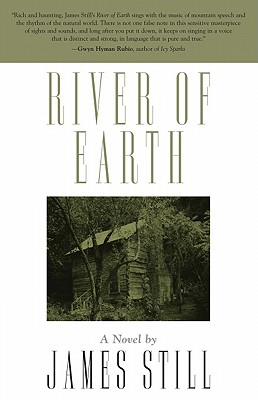
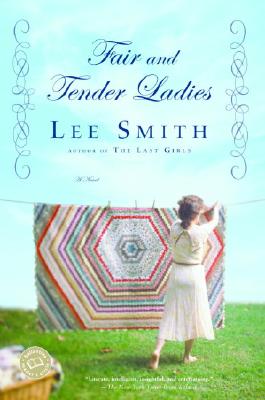
I'd like to put a few books on my wishlist that would be good places to go from here.  Any suggestions?  I think I might have a copy of River of Earth by James Still from back in 2004 when I was on the hunt for Appalachian stories.  I enjoyed Lee Smith's Fair and Tender Ladies a couple years back...that's all I've got.  What've you got?  Recommend me!

Monday, July 23, 2012

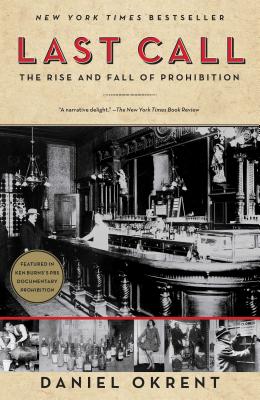
Last Call: The Rise and Fall of Prohibition

I don't usually blog mid-book, (I guess I'm a completed-project kind of girl,) but I did talk about this one midway because there was too much fascinating information to keep it all to myself.  So much, in fact, that I've worked this book into just about every conversation I've had in the last 2 months.  Because of this, I've had to make a smidge of an exception in my final rating (usually I reserve my 5-star ratings for books that I can't find any fault with, but the conversation application was like super-extra-credit here and nothing less than 5 stars would be accurate.)

My complaint is minor, actually: in a perfect world, a few of the pages about political machinations would have been swapped for more info about the more titillating descriptions of speakeasies, flappers, and social life (these aspects were addressed, just not in the ratio I yearned for).  Admittedly, Okrent is not ignorant of this: "The most familiar legacy of Prohibition might be its own mythology, a body of lore and gossip and Hollywood-induced imagery that comes close enough to the truth to be believable but not close enough to be...well, true."

What it is, if not the source for all the gossip and lore surrounding the 14 years Prohibition lasted, is the most thorough and engaging history of the era when America transitioned from rural to urban (and all the changes that entailed) that I've come across.  I loved discovering how many different issues were tied into this thing that we label, simply, Prohibition.  There's the conflict between rural and urban lifestyles, federal government's role in the individual's life, women's suffrage, the federal budget and income tax, immigration and racism, classism, religion, continuing resentment from the Civil War, - the list goes on and on.  This book is the WHY that always seems so out of reach, and the amazing thing is how enjoyable and attainable the author has made it.

If you hold the slightest interest in American history, you won't regret setting aside a little time for this book.  Highly researched, well organized, and a joy to read, this is what history should be.  You'll meet forgotten famous people like Wayne Wheeler and Mabel Willebrandt; you'll discover the origins of powder rooms, booze cruises, Las Vegas, NASCAR, and tourism in the Bahamas.  I could talk about it for days, but instead I'll leave you with a few brief excerpts and a strong encouragement to check it out for yourself.
"The connection between liquor and politics was not a new one.  When twenty-four-year-old George Washington first ran for a seat in the Virginia House of Burgesses, he attributed his defeat to his failure to provide enough alcohol to the voters."
"The booming prescription trade had been accompanied by a dawning realization among America's physicians that alcoholic beverages were in fact useful in treating twenty-seven separate conditions, including diabetes, cancer, asthma, dyspepsia, snakebite, lactation problems, and old age."
"It was a later edition of the KKK that focused its venomous loathing on black people; this version had a special hatred for Jewish and Catholic immigrants.  The Klan, which supported woman suffrage in behalf of Prohibition, in turn supported Prohibition as a weapon against the immigrants. [...] In many towns there was little distinction between membership in the Klan and in an ASL (American Saloon League) affiliated church."
"Wrote newspaperman Malcolm Bingay, 'It was absolutely impossible to get a drink in Detroit unless you walked at least ten feet and told the busy bartender what you wanted in a voice loud enough for him to hear you above the uproar.'"
"It was one thing for Pennsylvania legislature--any legislature, really--to give militant drys the laws they wanted, but quite another to provide the funds necessary for their enforcement."
"In 1925, when The Great Gatsby was published, the meaning of "drug-stores" was as clear as gin."

Sunday, June 24, 2012

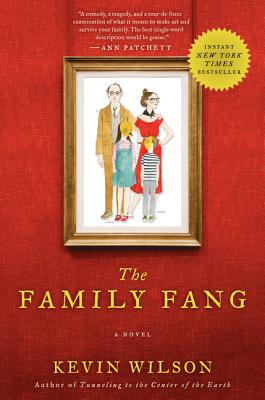
Book/Movie Pairing: The Family Fang and Moonrise Kingdom

Are you familiar with director Wes Anderson (of Royal Tenenbaums fame)?  I happened to have the great pleasure of watching his new movie, Moonrise Kingdom, this weekend and I absolutely loved it.  Though I've avoided it until now (who knows why?) I am now an ardent fan of his films.  I actually think the only other film of his I've seen is Darjeeling Limited - which is fabulous because that means I've a good number of promising films to enjoy now that I know I love him. ;)

Succinctly put, Moonrise Kingdom is about "A pair of young lovers [who] flee their New England town, [causing] a local search party to fan out and find them."  What makes it work is Anderson's impeccable sense of balance.  Not only did it strike that perfect funny/sad tone, but the characters are at once quite quirky and oh-so-easy to identify with.

I loved this movie.  I wanted to marry it.  Well, not exactly.  But I would like to find a way to plaster on my wall so I can watch it constantly and continuously.  (rated PG-13, btw)


The Family Fang, (if you've read any reviews of it already you may have heard,) has a very Wes Anderson vibe.  The super-quirks, the funny/sad...the ability to talk about serious subjects without being tiresome.  Set against the backdrop of performance art contrasted with imperfect art of raising a family, and told through a series of rather awkward moments, Wilson left me contemplating the blind journey we each make from childhood to adulthood.

Although propulsively readable, it doesn't dip into shallow waters for a minute.  I loved how, instead of spiraling into a mess of neatly-wrapped platitudes, it stayed engaging, funny, and contemplative until the very end.  It left me at once feeling completely satisfied and hungry for more.

"People would call him Professor Fang, which sounded so much like a supervillain that he wasn't sure he could go through with it."

What's your opinion about funny/sad books (and movies) with quirky characters?  Does that perfect balance make your heart sing like it does mine?

Tuesday, June 5, 2012

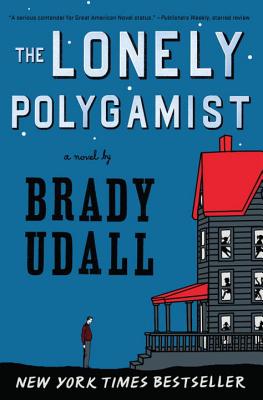
ReadThisBook: The Lonely Polygamist by Brady Udall

How hard is it to find a book that makes you laugh, consistently, all the way through, and still make your heart ache and your mind ponder?

The story told in The Lonely Polygamist--that of 45 year-old Golden Richards: husband of 4 and father of 28--wouldn't have nearly the same effect told by a different author.  Brady Udall has the peculiar insight and talent for the job: necessary ingredients to turn this book into a wonderful story.  I love how the book was captured in this tidbit:

"By turns laugh-out-loud funny and hauntingly sad, this novel is a big, fat, satisfying read that will make you reconsider what it means to be part of a family. Plus, it contains the naughtiest, goofiest 11-year-old boy who will ever break your heart.”
-- Roberta Dyer, Broadway Books, Portland, OR (via IndieBound)

Some of my love for this book was certainly due to the fact that it was amazing on audio.  David Aaron Baker?  Love him.  By the time I was halfway through the book, I had to pause and search Audible for what other books he's narrated (plenty of options).  He had a distinct voice for each character, which really brought them to life.

Now, I am not a fan of polygamy as a subject.  It's a topic that instantly puts a pit of SAD at the bottom of my stomach.  In my mind, it negates the individuality and specialness, to some degree, of each person involved.  I suppose I don't understand The Principle; the ascetic ideal is one I have a hard time accepting.  However.  (You knew there was going to be a BUT, didn't you?)  For the first time, there was a seed of sympathy, of understanding, accompanying that sadness.  Udall understands the nuances, and by showing his characters in a somewhat extreme (and occasionally ludicrous) light he allows the reader to see how simply human they are.


I loved how the characters were introduced...even the houses and the dog, and eventually Roy: the atomic test weapon...each with their own little history, their own narrative flavor.  I loved Rusty (poor crazy kid) and wish I'd known Glory.  The references to Reno were additionally funny to me, having lived relatively near it for much of my life.  I do wish the story hadn't been wrapped up quite so tidily, but since it all seemed pretty plausible (and since I'd enjoyed myself so much along the way) I can't really complain.  The book was over before I was ready, leaving me with a smile still on my face and an ache in my heart.

(A warning: be prepared for some bodily functions.  Many of the plights that Golden and his 11 year-old son Rusty find themselves in are a bit awkward and there is a smattering of strong language, including many mild but stereotypical 'gay' references.  I found it to fit the characters he had created, but if you're sensitive to these things it could possibly affect your opinion of the book.)

Tuesday, May 22, 2012

Discovering W. Somerset Maugham

Maugham was, until this last week, another mysterious classic-ish author of whom I knew nothing.  A spur-of-the-moment jaunt into my local bookstore changed all that, however, when I picked up The Painted Veil.  I was a lost cause from the very first words: She gave a startled cry.  Not the most complex writing, but it sure sucked me in.  I adored every bit of this book.

(Actually, my interest was piqued before that bookstore trip...I was at a book club meeting and two of the girls were talking about MOM, except they weren't...they were talking about MAUGHAM which apparently has a nice handful of silent letters similar to the name VAUGHAN.  Who knew?  Everyone but me, of course.  Welcome to my universe.)

So then, who is this Maugham fellow?  According to the Wiki:
  - Reputedly the highest paid author of the 1930s (wow!)
  - His mother had tuberculosis, for which her doctor prescribed childbirth (sheesh.)
  - He developed a stammer after his parents died when he was 8 (aww...)
  - He was a British spy during WWI and went on special mission in Russia (exciting!)
  - He didn't lead a very happy life, esp. regarding family/loved ones (poor guy)

From the get-go The Painted Veil felt like a Guilty Pleasure.  You know...so wonderfully delicious that it must not be very healthy somehow.  In a time of literary giants such as Faulkner, Joyce, and Woolf, Maugham once described himself as being "in the very first row of the second-raters".  Sad, right?  But in a way I can see how he may have come to that conclusion.   His writing was fairly simple compared to the experimental modernist fare, though fun to read and not unintelligent.  The story was rather quickly paced and a bit racy, exploring the boundaries of social/emotional rules rather than the boundaries of fictional composition.   The Painted Veil was the definition of accessible, no secret-decoder-ring required, and published in the hey-day of symbolic obscurity.

The two things that fascinated me the most about this particular title both happened to be related to the times.  First, the peek at life in Colonial Era Hong Kong and the cholera epidemic (not that I'm so familiar with non-Colonial HK, but still, it was an interesting perspective) and second, the social expectations on marriage at the time.  Having so many limitations on socially acceptable behavior, and so few viable options for women regardless of the circumstance, certainly adds a dynamic to a story that  is absent (or difficult to recreate) in modern fiction.

Now, I can't say that I loved any of the characters, or even that I truly sympathized with any of the characters.  They all had faults, and most had made bad choices, but I was truly absorbed in their thoughts and actions.  There were so many different personalities.  Kitty journeyed from an extremely shallow existence to some actual thought, while her husband was a much more intelligent, complex person that ended up finding that he'd made a very silly choice.  This was a book that I actually didn't want to put down until I'd finished it.  More Maugham is definitely in my future.


(By the way, is there a female word equivalent for cuckold?  ...Do we have a word that defines a woman whose husband commits adultery?  I'm not one to usually be all up in arms about women's rights, but this word has always bugged me for that very reason.)

World English Dictionary
cuckold (ˈkʌkəld)
— n   

   1. a man whose wife has committed adultery, often regarded as an object of scorn

— vb   

   2. ( tr ) to make a cuckold of 

[cukeweld, from Old French cucuault, from cucu cuckoo; perhaps an allusion to the parasitic cuckoos that lay their eggs in the nests of other birds]

Monday, February 13, 2012

Song of the Lark by Willa Cather

This seems to be one of those loveit/hateit books.  Reviews on GoodReads and LibraryThing vary from boredom to that wonderful combination of tears and laughter.  Why the disparity? I think it has a lot to do with the themes.  You either identify, or you don't.

The story follows Thea Kronborg from her humble beginnings in a small rural town, to adulthood and her struggle to fully realize her creative potential.  Thea is different from the other people in Moonstone, and eventually she must decide what she wants out of life--and if she's willing to pay the price to get it.
“I only want impossible things,” she said roughly. “The others don’t interest me.”
Not just a coming-of-age story, nor even a simple humble-beginnings tale, The Song of the Lark has much to say about prejudice, music, family, art, and that elusive quality-of-life.

Coming from a small town myself, it was easy to identify with the small town dynamics, as the following quotation shows.  This excerpt is also a good example of how, even in the midst of the heartache, Cather adds morsels of humor (similar to Tolstoy's sense of humor--derived from observing people of different kinds.)
"The fear of the tongue, that terror of little towns, is usually felt more keenly by the minister’s family than by other households. Whenever the Kronborgs wanted to do anything, even to buy a new carpet, they had to take counsel together as to whether people would talk. Mrs. Kronborg had her own conviction that people talked when they felt like it, and said what they chose, no matter how the minister’s family conducted themselves. But she did not impart these dangerous ideas to her children."
"Song of the Lark" by Jules Adolphe Breton--
a painting that Thea falls in love with in
Willa Cather's novel.
Another aspect of this small town was the depiction of the prejudice against Mexican citizens--people who had more history in the area than the new European immigrants--seeing this early picture was intriguing to me in light of the ongoing issues today.  When Thea would escape to the other side of town to hear Spanish Johnny play his mandolin and watch the women comb their long, black hair, I wished I was there with her.  Likewise, seeing Chicago and New York in the age when music and opera were the mark of culture was a little like traveling to a more sparkling era myself.

Many of the people who don't enjoy this book seem to get bored and irritated with Thea after the section on her childhood ends.  For me, this being a re-read, I was anxious to get past the childhood and onto the "good stuff".   It is seeing Thea realize that her dissatisfaction stems from a huge creativity without release; it is watching her struggle with her choice to strive for great things; it is the sadness of her success, that make my heart ache.
“Nothing is far and nothing is near, if one desires. The world is little, people are little, human life is little. There is only one big thing--desire. And before it, when it is big, all is little.”
Thea's childhood is drawn largely from Cather's own formative years, perhaps explaining why those characters are so real and multi-faceted.  I loved her mother--what a woman!  Though we only get peeks and glimpses of her, it is enough to foster admiration.
“She won’t come back a little girl,” Mrs. Kronborg said to her husband as they turned to go home. “Anyhow, she’s been a sweet one.”
If I'm able to clear my head of all the wonderful thoughts and ideas Cather imparts, of all the beautiful language for just a bit, I'd be honest and tell you that Song of the Lark does lean towards being philosophical--even somewhat sentimental at times.  Additionally, as the novel progresses, Thea becomes more distant from the story, and less likable.  However, I've never read anywhere else such an exact understanding and honest portrayal of the artistic struggle.  Especially, perhaps, for a woman.

I wouldn't recommend Song of the Lark to everyone, (in fact, if you aren't driven by passionate creativity you might read it & wonder what the heck I'm gushing about,) but if you have a artistic soul you are likely to find a unique experience here.

(Note: This is stop 5 of 19 in my challenge to read Willa Cather chronologically.  After Song of the Lark is My Antonia.)

Friday, January 13, 2012

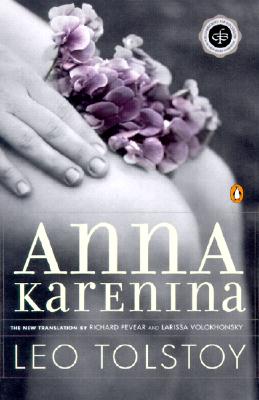
Anna Karenina Wrap-Up Post

Oh RIGHT! THAT'S what I was forgetting--my final Anna Karenina post!  I totally left the good old blogging hanging on that one--did I love it? hate it? finish it??  The last time I posted was before I read the last quarter of the book (meaning: yes, I did finish it...did you really doubt me, dear blog?) and then I didn't post because, well, the holidays were raging, and I sped through the end of the book so quickly that I finished it before the read-along ended and then felt a teensy-weensy bit guilty.

If you've read any of my prior posts on the book, you may remember that Anna Karenina is actually a re-read for me [technically]  although the fact that I read it in highschool (some 17 years ago or so) means that I don't remember much except for hazy pictures of unhappy people in big houses in the middle of Russia.  And trains of course.

This was my 2nd read-along (the first being last spring for Villette--also with Wallace) and it was also a very good experience.  I work well with deadlines, I suppose, so the schedule works for me.  Also, it's a great way to digest a classic: periodic discussions aid in understanding and appreciation.  So read-along=thumbs up, & hoping for more in 2012.

In Week 1, I delighted in Tolstoy's humor as well as the wonderful translation.  Also, it was crazy to realize that most of the main characters are not more than 34-35 years old.  When I was a teen that sounded ancient, now it seems oh-so-very-young. ;)

Week 2 was all about adding layers: the characters and the plot both start to become more complex as the picture starts to fill in.  Tolstoy continues to do this throughout the novel, which is one of the things that made it feel so real and intriguing to me.

Anna starts working herself into a corner in Week 3.  We see a little more of the social life in the upper class, and also some hints that the times are a-changing.

Week 4 is quieter.  We see Kitty's time abroad and Levin's observations on farming.  We are left to ponder the important things in life.

It's crunch-time in Weeks 5-7: so many things are starting to come to head and the characters' faults are showing.  I began to dislike many of the characters here, and yet was captivated by the story.

Ah, Weeks 8-9.  How many angles of love we see here.  There's the newlywed bliss and stress, there's the deluded justification of a broken marriage, there's the sad acceptance of a lesser love.  Dolly's circumspection here really touched me.  She realized that she did have love--which was good--but it wasn't the kind or the quality that she yearned for.  (sigh*)

The last quarter of the book shows Anna & Vronsky falling apart, Kitty & Levin grow stronger, Dolly and Stiva find a way to hold it together.  Seeing Anna crack up was pretty intense.  Tolstoy ended the book on a philosophical note rather than on drama and plot--something that felt very Tolstoy to me.  At first, since I'd been so enraptured in the story, I had a hard time switching back to philosophy.  In the end, though, I found that it not only allowed the story time to settle and soak in, but it also really brought all the plot points and themes together.

Tolstoy went through some major life changes while writing this book.  He struggled, as Levin does in the book, with what the meaning of life is & how he should be living.  While in the beginning Tolstoy was excited about writing what he viewed as a proper novel, in the end he was sick of it--had changed it so many times and just wanted to be done with it.  And yet the result is still wonderful.  I love that you can take so many different messages away from the book: since Tolstoy is mulling over all the issues himself, the book feels more like an invitation to mull over it along with him rather than being a vehicle to deliver his agenda.

This has solidified Tolstoy as one of my very favorite authors.  The mix of insight and action, poetry and wit are melded into perfection for me here.

[some of my favorite quotes:]

p. 236: ...She understood that she had deceived herself in thinking that she could be what she wished to be.


p. 260: Hard as Stepan Arkadyich tried to be a solicitous father and husband, he never could remember that he had a wife and children.


p. 427:  “I’ll begin from the beginning: you married a man twenty years older than yourself.  You married without love or not knowing what love is.  That was a mistake, let’s assume.”


p. 608: ...They all fall upon Anna.  What for? Am I any better? I at least have a husband I love.  Not as I’d have wanted to love, but I do love him, and Anna did not love hers. How is she to blame, then? She wants to live. God has put that into our souls. [...] I might have loved and been loved in a real way.


p. 614: “When you love someone, you love the whole person, as they are, and not as you’d like them to be.”


p. 729: Children? In Petersburg children did not hinder their father’s life.  Childen were brought up in institutions, and there existed nothing like that wild idea spreading about Moscow - as with Lvov, for instance - that children should get all the luxuries of life and parents nothing but toil and care. Here they understood that a man is obliged to live for himself, as an educated person ought to live.


p. 780: “Yes, as a tool I may prove good for something.  But as a human being I am a wreck,” he said measuredly.


p. 817: [last paragraphs]  This new feeling hasn’t changed me, hasn’t made me happy or suddenly enlightened, as I dreamed - just like the feeling for my son.  Nor was there any surprise.  And faith or not faith - I don’t know what it is - but this feeling has entered into me just as imperceptibly through suffering and has firmly lodged itself in my soul.
    I’ll get angry in the same way with the coachman Ivan, argue in the same way, speak my mind inappropriately, there will be the same wall between my soul’s holy of holies and other people, even my wife, I’ll accuse her in the same way of my own fear and then regret it, I’ll fail in the same way to understand with my reason why I pray, and yet I will pray - but my life now, my whole life, regardless of all that may happen to me, every minute of it, is not only not meaningless, as it was before but has the unquestionable meaning of the good which it is in my power to put into it!

Friday, October 28, 2011

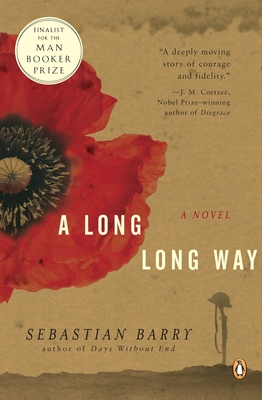
A Long Long Way by Sebastian Barry


He was born in the dying days.

And so opens this amazing story of young Willie Dunne.  This may be the most important novel I've ever read; it's certainly one of the best.  Awarding my own 5 measly little stars makes light of the experience, since I still get teary whenever I think about the book.  It doesn't seem fair that I have no one to discuss this book with, so I'm hoping one of you has read it!

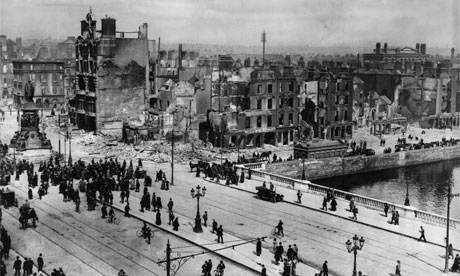
It is a book of the Great War: the First World War: a war of horrific scope and tragedy that is often overshadowed by WWII.  This isn't about the entire war, though, it focuses on the Irish boys that fought and died in it.  At the time, Ireland was controlled by England, and internally struggling with opinions about autonomy, which resulted in Easter Rising (see the photo and link below for more info). So Willie Dunne from Dublin, unable to follow his father's footsteps as a policeman because he didn't reach the height requirement, decides to volunteer to fight for England: a decision that becomes quite controversial as time passes.

I don't know about you, but when I think about "war books" I automatically groan inside.  I know from the get-go that there's going to be some rough spots, and dread reading it because I'm afraid it will be all action-movie-gruesome, lacking any introspection or emotional connection.  It was immediately apparent that this wasn't going to be the case with this book.  Here's a great example of the writing, setting the stage on the second page:
Those millions of mothers and their million gallons of mothers' milk, millions of instances of small-talk and baby-talk, beatings and kisses, ganseys and shoes, piled up in history in great ruined heaps, with a loud and broken music, human stories told for nothing, for ashes, for death's amusement, flung on the mighty scrapheap of souls, all those million boys in all their humours to be milled by the mill-stones of a coming war.
Devastation on Sackville Street, Dublin, where it crosses the River Liffey, due to the Easter Rising of 1916
Read some of the history about WWI and Easter Rising @ the guardian
What was surprising to me was how Barry managed to write a book that mostly takes place on the front lines, and yet avoid repetitive boredom.  Not to mention the fact that I'm baffled as to how he survived writing such an emotional journey in the first place.  It really is about so much more than just War, although you will be there like you've never been there before.

The prose was stunning. It ranged from simplistic to poetic, which helped to keep interest high and packed more power in the punch.  The pace and plot were thoughtful and engaging. It alternated from action to introspection with perfect timing and balance, and covered a fair amount of time, yet didn't feel rushed or dreary.  The setting and characters were vivid yet spare. Not overly descriptive, yet strong enough to feel you are there. Familiar, normal people just like those all around us.  Some we know more of, some less.  Some stir compassion, others incite frustration.

Read this when you are in the mood for a deep conversation with a good friend--that's what I felt I'd experienced when I closed the covers.  Read it with an expectation to learn, to grow, to see beauty, to remember, to feel.

A bit of background: I was introduced to Sebastian Barry during my trip to Ireland this year in March.  I went into the Clifden Bookshop to buy Joseph O'Connor's Ghost Light (which I somehow haven't posted about) and asked the bookseller for other Irish author recommendations.  She handed me The Secret Scripture by Sebastian Barry.  I enjoyed that very much, and picked this one up at the library on a whim.  I'm so glad I did; looking forward to reading Barry's other novels.

Title: A Long Long Way
Author: Sebastian Barry
Pages: 304
Published: Penguin (orig. 2005)
My Rating: 5 stars

Wednesday, October 26, 2011

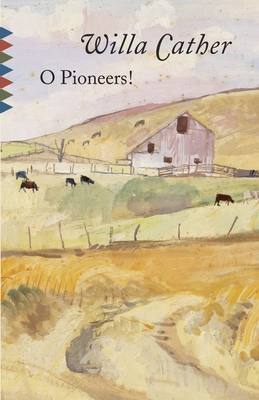
O Pioneers! by Willa Cather


How can you not love a classic book that has an exclamation mark in the title?

This is my fourth stop in my personal challenge to read Willa Cather's works chronologically.  Not only that, but O Pioneers! was the first title of hers that I read, and is my first re-read.  Somewhat of a milestone, I'd say.  If this one failed to impress, I'd be rethinking my challenge.  I was able to appreciate it much deeper this time around, which has me looking forward to my next re-reads.

In her previously published works, Willa Cather experiments with her fascination for the bond between people and land, with what drives a person, and how they make difficult choices.  In O Pioneers! she really lets the land (and the power it has on people) shine.  She has a way of simplicity in her words that speaks volumes; the way she talks of the land is just as she would speak of any human character.
There is something frank and joyous and young in the open face of the country.  It gives itself ungrudgingly to the moods of the season, holding nothing back.  Like the plains of Lombardy, it seems to rise a little to meet the sun.  The air and the earth are curiously mated and intermingled, as if the one were the breath of the other.
O Pioneers! feels like a coming-of-age story, but the main character is an untamed land.  It spans those years when immigrants became Americans, when the West became the Heartland.  It also follows Alexandra Bergson's life, as she struggles to take her father's land from the wild, and wrest from it a better future for her younger brother. Sadly, Alexandra is a strong, intelligent woman living in a time when it was much more acceptable to be a subservient, simple woman.  Because of this, much of her life is spent somewhat alone.
Isn’t it queer: there are only two or three human stories, and they go on repeating themselves as fiercely as if they had never happened before; like the larks in this country, that have been singing the same five notes over for thousands of years.
Unless the idea of getting into the minds of those immigrants: the Swedish, the French, the Bohemian, is distasteful to you, then I believe you are in for a wonderful experience with O Pioneers!  The generalizations of the different nationalities, and how they responded to the land and the other new neighbors, felt unique yet somehow so familiar and comforting.  The writing is simple, yet there are many though-provoking layers.  How we need hope in order to live.  How love is not so simple.  How physical strength or vivacity are not the answer they sometimes seem to be.  How our own selves are often more of a hindrance to our futures than any other obstacle.  How the grass is not always greener.
Frank knew well enough that if he could once give up this grudge, his wife would come back to him. But he could never in the world do that. The grudge was fundamental.

(Side note: In classic Wikipedia form, the page for this book states that it is #83 on the ALA list of banned/challenged books, which is simply not true. It is #83 on Radcliffe's Rival 100 Best Novels List, which the ALA cites. And kids wonder why you can't cite Wikipedia in research papers.)

As a recap:
1st was April Twilights, a collection of poetry
2nd was The Troll Garden and Others, a collection of short stories
3rd was Alexander's Bridge, a novel[la]


Title: O Pioneers!
Author: Willa Cather
Pages: 144
Published: Vintage (orig. 1913)
Read for: my personal Willa Cather Chronologically challenge
My rating: 5 stars

Thursday, July 28, 2011

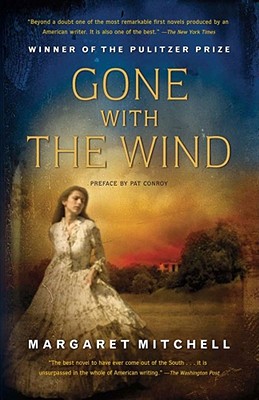
Gone With the Wind by Margaret Mitchell

Winner of the Pulitzer Prize in 1937, Gone With the Wind is a well known epic of love and war.  My copy weighs in at a hefty 959 pages, which is rather remarkable when I look back at how quickly I turned the pages.

I have to say upfront that the story is too sweeping and dramatic for my taste.  It was sort of like a soap opera, Civil War style.  The characters, except for Mammy perhaps, were tiring.  Scarlett is super annoying, Rhett is grating, Ashley is weak, Melanie is naive.  Yet for all of that, I found it all surprisingly enjoyable.

What makes Gone With the Wind so striking is how quickly and [seemingly] easily it pulls you into the world of the Confederacy.  The only other time that stands out in my mind that I experienced that was with The Good Earth.  Interestingly enough, The Good Earth won the Pulitzer only a few years before Gone With the Wind.  Being very readable and yet deep and layered is a quality that I find quite impressive.

Some of my favorite quotes:
I tell you they're born queer. Look at the way they go tearing up to New York and Boston to hear operas and see oil paintings.  And ordering French and German books by the crate from the Yankees!  And there they sit reading and dreaming the dear God knows what, when they'd be better spending their time hunting and playing poker as proper men should.
Throughout the South for fifty years there would be bitter-eyed women who looked backward, to dead times, to dead men, evoking memories that hurt and were futile, bearing poverty with bitter pride because they had those memories.
He felt there was something unbecoming about a woman understanding fractions and business matters and he believed that, should a woman be so unfortunate as to have such unladylike comprehension, she should pretend not to.
A woman had no business even knowing what a mortgage was.
She was twenty-five and looked it, and so there was no longer any need for her to try to be attractive.
Live's under no obligation to give us what we expect.  We take what we get and are thankful it's no worse than it is. 
I read this for the Back to the Classics Challenge: my book with a wartime setting.  It was a great experience--I'm glad to have read it--and puts me in the mood to read more about the Civil War.  What a great way to experience some history!

Title: Gone With the Wind
Author: Margaret Mitchell
Pages: 959
Published: 1996 Scribner (orig. 1936)
Read For: Back to the Classics Challenge
My Rating: 4.5 stars

Friday, July 8, 2011

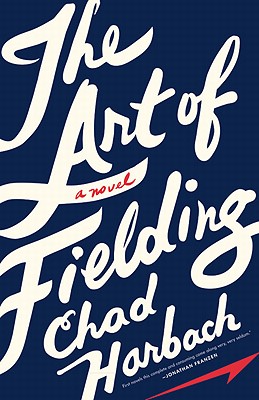
The Art of Fielding by Chad Harbach

I was going to write about Beloved next, seriously I was, but then The Art of Fielding knocked my socks off and I just can't seem to go about doing anything else until I get them firmly on my feet again by getting all my thoughts out of my system.  See? This is what happens when I don't have anyone sitting next to me to absorb the energy when I finish a great book: I go blog-wild.

(Now, if you are trying to comprehend how a book about baseball could steal the limelight from a literary classic such as Beloved, (especially when literature wins over sports every day of the week in my mind,) the answer is simple: baseball is much more fun than slavery, even if you aren't a fan of the sport in general.  And it's summer, so fun wins the day.)

The Art of Fielding doesn't come out until the beginning of September, (many thanks to the publisher for sending me my copy!) but the synopsis is simple and should become fairly familiar before long (I'm expecting to see this book pop up more and more the closer we get to September).  The bare bones description goes like this: At Westish College, a small school on the shore of Lake Michigan, baseball star Henry Skrimshander seems destined for big league stardom. But when a routine throw goes disastrously off course, the fates of five people are upended.

Sure, this book might be about college, about baseball...and about Moby Dick, (an interesting addition I wasn't expecting,) but more than those things, it is about the people: real, layered, complex, flawed people.  I can't say that I'd want them all in my life, but I adored being able to spend a bit of time with them.  Their idiosyncrasies were exaggerated just enough to make them humorous while still being a great example of the quirks we all have.

President Affenlight and his daughter Pella are definitely not the most stable family--if you can call them a family at all.  They both have some level of obsession with appearances and expectations, although they would most likely deny it. Honestly, I wouldn't be able to spend much time around these two before wanting to slap them upside them head.  I don't think either of them really knew what they were doing.

Henry and his roommate Owen make odd additions to the college baseball team in very different ways.  Owen is one of those people that comes off as incredibly self-assured, (which still has me wondering what drives him,) while Henry--in some ways the person whom events revolve around--is one of those guys that is a mystery even to himself.  And not in the mysterious/captivating sense, more in the content-being-behind-the-scenes sort of way.  You just aren't sure (and he probably isn't either) how many layers you'd find if you were to try to get to know the real Henry.

And then there's the gruff, lovable Schwartz. Schwartzy.  Shorts.  I loved Mike Schwartz, even though he didn't take care of his pain (or his apartment) properly.  He put others first, just as a way of life, and I wanted to give him a big teddy-bear hug more than once.  I don't know if I would have washed his dishes for him...but maybe...even though I think washing dishes is about on par with scrubbing toilets.  Schwartz carried this book for me; he made me care.

For characters that are so brilliantly portrayed, in situations so keenly felt, there is a surprising elusiveness to them.  Instead of feeling underdeveloped, though, this is an element that adds to the novel's depth and meaning.  None of them are perfect--far from it--but that's part of the joy and charm behind this book.  If anything, they show us that we are all on a journey to know ourselves and figure out why we do the things we do.  Perhaps their mistakes can help illuminate our own.

What else do I want to say? I know I'm going to leave something out...
  - For a chunkster (500+ pages) this was remarkably quick to read.  The writing is spry and full of humor, the observations are entertaining and witty while retaining a remarkable amount of insight.  The pace is great, balancing detail with fascinating plot turns.
  - For a sports UNenthusiast like myself, the baseball factor was (surprisingly) not a barrier.  In fact, it had me fondly remembering the year when I played T-Ball (too bad the one photo of me holding a bat is proving un-findable).  There's something patriotic about baseball for me...or there was until the strike in the mid-90s which destroyed my lingering fancies of old-fashioned sports-related romantic political chivalry.  I won't go as far as to say that the book has made me like baseball again, but close.  Pretty close.
  - A warning on some of the content...the mild locker-room humor, language & antics really weren't a big deal.  The bigger thing for me was the rather casual attitude toward sex, especially [*possible spoiler*] between Affenlight (the 60 year-old president of the college) and Owen. Hrm.  [*that's all*]  Nothing sexual was ever described in detail, it's more the idea behind it all that bugged me.  I was able to set aside my opinions and enjoy the book, otherwise it could have affected my reading experience.

How does a book with so many apparent strikes against it from the get-go leave me sad that I'm done, reluctant to pick up a different book, and eager to read it all over again? Talented writing, insightful observations, depth in the characters, and a sense of humor.  If you enjoy it as much as I did, you might consider nominating for the Indie Lit Awards--out of the 2011 fiction I've read so far, this is certainly a contender.

Title: The Art of Fielding
Author: Chad Harbach
Pages: 509
Published: Liitle, Brown 2011 (release date is September 7)
Read For: Review--Many thanks to the publisher for sending me a review copy!
My Rating: 5 stars
Eligible to be nominated!
Friday, June 24, 2011

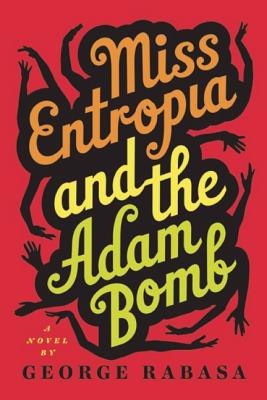
Miss Entropia and the Adam Bomb by George Rabasa

It's a rare treat for a book with a rather depressing topic to feel lighthearted and humorous, but that's exactly what George Rabasa has given us in his new title: Miss Entropia and the Adam Bomb.  The amazing thing is that he manages to do this without coming off as flippant or inaccurate.  This, in my opinion, is even more impressive than if he'd gone the serious route (as in the film Garden State (or the book C) where the storytelling style directly mirrors the mental state of the main character) because balancing humor with mental illness is a seriously fine line.

Just how ill Adam and Pia are is an interesting matter to consider, especially as compared against the "sane" people in their lives.  The blurb on the back of the book describes Adam as "no saner than he wants to be" and (because I'm having a hard time summarizing it myself) the synopsis goes like this:
      From the moment Adam Webb sees Francine Haggard--in the van that is supposed to return them to the Institute Loiseaux--the two young mental patients are inextricably connected. Adam will never let this girl go.  From Hijacking the van, to hiding her in his bedroom and then spiriting her away to Minnesota's north woods, "Miss Entropia" becomes the focus of Adam's every thought and of everything he does.
      He believes her to be a goddess, his own goddess.  But the pyromaniacal Miss Entropia will be neither worshiped nor owned.  And so Adam's possessiveness is destined to push her to the point where her fury will ignite.  Theirs is an incendiary love story, an unbalanced Romeo and Juliet, that spins and arcs its way strangely toward tragedy.
The writing is crisp, with a fair amount of dialogue, and every page moves the plot forward, illuminating the characters' personalities.  It was a great experience and a joy to read--another score for Unbridled Books! If you are up for a unique voice in writing, and a humorous jaunt through "normal" life, you really should pick this book up.  I thought it was brilliant.  I'll leave you with a random quote (from pages 226-227 at an art museum) to whet your appetite:
     An hour later we were in the Walker, standing before a skinny security guard too tall for the pants cuffs hovering above his ankles, who faced us with a look of profound indifference.  His attitude was reassuring since heightened interest from people in uniforms made us uneasy.
      "Can you direct us to the Picasso exhibit, sir?" Pia asked him.
      "Galleries three and four," he said with a nod toward the stairs behind him.
      Clearly Pia expected more. "What's your name?" she asked, as if she planned lodge a complaint for his lack of enthusiasm.
      "Ralph."
      "Wow, short for Rafaello. A great artistic name.  Art is in your DNA, Ralph.  You are preordained for your profession."
      He directed a look at her, then a quick glance in my direction to see if I was complicit in this exchange.  I tried to convey with a slight shrug that I was simply a bystander.
      "You must love your job," Pia said.  "Spending your day surrounded by all this great art."
      "Anything else I can do for you?" He gave Pia a blank stare designed to bring this odd conversation to its conclusion.
      "I'm looking for Girl Before a Mirror," she said.
      "I don't know her," he said, already dismissing us from his attention.  "Check the ladies room."
      Pia took his answer at face value.  "No, you wouldn't know her.  She's Marie-Therese. She was Pablo's mistress back in the '30s."
      I rushed to the rescue.  "it's one of Picasso's paintings."
      "Galleries three and four," he repeated mechanically.
Like I said, it's a treat. Eat it up!

Title: Miss Entropia and the Adam Bomb
Author: George Rabasa
Pages: 336
Published: 2011 Unbridled Books
Read For: LibraryThing Early Reviewers
My Rating: 4.5 stars

Tuesday, June 14, 2011

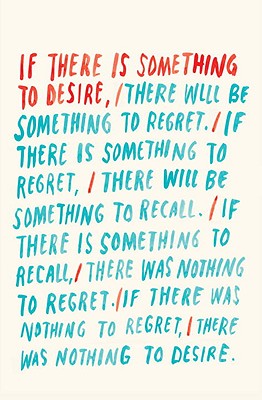
If There is Something to Desire by Vera Pavlova

I have found a poet I love.  Perhaps it was bound to happen sooner or later, considering my determination, but part of me feared that poetry was going to be another of those areas where my tastes are not the norm...that I'd remain the unfulfilled oddball in the corner, wondering what was wrong with me (I like to write poetry, why on earth don't I like to read it?)  Thankfully, it was just a matter of finding the right poet.

Vera Pavlova is a Russian poet whose work is translated by her husband, Steven Seymour.  (As a side note, my Russian friends inform me that Americans always stress the wrong syllable in Russian names...it isn't Pav-LO-va, but PAV-lo-va...maybe someday I'll get it right on the first go round.)  It's refreshing to experience a view of life from a different culture.  The only downside to having a favorite poet who writes in a foreign language is that I am unable to enjoy all that she has written.  If There is Something to Desire is her first full-length volume to be published in English, and I'm crossing my fingers (and hoping) that it won't be the last.

Praised for her succinct directness, I find that her little thoughts are often a combination of heartbreak and whimsy.
Why is the word yes so brief?
It should be
the longest,
the hardest,
so that you could not decide in an instant to say it,
so that upon reflection you could stop
in the middle of saying it.
Somehow she manages to encapsulate so much in so few words, making this volume of 100 small poems highly re-readable.  There were only a handful that really grabbed me at the time of reading, but I have a feeling that I will gain new favorites through the years.  This is a volume that will stay on my shelf only to be pulled down again and again--I love the way she looks at the world.
Basked in the sun,
listened to birds,
licked off raindrops,
and only in flight
the leaf saw the tree
and grasped
what it had been.
Pavlova's poems are easy to appreciate (some more than others) and worth checking out.  I think my favorite of the collection--because I'm a goof and this just tickles my fancy--is this brief statement:
I have brushed my teeth.
This day and I are even.
This is poetry I can love.  A little humor, and somehow a lot of back-story--it sets my imagination rolling!  Light and dark, quick yet lasting.  What do you think of these three poems?  How do they compare to other poetry you may be familiar with?  As always, I'm open to recommendations!  This volume gives me hope of finding other favorites out there...this journey into poetry is becoming much more exciting.

Title: If There is Something to Desire
Author: Vera Pavlova
Pages: 128
Published: 2010 Knopf
My Rating: 4.5 stars

Saturday, June 4, 2011

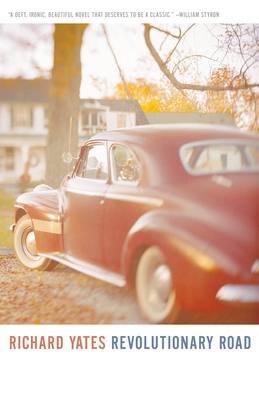
Revolutionary Road by Richard Yates

It's always a little scary to jump into a book that comes laden with expectations.  Oftentimes, expecting a book (or anything else for that matter) to be amazing is the perfect way to set yourself up for disappointment.

Revolutionary Road came with such expectations for me.  Richard Yates appeared to be something of a literary darling: quite a favorite amongst book bloggers and respected by his contemporaries, even if his name was a little less known to the general reading populace.  Other than those vague notions, the only thing I knew about the story were the bits and pieces I could remember from seeing the movie trailer once or twice back in 2008.  Now, having read (and loved) the book, I am interested in seeing the film, just to see how it compares.  I'm very happy that I hadn't seen it before reading the book, (so that I was able to get the full thrill-of-discovery experience,) although I can't imagine the movie having anywhere near the amount of detail and insight the book had...even if you have seen the movie I'd still recommend reading the book.

The premise is simple, and I don't think that anything is spoiled by knowing it. Frank and April are a young, disillusioned married couple living in mid-century American suburbia.  The magic in the book comes from the viewpoint on the era, the readability and lightness of the prose, and the incredible characterization.  You may not identify with Frank or April, but if you don't understand who they are...let's just say that it won't be Richard Yates' fault.  However, having some life experience under your belt before reading the book will go far in developing a connection with the story being told.

Richard Yates provides a perfect example of how a literary work doesn't need to be lofty, arrogant, or overly symbolic in order to be well done.  Here is a book with fascinating characters, insightful prose, and a sprightly pace that will leave you thinking and longing for more.  Thankfully, there is more Richard Yates to be had. You can be sure I'll be searching it out.
a quote from page 332: 
The whole point of crying was to quit before you cornied it up.  The whole point of grief itself was to cut it out while it was still honest, while it still meant something.  Because the thing was so easily corrupted: let yourself go and you started embellishing your own sobs, or you started telling about the Wheelers with a sad, sentimental smile and saying Frank was courageous, and then what the hell did you have?
Title: Revolutionary Road
Author: Richard Yates
Pages: 346
Published: Vintage 2000 (orig. 1961)
My Rating: 5 stars

Saturday, May 7, 2011

Everything is Illuminated by Jonathan Safran Foer

Everything Is Illuminated : A NovelThis is book is so....much.  I don't know quite how to explain it, but there was so much more in the book than I was expecting.  Although I hadn't seen the movie, (I watched it after reading the book,) what the movie covered was more what I was expecting...a story of a guy looking for his roots in Eastern Europe...perhaps that was based on seeing the trailer back when it was released?  (Now that I've mentioned the movie I have to say that it is no where NEAR the experience the book is.  VERY different.  So don't got saying well I've seen the movie...it doesn't count. At all.)

There is so much creativity in the writing, for one thing.  From the fact that Jonathan Safran Foer is himself a character in the book, to the huge chunks of dialogue all smooshed into a single paragraph (which shouldn't work, but does) to the eye-dialect written so well that I often found myself reading aloud just for the fun of it.

Here's a quote (from page 3, in the words of Alex--the Ukrainian translator) that will give you an idea of the dialect, the audacity, and the humor:
I will be truthful again and mention that before the voyage I had the opinion that Jewish people were having shit between their brains.  This is because all I knew of Jewish people was that they paid Father very much currency in order to make vacations from America to Ukraine.  But then I met Jonathan Safran Foer, and I will tell you, he is not having shit between his brains.  He is an ingenious Jew.
I can understand now why people talk about this book like they do...it leaves an impression, regardless of your ultimate opinion.  There were times while reading that I was thinking I love this!  So much fun! and other times when I was cringing at the irreverence:  oo, a little too much...hope my book club can handle it.  But neither impression lasts for long: just as soon as I'd almost had too much oddity, I was plunged back into fascinating humor or touching insight.

From page 78:
She was a genius of sadness, immersing herself in it, separating its numerous strands, appreciating its subtle nuances.  She was a prism through which sadness could be divided into its infinite spectrum.
This is a story of an American traveling to the Ukraine to research his ancestry; it is a story of Jewish heritage and oppression; it is a balance between characters and caricatures, old world and new world, past and present.  I laughed and cried many times--by the end of the book the people inside were dear to me, even with all their quirks.  Not your typical reading experience, this is a book to go to when you are in the mood for something unique.

Title: Everything is Illuminated
Author: Jonathan Safran Foer
Pages: 276
Published: Harper Perennial 2003 (orig. 2002)
Read For: Book Club 1
My Rating: 4.5 stars

Monday, April 25, 2011

Miss Pettigrew Lives for a Day by Winifred Watson

Miss Pettigrew Lives for a Day (Persephone Classics)Miss Pettigrew Lives for a Day is a wonderfully charming way to spend a couple of hours. It's funny, quaint, and even a wee bit shocking at times.  This is the first Persephone I've read, but if it is any indication of how unique their titles are, I'm definitely interested.

You may have seen the movie with Frances McDormand and Amy Adams (that is where my familiarity with the story began) but whether you have or not, reading the book is well worth the time.  It is quick paced and packed full of adventure.  At the beginning of the day poor Miss Pettigrew has no idea what she is in for, and by the end of the day she's had the incredible fortune to have been swept off her feet and into a whole new circle of friends.  This truly is a Cinderella story.

One of the things I loved was that the Cinderella-ish-ness wasn't based solely on the guy.  There was that element, but the real change and miracle was in how Miss Pettigrew discovered her identity.  She had muddled her way through life feeling like she wasn't good enough for her parents, wasn't competent enough for her work, wasn't attractive enough for marriage, and wasn't enjoyable enough for friends, and this single day changed all of that for her.  Even though the book doesn't take place in modern times, I think it still applies.  I think that it is amazing how much the opinion of others affects our view of ourselves, whether we'd like it to or not.

This is a book that manages to be a fairytale and somewhat grown up at the same time and it left me feel smiley and content.  It's one I'll read again, and deserves a place on the shelf.  Next time you need a little vacation, don't go out of town--read this book instead!

Title: Miss Pettigrew Lives for a Day
Author: Winifred Watson
Pages: 234
Published: Persephone 2008 (orig. 1938)
My Rating: 5 stars