After being laid out on the couch as sick as a dog for nearly week, I've lifted my head above the fog with that strange notion of time set askew. It feels as if I've missed more than a week of reality, and I figured that the best tonic would be to come clean on some perfectly good books that left me cold. Once I get this out of my system I move onto gushing about other perfectly wonderful books and all will be well.
May I present: The Story of Many Dogs That Almost Broke Into Speech But Never Quite Did. At least that's what I expected them to do.
This book was hugely popular a while back. Oprah selected it. I read enough unenthusiastic reviews to convince me not to read it, but then it was selected for my book club so I had to. I got through it mostly on audio, and if I said that I cared about any of the characters, I'd be exaggerating.
However. If you are a dog lover, a lover of the Shakespearean tragedy, if you are a Wisconsin lover or a lover of the long-winded epic, then this may be a match made in heaven.
Parts of Running the Rift were quite good. The story of Rwanda's recent history can't fail to be compelling, making it impossible to remain emotionally detached during the climax of the plot. It is important to tell the stories of those who are unable to tell their own—atrocities should not be left unremembered.
The problem is the nagging feeling that has followed this story for me: that those people weren't done justice in this book. I had a hard time drumming up a connection to any of the characters...what should have been a celebration of survival and spirit, instead felt rather lifeless and mechanical, and I thought it was a pity. Obviously my opinion is not universal, and I still think it's a story worth telling, even if the telling wasn't spectacular.
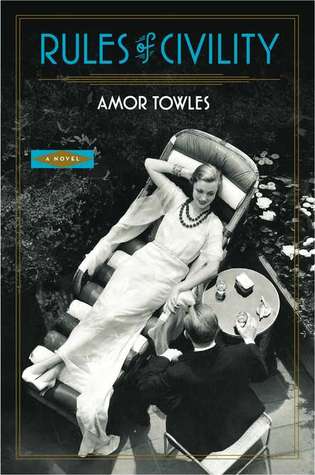
Now I thought that Rules of Civility would be a terrific romp through NYC in the Roaring 20s, and who am I to complain about that? Snazzy style, glamorous girls, plenty of parties, and most of all...jazz. Yes please.
Actually, I may have liked it more if I had read it instead of listening to it. Perhaps it was the narrator's intonations that brought attention to the scads of metaphors saturating the prose. It sounded as if it were written by someone who enjoyed sunsets and long walks on the beach and could rather do without having to actually read anything. I'm sorry, but there it is.
Still, I love the era. The title is great. The premise has promise. Sigh.
The Kitchen House: A Book Club Favorite. It's no wonder, actually, because it seems to have been marketed directly for that purpose. Simple writing, quick pace, tons of plot points, a gazillion-billion issues (and their sisters), and the Southern, historical setting, and Bam! Book Club Favorite!
Okay, but seriously. If you are in the mood for a quickly moving, easy to read, page turning experience, then pick it up. Do it. It's what you want. Just don't try to figure out why the Irish girl is named Lavinia, or what is benefited by the narrator switch, or if it is likely that all of these things would have happened to one person, or which issue you should care about the most...because you might get distracted and stop turning pages so quickly. And that was the point, wasn't it? Oh, and don't forget to meet up with a group of girls and drink a glass of wine afterwards. You've earned it.
Ahhh. I feel so much better now. I think that was just what the doctor ordered. :)
Showing posts with label It's Not You It's Me. Show all posts
Thursday, February 28, 2013
Wednesday, May 16, 2012
It's Not You, It's Me: Vol. 3
Nothing like a sunny spring day to spotlight some quality books that left me disgruntled, right? I have 5 books here in which I was interested and subsequently disappointed...not because the book was terrible (necessarily) but because we were a poor match. Or something.
I became intrigued by Haruki Murakami after reading The Wind-Up Bird Chronicle for a book club back in 2009. (It was far more bizarre than anything I was used to reading, but it grew on me.) After the Quake is a collection of stories revolving around the aftermath of the Kobe earthquake in 1995.
One of the stories was a good deal of fun, but most of them left me thinking "AND??" His writing is excellent, his characters are detailed and realistic, his settings are vivid and the pacing is seamless. The plots were obviously not the focus (either that or I'm just a bit clueless...wouldn't be the first time) and the themes weren't provoking enough to capture my imagination. It's a bit of a strange experience for me to find that although plot isn't usually the deal-breaker for me, it sure seemed to be this time.
Will I read more Murakami? Yes. His writing is too good to swear off forever, and besides I own The Elephant Vanishes. But maybe not this year.
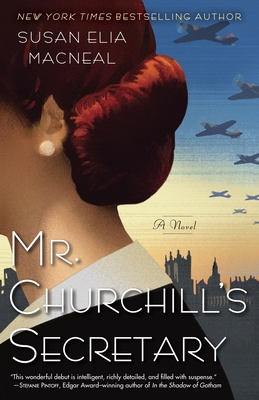
Mr. Churchill's Secretary was an ARC from LibraryThing, which I was very happy to receive. The setting was very agreeable, and I was so very ready for a lighter read, which this was certain to be.
What happened, though, was that the setting was only easy to picture because I've been there (I've walked through the war rooms in London and was able to mentally recreate the feeling that the author was trying to tell the reader about) not because the writing showed me anything. So the writing was out. And then the characters had the depth of paper dolls. The main focus was the mystery-plot, implausible though it may have been, and yet Was I Satisfied? Of course not. I'm hard to please, apparently.
This was actually an enjoyable read...I had a fun time tromping through 1940s London...but was rather like drinking a glass of air. Not very filling, you know? Once the thrill of turning the pages was over, there was nothing left. The good news? I think that qualifies it as an excellent summer read! Maybe I just read it at the wrong time of the year. I should have been lounging by a pool.
Aimee Bender, anyone? After reading The Particular Sadness of Lemon Cake, I wasn't sure I wanted to explore this author further, but the topic of An Invisible Sign of My Own sounded interesting, and it was recommended by a girl from my book club. GoodReads says this:
"Mona Gray was ten when her father contracted a mysterious illness and she became a quitter, abandoning each of her talents just as pleasure became intense. The only thing she can’t stop doing is math: She knocks on wood, adds her steps, and multiplies people in the park against one another."
It was all just so fantastical that I couldn't keep myself engaged. I didn't understand, couldn't identify, was unable to suspend disbelief. Quirky, rather like Jonathan Safran Foer for me (only more so,) I find the process of discussing it more interesting than the process of reading it. I almost didn't finish reading this one, but I persevered.
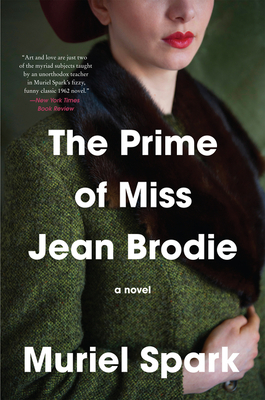
And then there's Muriel Spark! I knew nothing about her, but doesn't this book have an adorable cover? Before I was more than a few pages into The Prime of Miss Jean Brodie, I found myself thinking that this was exactly the kind of oddball storytelling that I could fall in love with. If only that sentiment had held!
I enjoyed the snatches of repetition and how bits of the future kept popping into the past. I liked the brief visit back to Edinburgh (what a beautiful historical city that is!) and the nod to the blossoming era of female individuality. I should have liked the suspense of the unfolding social drama.
You know that undefinable bit of magic that a book can hold for some people and not for others? I was in the not-for-others camp on this one. It just didn't captivate me. My appreciation was clinical - after the first few pages I didn't have any emotional reaction whatsoever...not even to the mechanical aspects. It was a time of literary ennui. Ho-hum. The End.
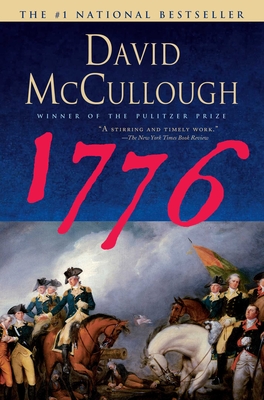
And then there's that awkward moment when you are in the middle of a book you've owned for years by an author you've enjoyed greatly in the past, and all you can think is how not-wonderful it is. John Adams sold me on nonfiction years ago, and McCullough's The Johnstown Flood was a fascinating bite of history as well. But 1776 was so much less than the bestselling Pulitzer Prize winning history that I expected to find.
First of all, expectations. I expected a history of the American Revolution. Which it was, in part. Specifically, the 1776 part. (duh.) The problem was that there was so. much. more. to the Revolution than just the year of 1776, and because I kept expecting the book to end at the end of the war, that first year took FOREVER.
The other problem, perhaps, is that this was history in a name/fact/date/textbookish sort of way, and though well-written for that sort of thing, after reading pieces of narrative nonfiction such as Unbroken, this just fell flat. I didn't learn as much as I could have because I was struggling with trying to keep track of who was who and where and when and it was all quite muddled together.
Now I want to know if you've read or connected with any of these books or authors. Does the problem lie in me? Or can I blame the book after all?
One of the stories was a good deal of fun, but most of them left me thinking "AND??" His writing is excellent, his characters are detailed and realistic, his settings are vivid and the pacing is seamless. The plots were obviously not the focus (either that or I'm just a bit clueless...wouldn't be the first time) and the themes weren't provoking enough to capture my imagination. It's a bit of a strange experience for me to find that although plot isn't usually the deal-breaker for me, it sure seemed to be this time.
Will I read more Murakami? Yes. His writing is too good to swear off forever, and besides I own The Elephant Vanishes. But maybe not this year.
What happened, though, was that the setting was only easy to picture because I've been there (I've walked through the war rooms in London and was able to mentally recreate the feeling that the author was trying to tell the reader about) not because the writing showed me anything. So the writing was out. And then the characters had the depth of paper dolls. The main focus was the mystery-plot, implausible though it may have been, and yet Was I Satisfied? Of course not. I'm hard to please, apparently.
This was actually an enjoyable read...I had a fun time tromping through 1940s London...but was rather like drinking a glass of air. Not very filling, you know? Once the thrill of turning the pages was over, there was nothing left. The good news? I think that qualifies it as an excellent summer read! Maybe I just read it at the wrong time of the year. I should have been lounging by a pool.
"Mona Gray was ten when her father contracted a mysterious illness and she became a quitter, abandoning each of her talents just as pleasure became intense. The only thing she can’t stop doing is math: She knocks on wood, adds her steps, and multiplies people in the park against one another."
It was all just so fantastical that I couldn't keep myself engaged. I didn't understand, couldn't identify, was unable to suspend disbelief. Quirky, rather like Jonathan Safran Foer for me (only more so,) I find the process of discussing it more interesting than the process of reading it. I almost didn't finish reading this one, but I persevered.
I enjoyed the snatches of repetition and how bits of the future kept popping into the past. I liked the brief visit back to Edinburgh (what a beautiful historical city that is!) and the nod to the blossoming era of female individuality. I should have liked the suspense of the unfolding social drama.
You know that undefinable bit of magic that a book can hold for some people and not for others? I was in the not-for-others camp on this one. It just didn't captivate me. My appreciation was clinical - after the first few pages I didn't have any emotional reaction whatsoever...not even to the mechanical aspects. It was a time of literary ennui. Ho-hum. The End.
First of all, expectations. I expected a history of the American Revolution. Which it was, in part. Specifically, the 1776 part. (duh.) The problem was that there was so. much. more. to the Revolution than just the year of 1776, and because I kept expecting the book to end at the end of the war, that first year took FOREVER.
The other problem, perhaps, is that this was history in a name/fact/date/textbookish sort of way, and though well-written for that sort of thing, after reading pieces of narrative nonfiction such as Unbroken, this just fell flat. I didn't learn as much as I could have because I was struggling with trying to keep track of who was who and where and when and it was all quite muddled together.
Now I want to know if you've read or connected with any of these books or authors. Does the problem lie in me? Or can I blame the book after all?
Monday, January 30, 2012
It's Not You, It's Me: Vol. 1
Welcome to my new feature! I thought I'd start out with some books from 2011 that I never got around to posting about for one reason or another--hope you find something to enjoy!
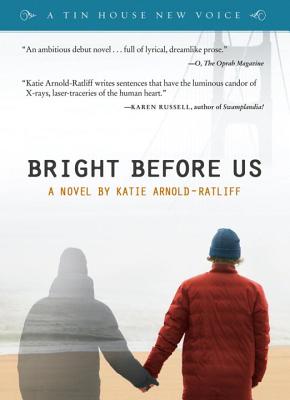
A Powell's Books Indiespensable selection in 2011, Bright Before Us had many components that should have made it a good fit for me:
- a descent into paranoia & disillusionment
- the idea of lost soul mates & the complexity of marriage
- navigating trauma in adults and children
Unfortunately, it didn't quite work for me, mostly because the main character really bugged me. I didn't sympathize with him, and wasn't curious about his story at all. Additionally, the beginning was confusing to me--somehow I didn't realize that there were actually 2 female characters. Whoops. It all made SO much more sense once I realized that the dude's wife wasn't also his childhood sweetheart. Duh.
Right, so...if the above ideas sound interesting, if you keep in mind that Francis' wife is not Norah, and you don't mind the occasional irritating character, check this new author out!
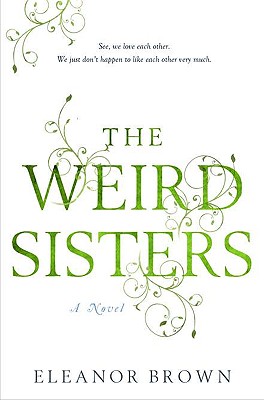
About a year ago, The Weird Sisters hit the shelves, and I was excited about the prospect of reading a story about a family of readers. The girls were named after Shakespeare characters for goodness' sake--it's got to be good!
My issues? 1: The pov didn't work for me. I've enjoyed plural-first-person in other books, but this one had too few characters & it was awkward. 2: I guess I really don't have any idea what it's like to have sisters, because the cattiness really got on my nerves. 3: The ending was a bit too tidy--I didn't think that it was wrapped up entirely realistically, and that made the characters seem more like tools than people.
BUT, if you are in the mood for a sweet little read about some modern women with Shakespearean names and don't care to get all critical like me, then give it a shot. A good vacation read methinks.
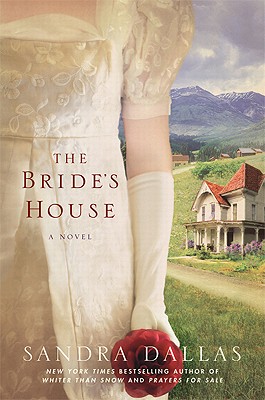
With The Bride's House, I had to wish a one-time favorite author farewell. We simply don't see eye to eye any longer. Perhaps we've both changed, but the heartwarming-heartbreak that I enjoyed in her earlier books has evaporated.
Part of the problem here was the number of main characters. The story line is meant to revolve around the house, (interesting idea,) so the fact that we see 3 generations pass through it should further that idea, not detract from it; but I was left feeling that none of the characters were fully developed.
Actually, I take that back. I loved the first character and was really stinking irritated when she only got 1/3 of the book. I didn't give a flying flapjack for the other two girls. I wish I could request a rewrite. Ms. Dallas probably wouldn't appreciate that very much though, would she?
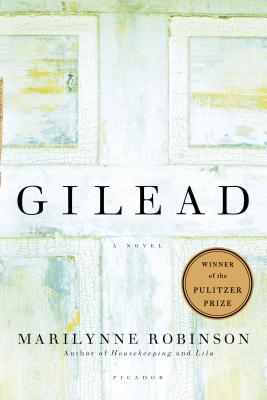
A Pulitzer Prize winner in the Fiction category for 2005, Gilead is a book that I was supposed to like.
- Pulitzer? (check)
- Character driven? (check)
- Reflective/Introspective? (check)
- Beautifully & Skillfully written? (check)
So what went wrong? I was bored. Everything took so looong (which was actually pretty realistic since it was narrated by an old man.) The parts I like the most were quotes like this:
There should be a law to prevent recipes for molded salad from appearing within twenty pages of any article having to do with religion.Funny, right? Or, maybe, more funny because the rest of the book was so even keel. It was interesting and poetic, but we didn't connect. In some ways made me think of Tinker (a more recent Pultizer Prize winner) except that Gilead took me longer to read. Much longer. So in the end, hmmm...it was alright. Well-written, but just okay.
Subscribe to:
Posts (Atom)