Tuesday, September 25, 2012

Huck Finn: Robotic Edition


I couldn't resist: I ordered the Robotic Edition of Huckleberry Finn.  I felt inclined to experience this culturally corrected edition, seeing as how it does the opposite of what the kerfuffle-edition did (changing every race-oriented-derogatory-term to 'slave').  Instead of making it tamer, less offensive, less about what it's about, this edition makes the point of the story that much more poignant.  By changing every offensive racial term to "robot", not only do we create some smiles, but we tell an important story in a way that has much more of the original impact for this day and age.  After all, our opinion regarding the humanity of robots is quite similar to the previously prevailing opinion about the real intelligence (etc.) of slaves.
Um...I mean...I'm of the opinion that the last version didn't go far enough in its censorship, and this version is best so that no one is uncomfortable and no point is made.

But that's just me.


An excerpt from the introduction:
'Banned from the Concord Public Library shortly after its first publication in eighteen hundred and something, "Adventures of Huckleberry Finn" was criticized in the Boston Transcript by members of the library committee for being "rough, coarse, and inelegant, dealing with a series of experiences not elevating, the whole book being more suited to the slums than to intelligent, respectable people." 
Ouch. 
While we have not taken the time to actually do the research to back up our claim, it is easy to infer that the sympathetic depiction of the African American character Jim as a human being worthy of freedom was one of the "rough, coarse, and inelegant" elements of the book to which many critics objected.  Which is ironic considering modern criticism has shifted to calling the book racist because of Twain's use of the word "n-word" more than 200 times throughout the text. 
Granted, that a lot of n-bombs—but Twain scholars (and other people who understand the book) counter it is actually an indictment of racism: the book shows a young boy's emotional growth from conforming to a racist society's values to gradually learning to think of people with higher levels of melanin production by the melanocytes in the basal layer of their epidermis as actual people.  But that argument has not stopped schools and libraries from keeping the book off shelves and out of classrooms.'

Good stuff, right?  
Robots are people too.
(Find out more here.)

Thursday, September 20, 2012

A Photographic Recap of Summer

As expected, summer was crazy; and of course the advent of a new school year comes with promises of more to come. Sometimes the only proper way to combat the quick pace of life is with some time spent in reflection. Upon looking through my photos of the last few months I found many smiles, inspiring me to share.  This is what our summer looked like:
We began our summer with trips to Disneyland and Knott's Berry
Farm.  Here's my youngest varmint at Knott's.
One of those internet pics that reminds me so much of
one of my friends that I keep it on my phone.  Makes me happy. :)
My girls (the two in front) loved horse camp at the beginning of summer.
The stables are such a fun change in pace from the rest of the city.
As a precursor to viewing a failed fireworks show in San Diego for Independence Day,
we took our kiddos on a trip to the Wild Animal Park.  What a beautiful habitat
for these animals! A day to remember.
The part of Northern California where I grew up suffered from major wildfires
this summer.  Wildfires are much scarier than earthquakes, just so you all know.
My family!  Yes, we are a bunch of goofs.  This apparently seemed like
the proper way to pose whilst outside the capitol building in Sacramento.
Perspective:  this wall is 7.5 ft. high, but it looks like
so much more when your child is hanging off the edge.
In which I discover that the English language is indeed lacking.
Why don't we borrow many Japanese words?  We need this one.

I've learned how to knit this year!  Here's a shot of my foot modeling
my 5th pair of socks.  (Sweaters, here I come!)
My 11-year old made her first quilt.  Proud momma here.
My older brother got married in Australia this summer.
I was unable to attend, but did get to meet the joy of his life
when they came to California during July.  Happiness!
Decisions, decisions.  Designing our remodel absorbs brain cells
that could be put to use reading books instead.
tee-hee

Monday, September 17, 2012

Oscar Fingal O'Flahertie Wills Wilde

I don't know if I like Oscar Wilde so much simply because he writes amazingly witty lines, or because I feel so bad for him having to do prison time and want to give him hugs.  I've only read two of his plays (The Importance of Being Earnest, and most recently, Lady Windermere's Fan) but they've convinced me that I need to read more.

I've heard that The Picture of Dorian Gray (his only published novel) tends toward the dark and depressing—have you found that to be true?  I bought a copy & plan on reading it anyhow, but like to know what the general consensus is before I jump in. (Just the overview, not the details...no spoilers!)

Lady Windermere's Fan is a play about a young married couple in the upper echelons of London society that find themselves (and their marriage) being challenged by rumors and a lack of proper communication.  As you may expect, it is filled to the brim with his characteristic wit and humor.  Not only is it entirely entertaining, however, but it is thought-provoking as well: a perfect combination and definitely recommended (it's super quick to boot.)

Not only does Wilde's writing spur the imagination, but his name does as well.  In Patrick Taylor's An Irish Country Doctor, one of the main characters is named after Wilde—an homage paid to Irish literature in general, and a tribute to those Irish authors, such as Wilde, who may not have received such honors during their lifetimes.

An Irish Country Doctor is the beginning of a series, and is a cozy read for those days when you wish you were back in Ireland (or wait, is that just me?) Filled with humorous anecdotes and endearing characters, the town of Ballybucklebo will be one you'll love visiting (especially with the audio version read by John Keating—love that accent!)

Wouldn't it be fantastic to see one of Oscar Wilde's plays performed live?  I've decided that's one of my goals in life.  :)  How have your Wilde experiences been?  Any other works (of his or about/inspired by him) that I should put on my list?  (As an aside, did you see these 10 interesting facts about Wilde?)

Thursday, September 13, 2012

For the Record: August 2012

It's been three weeks since I've finished reading a book.  Unfortunately that's not because I'm busy throwing back some impressive chunksters, but because I'm busy running around doing a billion other things. (pout)  Still and all, I did read 6 books (which, all things considered, isn't half bad.)

6 Books Read in August: (81 year-to-date)
1 for Book Club:
  - A Thousand Acres, Jane Smiley (3.5)

5 for Fun/Challenges:
  - One of Ours, Willa Cather (4)
  - Lady Windermere's Fan, Oscar Wilde (4)
  - Hell and Ohio, Chris Holbrook (4.5) [highly recommended short stories]
  - Quiet, Susan Cain (4) [read-along, reviewed here]
  - The End of the Affair, Graham Greene (4)


Challenges:
This month I read 4 books of 51 (33 year-to-date) for my various year-long challenges.
   - Willa Cather: One of Ours (done!)
   - Pulitzer: A Thousand Acres (1 more to go)
   - TBR Shelf: Hell and Ohio (6 more to go)
   - Back to Classics: Lady Windermere's Fan (2 more to go)


2 Current Reads:
  - Moloka'i, Alan Brennert.  I'm behind in my book club selections, this one is first up.
  - Into the Blue, Robert Goddard.  This book club meets soon too, so this book is next.


On My Nightstand:
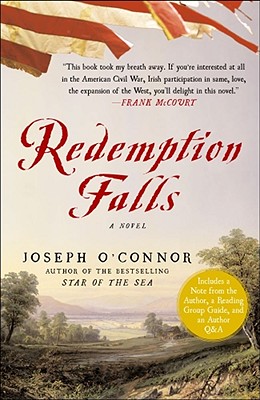
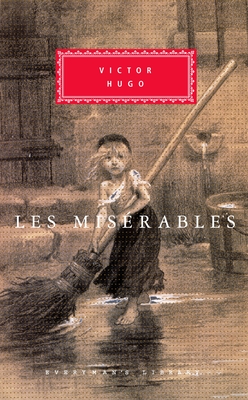
 If you saw my recent post, you wouldn't ask.  ;)  Seriously though, I'm looking at Redemption Falls and Les Miserables, both for read-alongs that are starting soon.


Tuesday, September 11, 2012

Book-Lag

I bought Les Miserables with full intentions of joining a read-along, only to place it on my nightstand and discover what 2+ weeks of being too busy to read has done to my perception of realistic reading goals.


This is ridiculous. (she says as she recalls another read-along book needing to be started that isn't even in these stacks.)  That stack on the left contains books I'm currently "reading" (a very theoretical phrase, seeing as how I haven't read a drop in the last two weeks.)  The other stacks are ARCs, loaners, book club books (due soon) as well as an Indiespensable book, some new arrivals from PaperbackSwap, and some classics I was craving.

Where do I start?  By putting some of these books away!  One book club is discussing Moloka'i in 7 days, the other book club is discussing Into the Blue a week later.  I certainly have work to do.  ;)

Friday, September 7, 2012

Starved.

I've just come off two weeks of insane craziness and am simply starved for some time to read and blog. The fact that I am typing this post must mean that life has started to shed its frenetic energy, slowing to the point of Very Busy, but my Google Reader is over 600—the highest it has ever been—so I have some work to do!

In addition to designing a major remodel, packing to move for the duration of the project, and preparing to home-school a high school student for the first time, the last two weeks have been consumed by the production of our 9th annual Joshua Fest—a Christian rock festival in Northern California that we* put on as a ministry** for teens (and others) that may not feel connected in the traditional Christian setting.

It isn't my style of music, but I love seeing the friendships and community formed while people are camping and enjoying the music.  This year held a special treat for some of the old-school kids with bands like Five Iron Frenzy, Relient K, OC Supertones, and MXPX, and we went out with a bang Sunday night with Switchfoot as our headliner.  I ran our official merch booth, (which means that I spent 13+ hours a day in a little room selling t-shirts, energy drinks, and ice,) which held the benefit of getting to meet a wonderful assortment of people who were completely jazzed to be there.

So that's what I've been up to.  I have a lot to catch up on, and tons of reading I want to do (pictures of my nightstand coming soon) but all in all, life is good.


* "we" meaning my husband and a close friend...with the amazing voluntary help and support of family and friends, without whom we could never pull it off.

** it's an event that takes tons of volunteer hours and never makes a cent, but we've got an incredible group of people that all summon super-human strength and endurance for the week to make everything work perfectly.

Saturday, August 25, 2012

Quiet by Susan Cain

I realize it's not true that I'm no longer shy; I've just learned to talk myself down from the ledge.  By now I do it so automatically that I'm hardly aware it's happening.  When I talk with a stranger or a group of people, my smile is bright and my manner direct, but there's a split second that feels like I'm stepping onto a high wire.

Boy can I identify with that statement.  I wasn't always shy: until I was 6 or 7 years old I remember being joyful and outgoing—part of the crowd.  By the time I entered 2nd grade, however, I'd had too many embarrassing situations (by my own unknowingly-introverted estimation) and found it was much safer to be quiet, to retreat from large social groups and unfamiliar situations (in fact, the thing I remember most about 2nd grade is the classroom's windows.)

I had a few years where I was painfully shy (to the point of having a difficult time talking to my parents) but I've grown out of most of that.  Though I scored 20/20 on the introvert/extrovert quiz (see the bottom of this article) I don't experience the agonizing guilt and shame that I used to feel regularly in social situations.  That doesn't mean that I like them necessarily, but I've become adept at "talking myself down from the ledge."

Although it may be impossible to read this book and not compare the experiences to your own, there really is more to this book than commiseration and self-justification.  It would be a valuable read for introverts and extroverts alike.  My favorite part was the first section, which addressed the history of how we came to value personality over character, as well as what constitutes quality leadership, and how modern Christianity has been shaped by the extrovert ideal.  I love learning about social history, and how so many things are interconnected.  

Did you know that public speaking is the number one fear in America?  Or that the number of Americans who considered themselves shy increased from 40% in the 1970s to 50% in the 1990s, (probably because we measured ourselves against ever higher standards of fearless self-presentation.)  Did you know that some parts of the world are overall more extroverted than others (would it surprise you that America is an extroverted extremist?)

As the book progressed it began to feel more anecdotal and self-help-ish to me and didn't have as much interesting information [in my opinion]. Still, worth reading.  I'm glad to see a book that provides this much-needed perspective hitting wide release; it's nice to have the vocabulary and background information to better negotiate our differences.

Wednesday, August 22, 2012

My Favorite Classic

I've been pondering the monthly prompt from The Classics Club, waiting to see if any other classic could top the one that instantly claimed first place.  That hasn't happened.  In fact, the more I think about it the more sure I am.  There are many classics that I adore, and fewer that I'm passionate about; but there's only one that I could reread yearly and still be in love:  Jane Austen's Persuasion.


What makes this book so incredibly dear to me?  It's a combination of things, of course, but it boils down to how understood it makes me feel.  I am not alone when I read this book.  It's how Austen expresses the balance between passion and duty, it's the emphasis on the value of deep feeling and true friendship, it's the desire to be interesting and special & fearing you are not, it's the gift of hope when all hope is gone.  So many observations and commiserations seen through Austen's characteristic wit make this book a perennial reread.

This is one of those books whose worth, for me, is greater than the sum of its parts.  When I take apart the story individually, I don't find elements ensuring a perfect fit.  There's the love story, which I think is a rather good and true one, especially considering the times, but outside my choice of genres all the same.  There's the bit of intrigue with her cousin that wasn't fully developed, and there's the classic Austen abrupt ending, (which worked for me okay here, but didn't so much in her other books.) But it has that spark of literary magic - of human understanding - that speaks to me whenever I read it, and that's what it's all about.

Another classic that affects me the same way is Willa Cather's Song of the Lark.  It is so much more than just a story to me.  No matter how much I adore Tolstoy's philosophy or Wilde's humor, it's those deep, personal connections that make a book come out on top.

Sunday, August 19, 2012

Appalachian Stories - Recommendations Wanted!

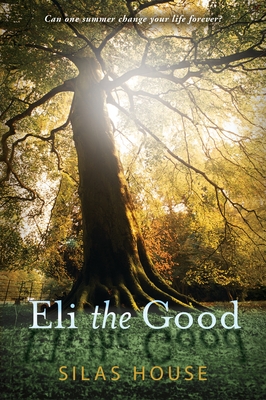
I recently read another book by Silas House which reminded me of how much I connect with his settings.  Eli the Good wasn't quite as Appalachian as his others, but Nature still weighs heavily in the story.

In addition to being his first foray into young adult literature, this book also happens to be great Independence Day reading.  It takes place in 1976, and follows 10-year-old Eli through the course of one summer.

Although the setting felt thoroughly American, the themes are universal.  What defines family?  Why is honesty a vital component of communication?  How do we show—or feel—love and concern?

Absolutely recommended, (although the epilogue didn't quite feel organic to the story,) especially for those who enjoy the coming-of-age aspect.  My enjoyment of the story ended up leading me to a book of short stories that has been on my shelf since August 2004. (Crazy, that.)  Chris Holbrook's Hell and Ohio: originally acquired because I'd enjoyed Silas House's other books.  At that time, newly entrenched in caring for a new infant (for the 4th time, hello) and therefore lacking in extra brain cells, I read only the first story and felt that it was a little slow.  Nothing special.  Reading it again 8 years later, I am entranced.  (I'm guessing that at least part of the reason is that I've taken measures to appreciate short stories, so I simply have more familiarity with the form.)

In the nine stories, coal mining (land development/destruction) is a common theme, as are manners, alcohol, religion. All themes that rang true to me...perhaps because I grew up in a small mountain town (admittedly it was in Northern California's Sierra Nevadas as opposed to the Appalachians, but the lumber mill and logging industry had a similar heavy presence in some respects to the coal mines).  I grew to enjoy feeling "a little closed in by all the trees and mountains on every side."

All the stories are wonderful, skillful, and worth reading.

(As a side note - I had the most visceral reaction (to The Lost Dog) I've ever had to a written work.  My first thought after reading the story was that it didn't say anything, but then immediately I was flooded with memories from my childhood that mirrored the story, and began to get choked up (something I don't often do, especially to the extreme I did) thinking about the fact that somebody else understood, perfectly, those feelings. I just had to stop and cope for a few minutes, I couldn't think about or look at anything else until I'd taken a few deep breaths. Pretty crazy experience!)

Recommendations?
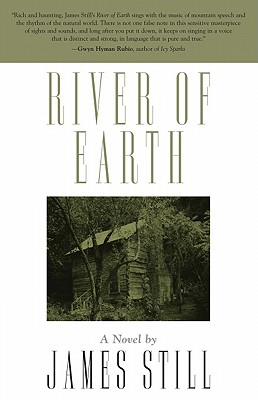
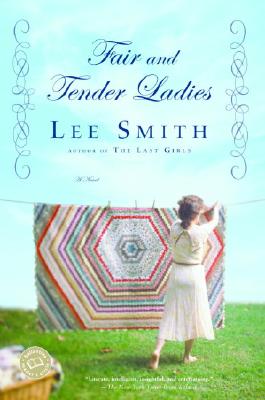
I'd like to put a few books on my wishlist that would be good places to go from here.  Any suggestions?  I think I might have a copy of River of Earth by James Still from back in 2004 when I was on the hunt for Appalachian stories.  I enjoyed Lee Smith's Fair and Tender Ladies a couple years back...that's all I've got.  What've you got?  Recommend me!

Wednesday, August 15, 2012

One of Ours by Willa Cather

Life was so short that it meant nothing at all unless it were continually reinforced by something that endured; unless the shadows of individual existence came and went against a background that held together.

Willa Cather's novels are my definition of literary comfort food.  Having been a while since I'd read one of her novels for the first time, (the last few have been rereads,) I'd forgotten what a wonderful experience it is.  True to form, the characters and setting were vivid and the writing easy to appreciate.  In each book of Cather's that I've read, she uses character sketches as a tool to help the reader get a wonderful sense of the nuances in each personality.  She's so adept at this that it never gets old.  In just a few sentences, we learn an incredible amount about four different people.

Claude knew, and everybody else knew, seemingly, that there was something wrong with him.  He had been unable to conceal his discontent.  Mr. Wheeler was afraid he was one of those visionary fellows who make unnecessary difficulties for themselves and other people.  Mrs. Wheeler thought the trouble with her son was that he had not yet found his Saviour.  Bayliss was convinced that his brother was a moral rebel, that behind his reticence and his guarded manner he concealed the most dangerous opinions.

If there is such a thing as a peaceful book about war, One of Ours is it exactly.  Published in 1922, only a few years after the Great War ended, this book seems to put the senseless loss into perspective in some ways.  The story follows the life of Claude, an idealistic young man, and shows how he found purpose in his life.  In a time when so many things were changing, (the book also addresses Prohibition, woman's role in society, transportation, and the Spanish Influenza to name a few,) such a massive loss of youth must have been impossible to understand.  Claude's story seeks to bring healing and soothe the heart.  It isn't a perfect novel—it's a bit too sentimental for that—but it's easy for me to see why it won the Pulitzer when it did.

She told off on her fingers the many ingredients, but he believed there were things she did not name: the fragrance of old friendships, the glow of early memories, belief in wonder-working rhymes and songs.  Surely these were fine things to put into little cakes!

Coincidentally, I picked this book up with perfect timing.  I'd just finished reading about Prohibition, and was longing for some prose about WWI, so it was a perfect tie-in.  This was the 5th book of Willa Cather's that I've read this year—marking completion of my 2012 goal in that regard—but I certainly haven't tired of her yet.  I've now read the first 8 of her 19 published works, and I'm greatly looking forward to the stories to come.