Showing posts with label NonFiction. Show all posts

Wednesday, June 19, 2013

The Worst Hard Time and The Dust Bowl

"All those short lives..."
-- my 8 year old's reaction to The Dust Bowl by Ken Burns

I've been on a big early-1900s kick lately, from Prohibition and the Great War to the Dust Bowl, the Jazz Age and the Great Depression.  It's been great fun so far - I'm learning so many things! I'm reading The Grapes of Wrath for the first time (no idea how that happened) and always keeping my eyes out for more must-read literature from the years around the 1920s.

One of the most accesible sources I've come across is the PBS documentary, The Dust Bowl.  Ken Burns did a wonderful job giving an intriguing and picturesque overview of the catastrophe.  It left me shocked and amazed, and hungry for more information...some of those pictures and videos are simply unbelievable.

The film wasn't enough for me, so I then read The Worst Hard Time by Timothy Egan.  This book is about the people who stayed behind, the people who "hunkered down out of loyalty or stubbornness, who believed in tomorrow because it was all they had in the bank."  I have two sets of grandparents that lived through the Dust Bowl and came to reside in Northern California and Oregon, so the struggles described were rather personal for me.
"Nothing that you see or hear or read will be likely to exaggerate the physical discomfort or material losses due to these storms.  Less emphasis is usually given to the mental effect, the confusion of mind resulting from the overthrow of all our plans for improvement or normal farm work, and the difficulty of making other plans, even in a tentative way."
-Caroline Henderson, 1935
One thing that surprised me (for some reason) was the pervasive prejudice.  The book didn't dwell on it, but it's always surprising to me to learn how deep-rooted and equal-opportunity this prejudice is.  Was there ever a time when America was actually the embracing, welcoming, free country that I like to imagine it was?  The 1930s were full of spite for many different groups of people:
  • Black Americans (of course...signs in/near Oklahoma read "Black Men Don't Let the Sun Go Down on You Here") 
  • Native Americans (no surprise...the bison were exterminated "as a way to ensure that no Indian would ever wander the Texas Panhandle") 
  • Volga Germans (others tried to "pass an ordinance prohibiting the language from being spoken in the city limits") 
  • Jews (people said they were "to blame for the bad times - that they did not belong in this country") 
  • Italians ("the 'low grade races' of southern Europe" were a "threat to civilization")
  • Mexicans ("cities were shipping Hispanics out of the country") 
  • the People Who Stayed ("They are simply, by God's inscrutable will, inferior men" -H.L. Mencken)
  • the People Who Left ("Okies and Dogs Not Allowed Inside")
Surprisingly, I don't think the Irish or any Asian countries were mentioned...but then again, this was only one book.

I was impressed by how well The Worst Hard Time was organized.  Continuity and clarity are vital in nonfiction, and Egan does it well.  Not only that, but the people were easy to remember and follow, and the facts were interesting and well-presented.  It's hard to ask for more out of non-fiction!

There are too many interesting things to start talking about all of them (such as the dangers of wind-generated static electricity and dust pneumonia) so I'll just say that if you have a passing interest in the Dust Bowl, both Ken Burns and Timothy Egan have done a great job with such a dry topic. Next up for me (other than Grapes of Wrath) is Whose Names are Unknown by Sanora Babb - excellent reading so far!

Wednesday, February 20, 2013

A Peek Below Stairs

For the Downton Abbey fan, for the lover of history, for the memoir junky, or the behind-the-scenes aficionado: if you haven't met Margaret Powell, you're missing out.

Originally published in 1968 but only discovered by me during a recent trip into a bookstore (a woefully rare occurrence), this book ended up being the missing piece in my search to understand the history of domestic service in Britain.  Not that I'm done reading about it, mind you.

A year ago I read Up & Down Stairs: the History of the Country House Servant, and found scads of fascinating information.  What was missing, however, was the unedited opinion of the servants themselves.  While I'm certain servants' viewpoints varied as widely as personalities vary in general, there's nothing like information straight from the horse's mouth.

Margaret Powell is a spunky girl, and Below Stairs is never lacking liveliness.  From her tales about growing up poor in a small town to bold opinions and conjectures, there's always something to keep you turning the pages.  It had me laughing aloud and searching for a willing ear to pass tidbits onto.  In fact, I can't quote anything from the book because I lent it out as soon as I'd finished reading.  It was that much fun.

And now I'm torn—I want to scour bookstores for more, snatching up anything remotely related, and yet how can anything live up to a perfect experience?

Tuesday, January 15, 2013

Cashing in on Jane Austen

A year or two back, (whenever it was that Jane Austen was beginning to be extremely supremely in,) a friend and I tossed around the idea of starting a blog dedicated to reading all the knock-off/spin-off (and otherwise Jane Austen inspired) books that were being published like crazy.

And then I began compiling a list.

I stopped somewhere around number 200 (I kid you not) because regardless of whether the books would be quick to read, the project was quickly growing to a size of not funny.

Humor is a funny thing.  (Well, of course it's funny—after all that's the point, isn't it?)  What is funny to me might not be funny to you. For example, you might think that the cover of the book pictured to the left is not funny, but I think it's hilarious.  (Not saying that the story itself should be ridiculed, just that the cover art cracks me up.)

So I dropped the idea of the project (I've got a gazillion other things to do anyhow) but one book stuck in my mind.  Another book with a cover that made me giggle.  And so I put it on my Paperback Swap wishlist, and before long it came.  It's a slim epistolary exchange between two long-time friends, discussing Jane Austen's Pride and Prejudice, and Mansfield Park.

I was hoping to be as entertained throughout the book as I was by the cover, but unfortunately that didn't happen.  It was readable and enjoyable, but both of these guys liked Austen way too much for it to be exceedingly amusing.  (If it was a book about my dad reading Jane Austen, the action would be non-stop, I assure you.)

So this wasn't a huge success for me, but it's actually made me [slightly] curious regarding Regency Era bodice rippers...I think Jane might have gotten a kick out of that one.

Oh, and just in case you are interested in the list, click here to check it out!  Which titles did I miss?

Tuesday, January 8, 2013

The Famine Plot by Tim Pat Coogan

"It would have pitied the sun
to look at them"
--James Hack Tuke

I have long been interested in learning more about the Irish potato famine—its causes and effects—but haven't been up to diving into a dense, detailed history.  The solution to the problem was The Famine Plot.  In a brief 235 pages, an overview of Ireland's modern history with a focus on the popular and political opinions around the time of the Great Famine (1845-1852).

Coogan, asserting that "Irish historians as a class have not done justice to the Famine," makes some bold claims about "England's role in Ireland's greatest tragedy."  Focusing mostly on the role Charles Trevelyan played in refusing aid to the famine stricken peasants, and influencing opinion about the Irish in general, it is easy to see that the outcome of those fateful years would likely have been very different under a different influence.

I can't begin to count the number of passages I underlined, nor can I think how to properly reduce all I learned into a few inadequate sentences.  The chapter talking about souperism and the Catholic/Protestant conflict were fascinating, and I found his observations on popular opinion quite captivating in light of how enlightened we now think we are.  The truth is that there is no perfect, easy answer to such a complex, multi-faceted problem, even though it is hard for me to read such derogatory opinions about the Irish people.

His writing did get a bit repetitive towards the end, but his tone wasn't near as accusatory as I feared it might be based on the title and subtitle.  The best part is that it did such a good job at keeping me interested that I'm eager to read on and learn more.

"For our part, we regard the potato blight as a blessing.  When the Celts once cease to be potatophagi, they must become carnivorous.  With the taste for meats will grow the appetite for them; with the appetite, the readiness to earn them.  With this will come steadiness, regularity, and perseverance; unless, indeed, the growth of these qualities be impeded by the blindness of Irish patriotism, the short-sighted indifference of petty landlords or the random recklessness of Government benevolence."
The Times, September 22, 1846

Wednesday, November 21, 2012

Hypothermia is Intriguing, Meteorology is Not.

In three minutes the front subtracted 18 degrees [Fahrenheit] from the air's temperature.   Before midnight, windchills were down to 40 below zero.  That's when the killing happened.

The Children's Blizzard is the foreboding title that came to rest upon the blizzard that raged through the American Dakotas on the evening of January 12, 1888.  The next morning, Friday the 13th as luck would have it, brought terrible news to many families.  Scores of children across the prairies had not been able to make it home from school, nor to safety anywhere.  The storm had caught them unaware and unprepared.

This book was a fascinating look into harsh pioneer winters.  From the background on why immigration was so high (hello, propoganda) to the living conditions and weather conditions, Laskin provides a clear look at the 1880s prairie.  As somehow who grew up reading Laura Ingalls Wilder, and finding The Long Winter (1881) so very, very long, I enjoyed the trip back to those days, gaining a deeper and more thorough appreciation for the trials they faced.

History is not the only topic discussed,  meteorology and hypothermia are also addressed.  My eyes glazed over during the chapters about barometers, isobars, cyclostyles, and whaaa????  {blink}  But I found the stages of hypothermia quite interesting—how the body fights for life without one's conscious thought or effort is fascinating to me.

Of course, this book is full of sad stories...but I think the title is enough to make you expect that.  Any time innocent people die it is a tragedy.  But topic aside, I did have a few issues with the construction of the book.  The writing is inconsistent:  at times poignant, at others overly complicated or vague.  Also, organization—vital in nonfiction—was not strong.  There were in-depth portions about people or things that mattered little, and fascinating points only touched upon, which resulted in an unbalanced feel.  The good news is that the 270-odd pages go by pretty quickly, even if you do read the boring parts.  If you have a passing fancy in immigrant or prairie life, this book is worth a passing glance.

Saturday, August 25, 2012

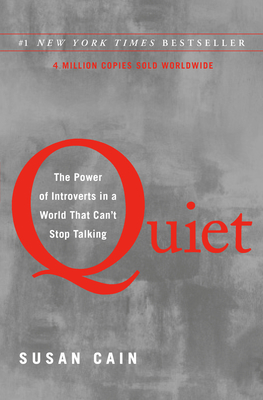
Quiet by Susan Cain

I realize it's not true that I'm no longer shy; I've just learned to talk myself down from the ledge.  By now I do it so automatically that I'm hardly aware it's happening.  When I talk with a stranger or a group of people, my smile is bright and my manner direct, but there's a split second that feels like I'm stepping onto a high wire.

Boy can I identify with that statement.  I wasn't always shy: until I was 6 or 7 years old I remember being joyful and outgoing—part of the crowd.  By the time I entered 2nd grade, however, I'd had too many embarrassing situations (by my own unknowingly-introverted estimation) and found it was much safer to be quiet, to retreat from large social groups and unfamiliar situations (in fact, the thing I remember most about 2nd grade is the classroom's windows.)

I had a few years where I was painfully shy (to the point of having a difficult time talking to my parents) but I've grown out of most of that.  Though I scored 20/20 on the introvert/extrovert quiz (see the bottom of this article) I don't experience the agonizing guilt and shame that I used to feel regularly in social situations.  That doesn't mean that I like them necessarily, but I've become adept at "talking myself down from the ledge."

Although it may be impossible to read this book and not compare the experiences to your own, there really is more to this book than commiseration and self-justification.  It would be a valuable read for introverts and extroverts alike.  My favorite part was the first section, which addressed the history of how we came to value personality over character, as well as what constitutes quality leadership, and how modern Christianity has been shaped by the extrovert ideal.  I love learning about social history, and how so many things are interconnected.  

Did you know that public speaking is the number one fear in America?  Or that the number of Americans who considered themselves shy increased from 40% in the 1970s to 50% in the 1990s, (probably because we measured ourselves against ever higher standards of fearless self-presentation.)  Did you know that some parts of the world are overall more extroverted than others (would it surprise you that America is an extroverted extremist?)

As the book progressed it began to feel more anecdotal and self-help-ish to me and didn't have as much interesting information [in my opinion]. Still, worth reading.  I'm glad to see a book that provides this much-needed perspective hitting wide release; it's nice to have the vocabulary and background information to better negotiate our differences.

Monday, July 23, 2012

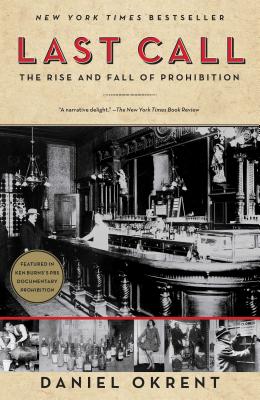
Last Call: The Rise and Fall of Prohibition

I don't usually blog mid-book, (I guess I'm a completed-project kind of girl,) but I did talk about this one midway because there was too much fascinating information to keep it all to myself.  So much, in fact, that I've worked this book into just about every conversation I've had in the last 2 months.  Because of this, I've had to make a smidge of an exception in my final rating (usually I reserve my 5-star ratings for books that I can't find any fault with, but the conversation application was like super-extra-credit here and nothing less than 5 stars would be accurate.)

My complaint is minor, actually: in a perfect world, a few of the pages about political machinations would have been swapped for more info about the more titillating descriptions of speakeasies, flappers, and social life (these aspects were addressed, just not in the ratio I yearned for).  Admittedly, Okrent is not ignorant of this: "The most familiar legacy of Prohibition might be its own mythology, a body of lore and gossip and Hollywood-induced imagery that comes close enough to the truth to be believable but not close enough to be...well, true."

What it is, if not the source for all the gossip and lore surrounding the 14 years Prohibition lasted, is the most thorough and engaging history of the era when America transitioned from rural to urban (and all the changes that entailed) that I've come across.  I loved discovering how many different issues were tied into this thing that we label, simply, Prohibition.  There's the conflict between rural and urban lifestyles, federal government's role in the individual's life, women's suffrage, the federal budget and income tax, immigration and racism, classism, religion, continuing resentment from the Civil War, - the list goes on and on.  This book is the WHY that always seems so out of reach, and the amazing thing is how enjoyable and attainable the author has made it.

If you hold the slightest interest in American history, you won't regret setting aside a little time for this book.  Highly researched, well organized, and a joy to read, this is what history should be.  You'll meet forgotten famous people like Wayne Wheeler and Mabel Willebrandt; you'll discover the origins of powder rooms, booze cruises, Las Vegas, NASCAR, and tourism in the Bahamas.  I could talk about it for days, but instead I'll leave you with a few brief excerpts and a strong encouragement to check it out for yourself.
"The connection between liquor and politics was not a new one.  When twenty-four-year-old George Washington first ran for a seat in the Virginia House of Burgesses, he attributed his defeat to his failure to provide enough alcohol to the voters."
"The booming prescription trade had been accompanied by a dawning realization among America's physicians that alcoholic beverages were in fact useful in treating twenty-seven separate conditions, including diabetes, cancer, asthma, dyspepsia, snakebite, lactation problems, and old age."
"It was a later edition of the KKK that focused its venomous loathing on black people; this version had a special hatred for Jewish and Catholic immigrants.  The Klan, which supported woman suffrage in behalf of Prohibition, in turn supported Prohibition as a weapon against the immigrants. [...] In many towns there was little distinction between membership in the Klan and in an ASL (American Saloon League) affiliated church."
"Wrote newspaperman Malcolm Bingay, 'It was absolutely impossible to get a drink in Detroit unless you walked at least ten feet and told the busy bartender what you wanted in a voice loud enough for him to hear you above the uproar.'"
"It was one thing for Pennsylvania legislature--any legislature, really--to give militant drys the laws they wanted, but quite another to provide the funds necessary for their enforcement."
"In 1925, when The Great Gatsby was published, the meaning of "drug-stores" was as clear as gin."

Thursday, February 9, 2012

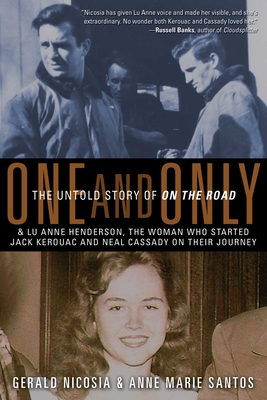
One and Only: The Untold Story of On the Road

I haven't read On the Road (yet--planning on joining Wallace for her read-along) so reading the untold story might seem a little backward...but I have my reasons.  Promise.

Reason the First, (the Obvious): I received the [audio] book free and don't yet own On the Road. (I'm trying to decide which cover I like best. It's complicated.)  LibraryThing seems to like giving me books (and I seem to like requesting them) and once I have them I've got to read them right?
I'm liking this cover.

Reason the Second, (the Justification):  I know next to nothing about the Beats, but I want to. Especially since moving into a modern 1960s house, I've had a growing desire to develop a bigger picture of the 60s, and yet seem to have no problem procrastinating in that area.

Reason the Third, (the Philosophical):  With a reputation for philosophical intellectualism as well as continual praise, I figured On the Road falls firmly into the "Classics" camp.  What this means for me is that I like to know a little bit about the era before reading it so that I can pick up on as many references as possible.  This is an evolving theory of mine, but it has made a huge difference in the past.

I tried to start learning
about the Beats with their
poetry.  Didn't  work so
well. Still, it's a cute book!
Let's Get On With It.  One and Only is the story of On the Road, of Jack Kerouac and Neal Cassady, told from the point of view of Lu Anne Henderson (a.k.a. MaryLou).  This isn't a huge, complex biography.  Rather, it is comprised largely of an interview the author had with Lu Anne many years ago.  A lengthy introduction is given by the author, a revised transcript follows, and the book ends with a short commentary by Lu Anne's daughter.  My favorite section, perhaps in part because of the audio version I listened to, was the middle: hearing Lu Anne's voice.

While her somewhat meandering commentary occasionally felt repetitive, the entire book weighed in at less than 250 pages, so I couldn't complain much.  I enjoyed the pictures and hearing Lu Anne's voice.  She seemed such a joyful person overall, always willing to think the best of people, and seemed somewhat speechless to find that other people didn't necessarily do the same.

Lu Anne was married to Neal Cassady from a young age, and although the marriage was annulled (also at a young age) their relationship stayed much the same throughout their lives, to hear her tell it.  She relates some of the adventures they had while travelling across the country, underpinning each event with the fact that they were young, they were poor, they were surviving.  They were just holding it together, really.

A fun behind-the-scenes look at Kerouac, this book also felt like a good introduction to some of the main characters in On the Road.  Reading the book itself no longer seems quite as scary.  In fact, I'm getting pretty curious to see the story through Kerouac's creativity.  Have you read it?  Any other suggestions for getting to know the Beats?

Sunday, February 5, 2012

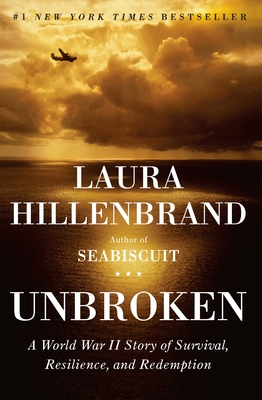
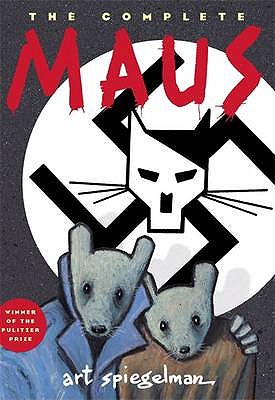
Unbroken and MAUS: WWII Nonfiction

I seem to have found myself on a kick of WWII nonfiction, starting the year with Unbroken, and quickly following that with The Complete MAUS, and eager to begin Night.  Unbroken and MAUS address different parts of the war, the Pacific theater and the Holocaust, making for an interesting, well-rounded perspective.
I wasn't planning on reading Unbroken.  It was one of those books that had gotten so many amazing reviews that I instantly felt skeptical.  That didn't stop me, however, from giving the book to my dad for Christmas.  His dad had flown in the same type of plane (B-24) in WWII as Louis Zamperini (albeit in a different location) which made the story all the more interesting to him.  He began reading it and telling me how interesting it was at about the same time I found out that Zamperini would be coming to my son's high school to speak.  That was something I didn't want to miss out on.  Not only did I buy the book, but I also started an Audible.com trial: when I couldn't read, I listened; when I couldn't listen, I read.

Unbroken is quite a page-turner.  I had to keep reminding myself that these were actual events.  Some of the events in the Pacific Ocean reminded me of Life of Pi as far as the implausibility, but this was real.  Unbelievable, except that there's a guy who lived to tell about it.

Not a great photo, but that was Louie in
the wheelchair--a fab fellow!
If you've hung around me enough, you may remember that I'm not a big memoir person, nor am I an ocean person.  Fortunately, these weren't the slightest factors while reading the book.  Of course, it isn't a memoir, but it doesn't even reek of the touchy-feely vibe I occasionally get from memoirs.  And the ocean? Maybe it was because there weren't a bunch of nautical terms, maybe because he was enduring it instead of enjoying it, but I wasn't bothered at all.

There were a couple of points that I was afraid the writing was going to bog down, (I thought that his childhood and the POW sections were both a tad longer than they needed to be,) but it never once got to the point that I wanted to set the book down.  It's a book that I'd recommend to all but the most sensitive readers.

Seeing Louis Zamperini and hearing him speak was such a good experience.  He just turned 95, but he is still so quick and funny. He talked of his youthful shenanigans, of meeting Hitler at the 1936 Olympics in Berlin, and his too-eventful time in service.  He told of a time when he was asked if his time as a POW had any positive outcomes, and he remarked that it certainly had--it had prepared him for 55 years of marriage!

I heard about The Complete MAUS sometime last year when I saw it on a list of "must-reads" for high school students.  My eldest is in 10th grade this year, and so my ears were wide open for more engaging books on important topics (his school's required reading seems to be very Shakespeare oriented--which is fine except for the fact that the imbalance means the kids are missing out on so many other wonderful experiences.  It's up to me to make up for that!  Good news for me is that my influence doesn't end after his senior year!)  I'm still trying to get my 15 year-old to read this, but my then 12 year-old did read it and was greatly impacted.

Perhaps it is inevitable, more than 50 years after the Holocaust, to feel like you've heard it all before--though the story doesn't get old, when MAUS is lumped together with all the other books about the topic, this one doesn't feel quite as shocking, quite as big--but it is important nonetheless.  To stop reading about the Holocaust is to say that these people's stories don't matter, that the people themselves don't matter.  By keeping the story alive, and making it new for each generation, you are honoring the lives of all those affected by the trauma.

(photo credit/more about Spiegelman)
Seeing the story through my son's eyes reminded me what it was like to hear of Auschwitz for the first time.  While MAUS deals with the generational affects of the Holocaust almost more than with the events themselves, it gives a very realistic picture of Nazi Germany as well as the lasting consequences.

If you haven't ventured into graphic novels, this is a good place to start....combine some history with a new format and see what happens.  The story is full of things to think about--more contemplative than shocking, more layers and depth than you might think.

Tuesday, January 24, 2012

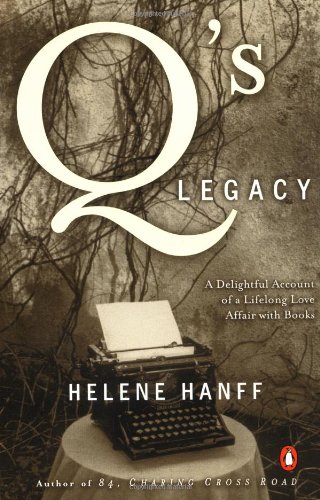
Q's Legacy, Helene Hanff

This book was a beautiful idea--which is actually just a twisted way of saying that I was intrigued by my own misconceptions.  From something I'd read, (helped by the subtitle "A Delightful Account of a Lifelong Love Affair with Books") I was under the impression that I was going to get some details about how Helene Hanff (author of the delightful 84 Charing Cross Road) discovered and learned about literature.  

Alas, that was not to be.  Why must Expectations be such a powerful destroyer/maker of dreams?

What Q's Legacy actually is (which is easily discovered, apparently, by reading the back cover or any synopsis on the web you may happen to run into--who knew?) still has its own charm--never fear.  It is a memoir of her career as a writer, for the most part, dipping into her visits to London as well.

While I deeply wished that she and I had spent this read browsing dusty shelves in old libraries, discovering wonderfully obscure yet extremely useful tidbits of information, Helene is a charming person doing perfectly mundane things as well.  In some ways, this book did nothing to satisfy my curiosity about her; in others, I feared that if I knew more she'd become irritating (sad but true...eccentric personalities are called such for a reason, I'm afraid.)  If you've read 84 Charing Cross Road (and if you haven't, you really should!) and it left you wanting to know more about Helene, then this is a perfectly good place to go next.  In fact, it's part of a trilogy about her life, leaving only The Duchess of Bloomsbury Street (which I haven't read) in between the two.

So maybe I didn't get what I wanted, but that's hardly Helene's fault.  And besides, it knocked a book off my TBR shelf, so who am I to complain?  Have you enjoyed anything by Helene? Please tell me you loved 84 Charing Cross Road...

My favorite quote--from page 97:  
The whole book was so full of outraged capitals that reading it was like being continuously shouted at. When you finished you were just worn out.

Monday, January 9, 2012

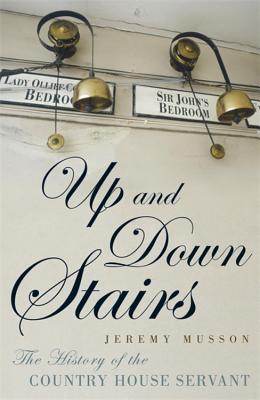
Up and Down Stairs

Subtitled, The History of the Country House Servant, Up and Down Stairs is exactly what it puts itself out to be.  From the medieval days to the present day, this book gives you an overview of the the time period and the servant's role in it, as well as how the changing lifestyles in turn affected architectural design.

I've always been interesting in the behind-the-scenes, operational side of a large home.  I remember longing, as a child, to be able to see the kitchen and work rooms of an historical estate.  Even now, seeing what's "Behind the Green Baize Door" [title of chapter 4] and getting a glimpse of how it all works is more intriguing to me than seeing the formal rooms.

That's why I love Gosford Park and Downton Abbey.  That's why one of the best parts of staying at the amazing Ashford Castle in Cong, Ireland, was the opportunity to go to the kitchen and make scones.  I've no idea why this interest is embedded in me in the first place, but Up and Down Stairs certainly helped fill that thirst for knowledge.  It also made me want to know more, which (I think) reflects on the writing quite admirably.

Two vital aspects in writing nonfiction are organization and writing fluidity, and Jeremy Musson seemed to accomplish both effortlessly.  The book begins with the castles of medieval times, and ends with the modern day, spending the most time in the 18th and 19th centuries: the high point for large country estates.  Also included were pictures and quotes (from both servant and master) spanning those time periods--a nice addition that helped to keep it from bogging down.

I had to read aloud to my husband the duties of a valet--boy is he ever jealous.  I think that acquiring a valet just went on his bucket list (or perhaps it was already there!)  Whether you empathize with the working conditions of some of the servants or pine for the life of the master, if you've ever wanted to know more about Britain's grand estates or those in domestic service that kept them running, you'll find something to love in this book.

A critical factor [after the war] was the inability to recruit new servants, not merely to look after the landowner’s family personally, but also to maintain the contents and fabric of the house. The loss of the ‘odd man’ who had once swept the gutters and cleared the drains was in many ways as significant as the loss of a steward or a butler.

Where to go next?  I have a copy of Keeping their Place: excerpts from servants' writing about life in domestic service, and have an inclination to finally read some Wodehouse...and off to watch the new season of Downton Abbey!  Some days, I must admit, it sounds awfully nice to have a scullery maid to do the washing up.

Monday, November 28, 2011

New Books Show a Need for Nonfiction

Sometimes you know that you are in the mood for a certain type of book.
Sometimes you know that you are in the mood for a certain type of book and you immediately start reading it.
Sometimes you know that you are in the mood for a certain type of book and yet can't seem to get around to reading it.

Sometimes you don't know that you are in the mood for a certain type of book until your purchases illuminate it for you.


I actually own both versions of this book and haven't read either one.  They have both been following me around on my vacations from nightstand to nightstand for the last month.  I've owned them for years.  I've been wanting dreadfully to read them.  Why haven't I?

Keeping Their Place: Domestic Service in the Country House
I've just received both of these from Book Depository as an early Christmas gift to myself.  I've always been fascinated by the workings of a large estate, (I loved Gosford Park for that very reason, and touring the kitchen of Ashford Castle to make scones during my Ireland trip was mostly fantastic because I adore the behind-the-scenes view...in fact I'm fascinated with doors in general and am now wondering if the two are related?) and my interest has ramped up again after watching the first season of Downton Abbey...need.to.read...

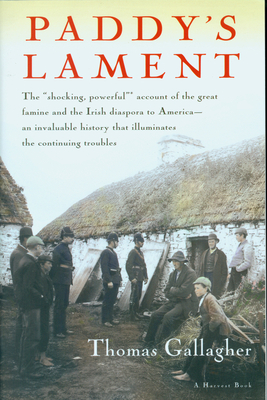
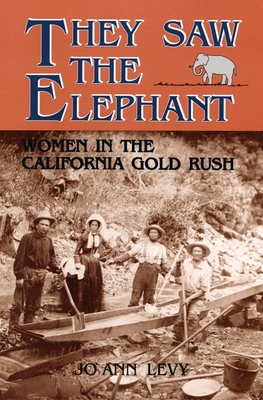
All right, so maybe these seem to have nothing in common.  But they both hold importance to my family's history: my grandfather's family emigrated from Ireland, and I grew up in California Gold Rush country.  Learning more about these topics somehow makes me feel I'll know more about myself.  I've been carrying the first around for nearly a year now, wanting to read it.  The second recently arrived from PaperbackSwap.  I want to read them both, yet somehow they aren't that the top of the pile...?

I've [obviously] been having a huge urge to read some good nonfiction (it goes beyond even these titles shown) but somehow they keep getting pushed aside.  I think that nonfiction takes a concentration that fiction often doesn't, and so I keep waiting for the perfect time.  I'm coming to think, however, that starting a nonfiction book is like starting a family:  you need to just do it, because if you wait for the perfect time it will never happen.

Have you experienced this?  Perhaps in different genres or delineations?  In the past few years I've read much more nonfiction (and much less adult fiction) than this year, which leads me to speculate that blogging might have something to do with it.  I somehow seem to adopt a running-out-of-time mentality that makes me shy away from nonfiction.  I think I'll give December a nonfiction focus: I've done well with my goals for this year, why not end the year with something I've been longing for anyhow?

Wednesday, September 28, 2011

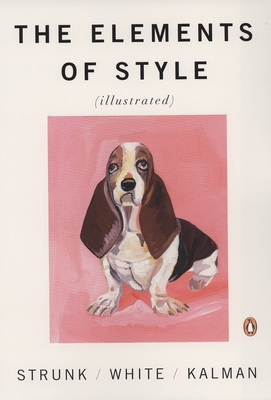
The [Non-Intimidating] Elements of Style

"The shape of our language is not rigid; in questions of usage we have no lawgiver whose word is final."

I received a great amount of enjoyment from this little book.  I highly recommend the illustrated version, too, since it adds to the serious, yet humorous, nature of the writing.  I appreciated how it was written, as well as the opinions expressed, even if my pet peeves aren't necessarily the same as Strunk's.  I do agree that more attention should be paid, generally speaking, to eliminating the extra words that add nothing but clutter to a written piece.

The brevity was refreshing.  Too often, books about writing are not written in a way worth emulating.  It would be nice to be able to say that, having read this book, my writing is now greatly improved.  But in the absence of that, at least the book's format lends itself nicely to future reference.

"The language is perpetually in flux: it is a living stream, shifting, changing, receiving new strength from a thousand tributaries, losing old forms in the backwaters of time."

I was spurred into pulling the Elements of Style off my shelf by my recent grammar encounter, and I have to say that it felt great to read something on a whim for once...the last year has been about becoming disciplined in my reading, which--though I've been pleased with my progress in this department--has severely restricted my reading impulses.  Perhaps now it is time to find some balance. :)

Two excerpts that made me smile; a great example of the humor laced throughout:
Prestigious. Often an adjective of last resort.  It's in the dictionary, but that doesn't mean you have to use it.
Avoid the use of qualifiers.  Rather, very, little, pretty--these are the leeches that infest the pond of prose, sucking the blood of words.  The constant use of the adjective little (except to indicate size) is particularly debilitating; we should all try to do a little better, we should all be very watchful of this rule, for it is a rather important one, and we are pretty sure to violate it now and then.
Two excerpts about writing, or more precisely being a writer, that I enjoyed:
A writer is a gunner, sometimes waiting in the blind for something to come in, sometimes roaming the countryside hoping to scare something up.  Like other gunners, the writer must cultivate patience, working many covers to bring down one partridge.
Your whole duty as a writer is to please and satisfy yourself, and the true writer always plays to an audience of one.  Start sniffing the air, or glancing at the Trend Machine, and you are as good as dead, although you may make a nice living.
Strunk & White.  The Elements of Style.  A classic writing manual, yet surprisingly entertaining, informational, and not at all intimidating.  If you enjoy language, this is worth a read.

Tuesday, September 20, 2011

Nonfiction Finds

For some reason I find it harder to blog about most nonfiction books than fiction.  Almost like there is so much to say that I draw a blank and don't know where to start...so I thought that some mini-reviews might be in order.  I haven't read as much nonfiction this year as I have in years past, but here's some nonfiction books I've been wanting to share.

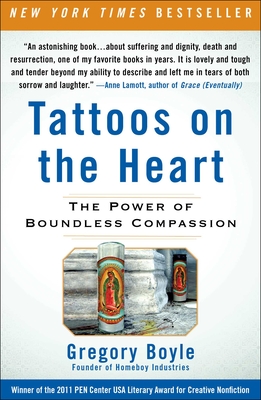
Tattoos on the Heart, Gregory Boyle
We all just want to be called by the name our mom uses
when she's not pissed off at us.

I read this for one of my book clubs.  It was a nice change of genres, and held the added interest of being local(ish) to our area.  I typically run from memoir/self-help type books, which this could technically be categorized as, but the author has such a humility and personal-improvement perspective that it is not at all what I thought it would be.  Father Boyle works with gang members in Los Angeles, and he has a very practical grasp on how to demonstrate love and emulate Jesus' ministry.  Also, he's quite a reader so there were many times he quoted authors (double fun!)

You stand with the belligerent, the surly, and the badly behaved until bad behavior is recognized for the language it is: the vocabulary of the deeply wounded and of those whose burdens are more than they can bear.

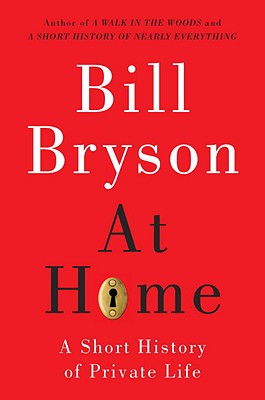
At Home, Bill Bryson
If you've ever read Bill Bryson, especially if you are a person who appreciates the odd facts and juicy tidbits he likes to throw in there, you know that if you try to write out interesting quotations you'll have filled a large notebook before the first chapter is over.  This book was no different.  Much of the book talks about architecture, although the intro where he talks about the history of home and the idea of comfort was quite interesting to me, as were the bits about servant life.  Did you know that there was one point when lobster was so plentiful that servants actually had clauses in their contracts so they wouldn't have to eat it more than twice a week?  One of my fascinations is with the structure of servants in a large household, so I enjoyed that much of this book seemed to focus on the 19th century. There's a ton of pages in this "short" history, but it is interesting, as can well be expected of Bill Bryson.


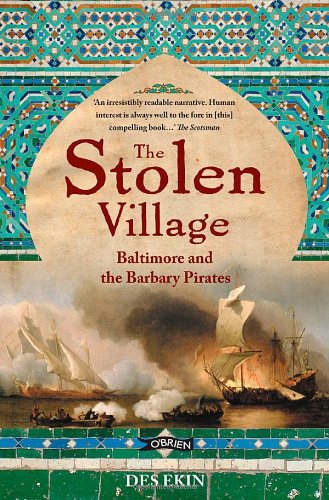
The Stolen Village, Des Ekin
I bought this book in Ireland, which is quite fitting really, since it has to do with Irish history.  I wasn't very far into this book when I became rather embarrassed about my lack of knowledge about the Barbary Pirates.  This book not only schooled me on a bit of Irish history, but also on a whole aspect of world history that I missed in my not-so-stellar education.  Before this book my mental connections went something like this:  pirates=Carribbean, slaves=Africa-->America.  Now, thanks to this book, I know to what extent the pirate/slave trade scenario was alive and well long before Sir Francis Drake and Southern plantations.  I love it when a book expands my world!  The writing could have been more polished, but it was an easy, interesting read, and I loved the topic.


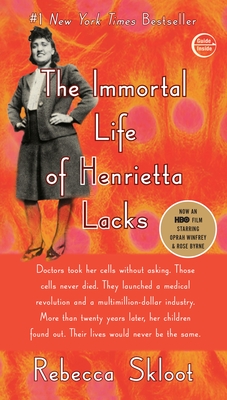
The Immortal Life of Henrietta Lacks, Rebecca Skloot
This book has been on the bestseller list for so long that I'd just decided to NOT read it (I'm rebellious like that) when it was chosen for my book club.  I was happy, since that was pretty much the only way that I'd read it.  The most fascinating part  of the book for me was the history on medical procedures, scientific study, and the evolving issue of patient privacy.  There is such a huge disparity between the enormous contribution HeLa cells have made to society, and the great difficulty the Henrietta Lacks' family has in getting proper medical care that this made a perfect platform for a discussion about ethics.  I thought the author did a good job at representing all sides in a fair, even generous, manner, and I enjoyed her writing.  She researched this case for quite some time, but I'd venture to guess that we'll be seeing more from Ms. Skloot.

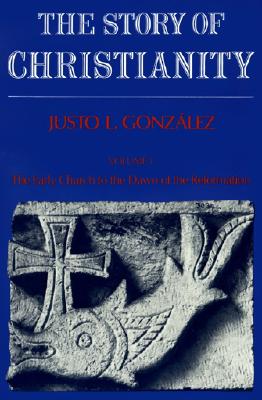
The Story of Christianity Vol. 1, Justo Gonzalez
This is only the first half of the story, and it took me just about forever to get through--but that's just because I got hung up on all the details of corrupt popes about midway through.  I'm not so interested in those details, so I had a really hard time pushing through that part.  It was necessary, I understand, but still--blech.  I did enjoy all of the theological discussions of the early church, and the political climate that dictated much of those developments.  And towards the end, when it was talking about the beginning of the Reformation and the establishment of Christianity in the New World, I was also quite interested.  I have the second volume on hand, but haven't quite decided to jump into it yet.  On one hand, I'd love to finish it up by the end of the year, on the other hand, who I am kidding?

Wednesday, June 22, 2011

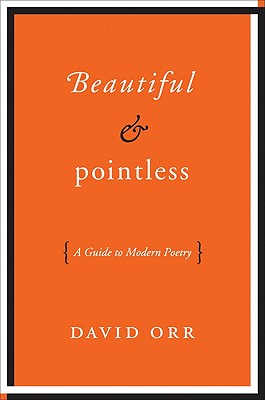
Beautiful & Pointless by David Orr

So, I've been on a poetry quest this year, right?  I've been reading it, writing it, and generally trying to figure it out.  So when I was browsing my local Barnes & Noble (on the day that I bought my new Nook)  I made sure to pick over the poetry shelves (which, by the way, are farther off the beaten path than Alaska).  On the highest shelf of the farthest wall on the lowest level of the bookstore, I saw the spine of this pretty orange book smiling at me.  It looked like it needed a home, and my impulse-book-buying-urges were in Full Justification Mode.

What I Hoped This Book Would Be:
I've struggled with modern poetry largely because, as the title of this book affirms, many of the poems I read feel pointless.  I don't know about you, but if I'm reading something and I'm thinking What's the POINT?? then I generally don't feel like it was a worthwhile read.  This book: A Guide to Modern Poetry, looked to be just the thing to explain to me how modern poetry has evolved, and what on earth I'm missing.  I want to know why "good poetry" is considered good, and why it is so difficult to find different styles of modern poetry.

In many ways, the book was exactly what I was looking for and did what I hoped it would do.  It answered many of my questions and went far to clarifying the current poetry climate.  Also worth mentioning is the fact that it was written in an easy to read, humorous, and intelligent manner.  On the other hand, I was disheartened and disappointed by what I found.  It actually left me rather depressed, and though a good dose of reality isn't necessarily a bad thing, I'm still left wondering if the opinion of this NYTimes Poetry Critic is universal.  If it is, then modern American poetry is in a sad state indeed.

The Good Stuff:
Not of great use for learning how to analyze modern poetry,  but still rather helpful in understanding what modern poetry is, and how it got there.  Among other things, reading poetry is a journey towards understanding how a specific poet thinks and views the world.  In this sense, biographical information about the author may end up being a valuable commodity, depending on the specific writing style.  I liked that the author pointed out that there are some poems/poets that nobody really understands. What this means is that if you don't understand a poem, it isn't necessarily your fault.  Perhaps the poem is appreciated for reasons other than appeal.  Don't discount your gut reaction.  The chapter on Form ended up being a great explanation about the fluidity of poetry rules.

The Sad Stuff:
It turns out that, in the author's world at least, all poets are liberal, political, and non-religious.  Not only that, but it is far too easy to obtain a MFA these days, and the Golden Days of Poets-With-Ambition are long gone. Orr spoke often of the inner politics of poetic elite, at once bemoaning and defending immature and/or illogical behavior.  As far as why "good poetry" is considered good, this portion of the chapter Ambition was telling:
Many of us in the American poetry world have a habit of exalting foreign writers while turning them into cartoons.  [...]  How else, really, to explain the reverse condescension that allows us to applaud pompous nonsense in the work of a Polish poet that would be rightly skewered if it came from an American?
That, to me, shows a couple of things.  First, there really are no absolutes in quality of poetry--beauty is in the eye of the beholder.  Second, being a successful American poet has more to do with politics and popularity than anything else...explaining why it is often difficult to find variety in currently publish poetry.

The Verdict:
Half of this book was fabulously informative and the other half was irritatingly depressing.  If I could turn back time, I'd read every other chapter: The Personal, Form, and The Fishbowl, (skipping The Political, Ambition, and Why Bother?)  That way I'd be able to remain pleasantly content in my optimism and new found knowledge.  Taken all together, there was an amazing amount of reading-between-the-lines, which (while being a fascinating thing to observe and digest) was ultimately very off-putting.  To say that it tempered my enthusiasm for modern poetry would be an understatement.

[edited to add another quote]
      Much as the growth of trees is affected by the quality of the soil, the writing we call poetry is affected by the methods we've developed to produce, distribute, and discuss it.
      In many ways, this is obvious.  Consider, for instance, publishing and reviewing.  The structure of the poetry world helps determine which books end up in print, which in turn determines what poems audiences have the opportunity to hear about and read, which in turn determines what the average, educated person believes to be "poetry", which in turn has an effect on how many poets feel about their own work.

Title: Beautiful & Pointless
Author: David Orr
Pages: 224
Published: 2011 Harper
My Rating: all said and done, I guess this one balances out at a 3

Thursday, June 16, 2011

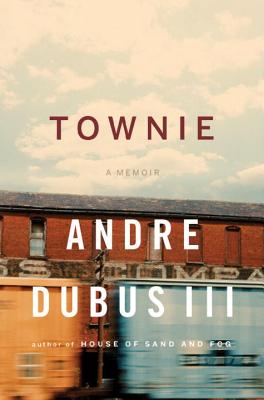
Townie by Andre Dubus III

I have an illogical and unsubstantiated bias against memoirs.  It's really irritating.  If it were a simple matter of taste, and I didn't happen to enjoy memoirs, that would be one thing...but that's not it.  I have enjoyed the memoirs I've read, for the most part.  But it's like this: I can't get over the idea that reading a memoir is akin to listening in on someone's therapy session.  It just feels weird.  There are just too many feelings intrinsically entwined with a memoir, (something I think about continually while reading one,) and it leaves me rather worn out.

My personal issues aside, Townie was an interesting book.  I read it because it was a Powell's Indiespensable selection, and I was completely unfamiliar with the author (haven't read House of Sand and Fog or any of his father's work).  I can't help but think that it would have been more rewarding to read under the following circumstances:

  1.) I was previously familiar with his (or his father's) life or writing
  2.) I was a guy (lots of weight lifting and fighting in this book)
  3.) I could relate to the time or place (1970s Massachusetts)
  4.) It was a tad shorter (not enough variance for 387pp.)

Even with these issues, though, it was an enjoyable, lasting read.  I appreciated the thoughtfulness and compassion he wrote with--it balanced out his circumstances.  After his parents divorced in 1970, Andre was taken out of his academia-entrenched lifestyle and plummeted into the poverty, drugs, and violence of a depressed mill town.  He and his siblings were basically left to fend for themselves as their mother struggled to stay afloat (emotionally and financially) and their father lived nearby, somehow unaware of the situation.

This book is a clear picture of how our past looms large.  Everyone has things in life that are difficult to process or understand, that are difficult to put behind us and move beyond...things that are typically more monumental in our own minds than could possibly be communicated to anyone else.  It is evident within the first few pages that the author has captured the haze through which we view our parents when we are young, and the journey we make to realizing that they--like us--are just people.

What was unique about this memoir is the viewpoint on writing.  Andre began life in the midst of some literary greats, but his parent's divorce quickly changed his surroundings. Because of this, he focused on developing his physical strength--something that would help him deal with the life he'd been given--sparing little time for intellectual or creative endeavors.  How these extremes ended up balancing out, and how he ended up finding himself as a writer, is fascinating.

So you see: a memoir: a book I'd never have picked up on my own, that I didn't think I would enjoy, ended up being an experience that has stuck with me.  One of my next book club books is a memoir, (Look Me in the Eye,) and while my smile obfuscates internal groaning, Townie has given me another reason to hope: another reason to convince myself that memoirs aren't that bad after all.

Title: Townie
Author: Andre Dubus III
Pages: 387
Published: 2011 W.W. Norton & Co.
Read For: Powell's Indiespensable
My Rating: 3.5 stars (above average!)

Saturday, April 23, 2011

Sunday Salon: Happy Easter (and the Reese Chronological Bible)

The Reese Chronological BibleOn Easter weekend, I can't help but think about my recent journey through the bible.  Before this year, I'd never read the bible in its entirety.  I've read a lot of it many times, but every time I try to read the bible all the way through I get to the middle of all the Levitical laws and my good intentions fly out the window.  In January, the month of resolutions, I bought a copy of the Reese Chronological Bible (even though it only came in the King James version) with the intention of reading it straight through.  There is something fascinating about placing the scriptures in a chronological order and historical context, don't you think?  Well, by the end of January I was about to stick it on my shelf, resigned to the idea of picking it up sometime later, (when my TBR wasn't so huge--ha!) but as I was carrying it away from my nightstand and toward my bookshelf I felt that I needed to make a concentrated effort to read through it instead of giving up on the idea so easily.

This bible is 1600 pages, and I read it in 66 days...25 pages a day (and 50 the last day).  Some days it felt like insanity: one day I read the books of Colossians, Ephesians, Philippians, 1 Timothy, Titus, and 1 Peter.    Now those aren't the largest books in the bible, but it does sound impressive, doesn't it? :)  It equalled out to about 45 minutes of reading...if I was focusing well.  If not, (and there were many portions of the bible when it was quite difficult for me to maintain focus,) then it would likely be the only reading I'd be able to fit in that day.   Why did I read it at such a pace?  It was sort of a Lent project, I suppose.  I felt challenged to read it as quickly as possible, and this pace ended up being about the exact amount I could read without getting frustrated and giving up.

One of the fabulous things about reading the bible in chronological order is that it provides a better Big Picture.   There is more continuity; it makes sense historically, which makes a world of difference for a brain like mine.  I loved the inclusion of historical facts, even if they were brief.  Before the book of Malachi, the birth of Plato is listed (429 BC) as is the reign of Darius II of Persia (423-404 BC).  In between the Old Testament and the New Testament, there is a brief commentary about Greece and Rome as world powers, which further aids in understanding the timeline.  The Big Picture goes beyond the historical context and into understanding the ultimate message of the bible: that of Yahweh's view and plan for humankind.

So although it was definitely a challenge, it had a rewarding outcome.  As far as the specific version is concerned, I was very pleased with how it was organized.  All other chronological bibles I've seen were much less specific in arrangement--while this version occasionally divided books into verse-sized sections, the others seem to be by books or perhaps chapters.  I thought this attention to detail was amazing, really adding to the poetry of some parts.  The story of David told in a way that interspersed the Psalms into the historical bits made for a beautiful, full retelling.  When I was previewing the book, the first few verses sold me:
John 1:1-2  In the beginning was the Word, and the Word was with God, and the Word was God.  The same was in the beginning with God.
Psalm 90:2  Before the mountains were brought forth, or ever thou hadst formed the earth and the world, even from everlasting to everlasting, thou art God.
Genesis 1:1  In the beginning God created the heaven and the earth.
While I wish that I'd had the option to read it in another version, I remain pleased with my experience.  It has provided a great frame of mind to head into Easter weekend, and beyond that into the rest of the year.  If you've been considering reading through the bible, this is one I'd recommend.  If you celebrate Easter, have a joyful day celebrating friends, family, and the risen Lord!

Title: The Reese Chronological Bible
Author: King James version, work by Edward Reese based on Frank Klassen's chronology
Pages: 1600
Published: Bethany House 1980 (orig. 1977)

Sunday, March 6, 2011

The Sunday Salon: (My First!) & The Slippery Art of Book Reviewing

I love reading The Sunday Salon posts, they are often so relaxing and offer a glimpse of life behind the curtain of book reviews and stat-tracking.  I tried to convince myself that it was not the best use of my time to begin a new project one week before my vacation, when there are so many other things needing to be done, but I didn't listen.  Spending some time sipping tea, surrounded by books, and putting everything into perspective sounds like the perfect way to spend part of my Sunday.

I started my book blog at the end of 2008 as a way to track my reading life without inundating my family blog, but I didn't really join the book blogging community until last June.  As you all know, this is one fabulous group of people, and the time I spend blogging and visiting remains a rewarding addition to my life.  In the 9 months or so since I decided to put more effort into my blog, my blogging style has gone (and continues to go) through changes.  Sometimes these changes are spurred by an imbalance somewhere--type and quantity of reading, type and quantity of blog posts--but sometimes they are spurred by something I've read in a book or on a blog, something that makes me consider what I'm doing from a different angle.

The Slippery Art of Book ReviewingReviewing books in a blog format, just for the joy of sharing bookish thoughts and starting bookish conversations, is different than writing book reviews in a less personal way, as a means to building a career in the industry.  Depending on your style, involvement, and platform, this may be a fine line...but I think it is one worth exploring.  Reading The Slippery Art of Book Reviewing (a title which bugs me every time I think it, say it, type it, read it, type it...what is slippery?  books aren't slippery, nor are reviews, nor even [most] art.  I don't like the idea of slippery-ness. What are we sliding into? Away from? Ugh.) has made me reconsider again, my approach to writing book reviews.

In the past I think I've tended towards maintaining a professionalism in my reviews, striving for nicely constructed sentences and fulfilling prose, often sacrificing strong opinions, humor or passion in the process. The [er...] Art of Book Reviewing has helped me to realize that I am not interested in making a career of book reviewing.  I want to read what I choose to read, and I want to be able to chat about it.  Why it took me so long to realize this, or why it was a fairly simple book that brought me to the realization, I have no idea.  I liked that the book showed that writing short reviews or long reviews is a matter of taste, on the part of the one reading it, the one writing it, and the one publishing it.  I prefer shorter reviews, and have occasionally felt inferior because of it--no more!!

This book also touches on book blogging, and includes resources for becoming more involved in book reviewing professionally, both things I appreciated.  If you are interested in some of the how's and why's behind book reviews, this book is worth a read.  Maybe you'll even get lucky like me and come away with a bit of perspective as well.  Is it ironic that the post in which I talk about my preference for short reviews happens to be a post of some length?

The week ahead, my last week home before my Ireland trip, (a place I've wanted to visit for such a long time,) is all about organization.  My thoughts, my house, my suitcase, etc.  I'm hoping to be able too continue to spend some time here in the off moments, but I'm trying to come to terms with the fact that my time and internet will be limited.  It's reassuring to know that when April rolls around, and my life resumes some semblance of normality for a while, you will all still be around, ready to talk books.  Here's to a productive week!

Title: The Slippery Art of Book Reviewing
Author: Mayra Calvani and Anne K. Edwards
Pages: 186
Published: 2008 Twilight Times Books
My Rating: 3 stars

Sunday, February 27, 2011

A Kidnapping in Milan by Steve Hendricks

A Kidnapping in Milan: The CIA on TrialTitle: A Kidnapping in Milan: The CIA on Trial
Author: Steve Hendricks
Pages: 352
Published: 2010 W.W. Norton
Read For: Review
My Rating: 2.5 stars

The CIA and Italian police, politics and government, terrorism and counter-terrorism, Egypt and Islam, torture and extraordinary renditions...the stuff movies are made of, right?  They are also all things I don't hold much interest in, and yet I gave it a shot, inspired by my experience with Thunderstruck by Erik Larson--another nonfiction book I read recently (one that I wasn't interested in and ended up enjoying).  They are also all things that I think are vital to be interested in, if loving this book is the ultimate goal.  This book may be just the thing for the person who loves the inside scoop, who revels in well-researched details and isn't bothered by a very full cast of characters.

While one of the resources in the back of the book lists 53 different significant characters, (an impressive number,) I came away only remembering the names of 3 and don't feel worse off for it: Abu Omar (whose kidnapping the book focuses on), Milan's CIA Chief Bob Lady (because I'm tickled by the idea of calling someone Mr. Lady), and the Italian investigator Spataro (because his last name shares the same nationality and 1st 3 letters as my married name...as does spaghetti, my husband informed me.)

I can only imagine how difficult a task it must be to whittle down the vast amount of information a project of this sort must entail, to a size that will make the information accessible to the maximum number of people.  I'll not attempt to opine that any of the characters in this book were unnecessary, yet I wish that it had been easier, while reading, to determine which characters it was more important to pay attention to.  I also wish that the book had been anchored by a character whose personality, beliefs and experiences were better known and easier to identify with (such as Spataro or the author himself) instead of floating around an issue or an aloof character.

In many ways, it has a documentary sort of feel about it: it is non-fiction based on current events, and the author obviously put a lot of personal work and research into the book.  He seeks to inform the public about an issue that, especially since 9/11, has become big enough to demand some thought and answers.  What level of illegal actions is acceptable for a government organization?  What level of inhumane treatment is acceptable in response to unrepentant terrorism?  Also discussed is the history of unrest in Egypt, which makes for a nice base of knowledge in light of current events.  While I am glad that I don't have to be the one making these decisions, I am also glad to have some background knowledge about them.

(Many thanks to the author and publisher for providing me with a copy of this book!)

Sunday, January 23, 2011

The Polysyllabic Spree by Nick Hornby

The Polysyllabic SpreeTitle: The Polysyllabic Spree
Author: Nick Hornby
Pages: 143
Published: 2004 McSweeney's
My Rating: 3.5 stars

Subtitled: A Hilarious and True Account of One Man's Struggle with the Monthly Tide of the Books He's Bought and the Books He's Been Meaning to Read

If you've ever read Nick Hornby, you know that he keeps you smiling.  This is the second book of his I've read, but I know it won't be the last.  I've noticed that his books grow on me over time.  Usually my feelings about a book are solidified within a day or two after reading it, but this has not been the case with Hornby.  The smiles and laughs stick in my head, and the fatalistic perspective evaporates.  Unlike High Fidelity (the first book of his I read) The Polysyllabic Spree is Nonfiction.  It is a collection of essays originally published in the Believer magazine in which Hornby talks about the reading life.

Each chapter begins with two lists: the books that he bought in that month, and the books that he read in that month.  Then he proceeds to chat about his months in books.  I love his attitude about buying books:
I don't want anyone writing to point out that I spend too much money on books, many of which I will never read.  I know that already.  I certainly intend to read all of them, more or less.  My intentions are good.  Anyway, it's my money.  And I'll bet you do it too.
This is a book about  books.  And it's funny.  And it's quick to read.  That's about all you need to know to decide whether you should read it or not.  The reason I ended up only giving it 3.5 stars is because I was frustrated that I hadn't heard of more of the books/authors he mentioned, which I attributed to the fact that he's in England and I'm way over here in California.  But, like I said, the longer it has been since closing the covers, the more it is growing on me.