Showing posts with label Read Along. Show all posts

Tuesday, February 11, 2014

Life Seen Backwards (a.k.a. first thoughts on Middlesex)

I started reading Middlesex by Jeffrey Eugenides for a read-along at Unputdownables (this is the first week, so I'm only about 60 pages in).  Now, my experience with Eugenides thus far (why does reading Eugenides always seem to need to come with a prior-experience disclaimer?) has been only with The Marriage Plot, which I read when it came out simply because it was sent to me by Powell's in my Indiespensable shipment (back when I was doing so good at keeping up with them).  It thought it was...okay.  Mostly I just really didn't connect with it—the characters, the plot, the theme, and even the writing itself.  However, people ADORE Middlesex.  The Pulitzer Board loved Middlesex.  Right?  So I've got to read it at some point and it may as well be now.

All that to say that I began reading it with some hesitation.  The first chapter wasn't great.  And then the second chapter had me [first] highly irritated and [second] entranced.  And I'm thinking.  Perhaps this is Eugenides? Or maybe only Eugenides to me, but this quality of being simultaneously impressed and disdainful has settled over me during both of his books so far.  Is that a reflection of the author's feelings/personality or something he's hoping to evoke? Or is it just me being a little bit snotty?  I don't know. But interesting thought.

What left me entranced was the description of the grandmother's, erm, relationship, when she was young.  I really enjoyed how it was written, I could picture the characters and setting, and I was planted in the fictional dream.  If you've read it, you know of what I speak.  If you have not read it, well, I don't want to spoil it, but suffice to say that it is related to tough times in a small town.  Maybe.  Anyhow, (when the narrator kept his nose out of it at least,) the whole thing was captivating.

The great irritation stemmed from the point of view it was written in (first person semi-omniscient or something like that) that kept jolting me out of the story being told.  The high point of aggravation was the part where he rewinds time back to when his grandmother was young.  How those sentences were written simply didn't hold up to Pulitzer status.  In my opinion, of course.  They were highly conspicuous to me because it was impossible to not compare it to a similar type of scene in Kurt Vonnegut's Slaughterhouse Five.  And really, there is simply no comparison because Vonnegut composed one of the most amazing things ever in that scene. Anything else would necessarily pale in comparison. I actually had to put Middlesex down for a few seconds because I was annoyed about the whole Pulitzer thing.  (See?  That disgust that is so ready to rear its ugly head?  I'm not usually like that.  What's the deal? Who really compares authors like that? As if nobody is ever allowed to rewind the story ever again? Ugh.)  But because my subconscious won't leave me alone unless I actually compare them for realz, even though I feel like that makes me a little bit of a terrible human being, here they are.

[from Middlesex, 2002 by Jeffrey Eugenides]
And so now, having been born, I'm going to rewind the film, so that the pink blanket flies off, my crib scoots across the floor as my umbilical cord reattaches, and I cry out as I'm sucked back between my mother's legs.  She gets really fat again.  Then back some more as a spoon stops swinging and a thermometer goes back into its velvet case. Sputnik chases its rocket trail back to the launching pad and polio stalks the land.  There's a shot of my father as a twenty-year-old clarinetist, playing an Artie Shaw number into the phone, and then he's in church, age eight, being scandalized by the price of candles; and next my grandfather is untaping his first U.S. dollar bill over a cash register in 1931.  Then we're out of America completely; we're in the middle of the ocean, the sound track sounding funny in reverse. A steamship appears, and up on a deck a lifeboat is curiously rocking; but then the boat docks, stern first, and we're up on dry land again, where the film unspools, back at the beginning...


[from Slaughterhouse Five: or the Children's Crusade, 1969 by Kurt Vonnegut]
American planes, full of holes and wounded men and corpses took off backwards from an airfield in England. Over France, a few German fighter planes flew at them backwards, sucked bullets and shell fragments from some of the planes and crewmen. They did the same for wrecked American bombers on the ground, and those planes flew up backwards to join the formation.

The formation flew backwards over a German city that was in flames. The bombers opened their bomb bay doors, exerted a miraculous magnetism which shrunk the fires, gathered them into cylindrical steel containers, and lifted the containers into the bellies of the planes. The containers were stored neatly in racks. The Germans below had miraculous devices of their own, which were long steel tubes. They used them to suck more fragments from the crewmen and planes. But there were still a few wounded Americans, and some of the bombers were in bad repair. Over France, though, German fighters came up again, made everything and everybody as good as new.

When the bombers got back to their base, the steel cylinders were taken from the racks and shipped back to the United States of America, where factories were operating night and day, dismantling the cylinders, separating the dangerous contents into minerals. Touchingly, it was mainly women who did this work. The minerals were then shipped to specialists in remote areas. It was their business to put them into the ground, to hide them cleverly, so they would never hurt anybody ever again. 

Actually, typing it out made me realize that I was probably mostly just offended that a pregnant woman is described (by a man) as "really fat".  I'm not an easily-offended sort of person but THAT gets my ire up.  After continuing on to read the third chapter my irritation was mostly diffused—I still don't care for the narrator/narration style very much, but I'm quite interested to see where the story leads.  (Still, that Vonnegut passage is the bees knees.)

Saturday, January 26, 2013

Persuasion: Wrapping it Up

"As she spoke, she felt that Captain Wentworth was looking at her; the consciousness of which vexed and embarrassed her, and made her regret that she had said so much, simple as it was."

I've had a marvelous time with this reread, but now it is time to wrap it up.  I never want the end to come, lovely though it is, because it's the anticipation and anguish that thrills me.  Endings are so...final.

A conversation between Mrs. Musgrove and Mrs. Croft about the preference of a short engagement to a long engagement made me stop and muse for a while.  I was engaged to be married for 8-9 months, and it was only that long because we had to graduate from high school before getting married (a stipulation put forth by the judge!)  We were an unusual case to say the least.  What is your own opinion about the length of an engagement?  Had a couple better go ahead and get married once they decide to do so?  Or had they better wait and make sure they are financially secure first?

"Place it before Anne."
(Find more photos at Molland's)
Jane Austen begins the last chapter of this book with a note about the moral of the story.  In an age where (as Anne herself mentions at Lyme) novels were expected to support the notion of morality and encourage one on the path of duty, she admits that her argument for love over prudence might be "bad morality to conclude with, though she also asserts that she believes it to "be truth."  One of the compelling things about the Regency Era is how pivotal it was in many ways, including women's role in society, and preference to the individual's desires over the status quo.

Reading it this time around made me realize even more that the reason I love this book is largely because of how closely I identify with Anne.  I just feel the whole book--feeling overlooked and undervalued, convincing yourself to accept your lot in life and giving in to other people's opinions, not fitting in with the 'norm' and wanting more out of life, etc.  Because I feel like that pretty much all the time, I never really know when it's important to stand up for myself.  Putting that on paper makes it sound a little silly to my ears, but there it is.  Again, I feel like Anne: regretting that I "said so much, simple as it was."

This was my 3rd? 4th? time reading this book, and it never fails to disappoint me.  How could it when it makes me feel so understood?

If you wish to follow my whole journey through Persuasion, follow these links!

Friday, January 18, 2013

Persuasion: Part 3 of 4

"If I thought it would not tempt her to go out in sharp winds, and grow coarse, I would send her a new hat and pelisse." --Sir Walter, ever concerned with appearances.

The first half of volume 2 brings us back to Sir Walter and Elizabeth: the relatives from whom no absence is long enough.  Having spent much time in the presence of very good, open-hearted people, the difference is felt more keenly.  Ridicule of Sir Walter's priorities becomes more blatant, and the reader feels, as Anne must, that the idle conversations are an poor way to pass the time.

Noticeable in this section is Anne's relative assertiveness.  Anne states her mind after Mary asserts that Lady Russell "will not find any thing very agreeable" in Captain Benwick. Mary says, "He is one of the dullest young men that ever lived."  Anne has no problem contradicting her, and hearing Anne's voice (for what feels like the first time) is welcome relief.

In fact, we hear much more of Anne's voice, (rather than solely her thoughts and observations,) throughout this segment.  I believe this reflects a restoration of life and hope, in addition to a general gain of gumption.  She has faced what she had lived in dread of, (seeing Wentworth again,) and she has survived.  Her disappointment did not spell the end of her.

Camden Place in Bath
One of the things Austen addresses in this section is the quality of openness.  While Mr. Elliot has every quality polite society might desire—more than sufficient manners to satisfy Lady Russell—Anne can't help but feel something wanting.  Though she finds him to be "an exceedingly agreeable man," she later says that he is "too generally agreeable."  Though he communicates to Anne his contempt of Mrs. Clay, still Mrs. Clay finds him "as agreeable as anybody."  This is a "decided imperfection" and in sharp contrast to the warmth of the Crofts, who display the attribute of openness admirably, and soon join the society at Bath, saving us (and Anne) from wilting in oppressive shallowness.

"They brought with them their country habit of being almost always together."

While the Crofts (whom I love) are being spoken of, I must use a quote of Admirable Croft's to mention Austen's use of parenthesis.  I love using parenthesis myself, and so of course it makes me smile how Austen uses them.  Doesn't it just transport you to the scene itself?

"I wonder where that boat was built!" (laughing heartily) "I would not venture over a horsepond in it.  Well," (turning away) "now, where are you bound?"

I like it, and all the more for the fact that it feels unexpected from a book written nearly 200 years ago.  Another practice Austen uses is free indirect speech, which is shown at the beginning of chapter four, and which also serves to make a scene come alive...though I'm certain that it could also (in combination with the abundance of punctuation) be confusing to a reader unaccustomed to it.  It makes me happy. (Another item of humor in the following excerpt, by the way, being that Gowland's Lotion contained mercuric chloride, a derivative of sulphuric acid, a.k.a. chemical peel. ouch.)

In the course of the same morning, Anne and her father chancing to be alone together, he began to compliment her on her improved looks; he thought her "less thin in her person, in her cheeks; her skin, her complexion, greatly improved—clearer, fresher.  Had she been using anything in particular?" "No, nothing." "Merely Gowland," he supposed. "No, nothing at all." "Ha! he was surprised at that;" and added, "certainly you cannot do better than continue as you are; you cannot be better than well; or I should recommend Gowland, the constant use of Gowland, during the spring months."

Now that I've talked at great length about punctuation (wasn't that exciting?) I suppose it's time to wrap up, though I have one more point to address.  Isn't it an interesting contrast that the man who declares he is ready and willing to love any young lady (Wentworth) ends up holding out for something more perfect, while the man who is so bereft that he shall never rise out of his misery (Benwick) ends up being quickly consolable after all?


Friday, January 11, 2013

Persuasion: Part 2 of 4

"Anne felt her spirits not likely to be benefited by an increasing acquaintance among his brother-officers.  'These would have been all my friends,' was her thought; and she had to struggle against a great tendency to lowness."


The tension builds.  The majority of this section (the second half of the first volume) shows Anne playing second fiddle, Anne in the background, Anne quiet while others talk over her, Anne being talked at instead of to.  This all changes when she arrives in Lyme.  The sea air is invigorating, inspiring, as is the new company.  She finds in Captain Benwick a thoughtful conversant, and in Mr. Eliot a new admirer.  An event happens that forces our headstrong Captain Wentworth to reconsider those feelings and emotions he has long resolved to ignore.

Amazing to me is how caught up I get in Austen's writing in this book.  The reader gets to partake in Anne's feelings of loneliness and the beginning pangs of resignation as conversation steers around who Wentworth will choose—none of the options being herself.  Then, just as that sad reality starts to make itself at home in your heart, the end of chapter nine brings a development that transports you directly into Anne's "disordered feelings" and "painful agitation" and serves as the first in a series of occurrences that leave Anne in disarray.

"She was ashamed of herself, quite ashamed of being so nervous, so overcome by such a trifle; but so it was; and it required a long application of solitude and reflection to recover her."

One thing to note is how Austen manages her male characters.  There is one case where she actually (briefly) writes from Wentworth's point of view, but most of the time when his motives are being noted, it is through Anne's observations and interpretations, and must be viewed through that lens.  It is my opinion that Wentworth isn't simply bitter about the affront of being refused all those years ago, rather he wears this mask in order to protect himself from constantly reliving the heartbreak of being rejected...because he is still in love.  Of course he won't admit that, not even to himself, but when it all boils down we see that he still thinks very highly of her.  However, believing that she still holds to that terrible persuasion that separated them so long ago, he cannot trust himself to be open with her, for that would be to risk utter destruction.

"'Is there no one to help me?' were the first words which burst from Captain Wentworth, in a tone of despair, and as if all his own strength were gone."

Between Lyme Regis and Charmouth, by John White Abbott
(Read more about Persuasion at Jane Austen's World!)
A unique (to Jane Austen) element that features heavily in Persuasion is the importance of location, as it influences more than simply the setting.  Anne, especially, is affected by the different places she happens to be.  At Kellynch, she feel repressed and confined by the expectations of propriety.  At Uppercross she feels needed, yet lonely; more alive, yet still ignored.  At Lyme, she is stimulated and inspired, sensing the vitality that she has lived without.  And Bath, her upcoming destination, she dreads.  The very thought of it sends her into low spirits.

As Volume 2 begins, there is a definite shift in mood.  Anne begins to take more ownership of her life (her internal life, at least).  This is apparent from the beginning, when she has a difficult time paying attention to the matters of family that Lady Russell speaks of, even though she knows that she should be more concerned.  She also admits to herself that the Crofts were more worthy of Kellynch than her own father—a shocking statement for the times, not only because of familial loyalty, but because it questions the class structure.  With this new breath of life swirling round her head, the next installment should make for interesting reading.


Tuesday, July 31, 2012

On the Road by Jack Kerouac

I've officially done it!  Wallace's read-along for Kerouac's On the Road is complete and I can now say that I Have Read This Book.

I discovered that many of my fuzzy notions about this book were actually sizable misconceptions.  For example, I was rather worried about the rumours of stream-of-consciousness and hard-to-follow writing.  In actuality, Kerouac's writing was one of the things that made this book enjoyable.  I adored this (from page 8) which was just about as "streamy" as it got:

They rushed down the street together, digging everything in the early way they had, which later became so much sadder and perceptive and blank.  But then they danced down the streets like dingledodies, and I shambled after as I've been doing all my life after people who interest me, because the only people for me are the mad ones, the ones who are mad to live, mad to talk, mad to be saved, desirous of everything at the same time, the ones who never yawn or say a commonplace thing, but burn, burn, burn like fabulous yellow roman candles exploding like spiders across the stars and in the middle you see the blue centerlight pop and everybody goes "Awww!"

I loved this description: “His excitement blew out of his eyes in stabs of fiendish light.”

Apart from being a little bit in love with Kerouac himself, I also loved the clear picture of America and Mexico in the late 1940s.  It was like getting a real glimpse of history, rather than a retelling.  Unfortunately, the novelty of traveling and visiting places familiar and strange wore off the more Dean Moriarty (aka Neal Cassidy) was in the picture.  That guy is just a super-stressball (compounded by the fact that I know someone who (in some ways) is very much like him.  So much that I've actually heard the same defense for said person as Kerouac did for Dean:)
I longed to go and put my arm around Dean and say, Now look here, all of you, remember just one thing: this guy has his troubles too, and another thing, he never complains and he's given all of you a damned good time just being himself, and if that isn't enough for you then send him to the firing squad, that's apparently what you're itching to do anyway...
Another misconception I held before reading the book was that it was all only sex&drugs.  Certainly there is a lot of sex&drugs, (one scene in Mexico stands out in my mind,) but for the most part, Kerouac's insights and observations made it apparent that post-WWII America was a little lost and trying to figure out exactly what life was all about.  The problem was the lack of hope.  Seeing a group of people not be able to move on, or grow out of, such behaviors is sad.  Although I appreciated the historical importance, and enjoyed Kerouac's writing, most of this book ended up leaving me somewhat ambivalent.  Dean was stressful, and everyone's inability to be content was depressing.

I am glad I read it though, both for its significance in literature, and because I no longer have those misconceptions I began with.  It was easy to read in many respects, but a growing experience at the same time.  Kerouac had many acute observations, even in the midst of dizzying jazz and exhilarating car rides, that made my time with the book much more enjoyable that it might have been otherwise.  I'll leave you with one I especially liked.
Dean took out other pictures. I realized these were all the snapshots which our children would look at someday with wonder, thinking their parents had lived smooth, well-ordered, stabilized-within-the-photo lives and got up in the morning to walk proudly on the sidewalks of life, never dreaming the raggedy mess and riot of our actual lives, our actual night, the hell of it, the senseless nightmare road. All of it inside endless and beginningless emptiness. Pitiful forms of ignorance.

Friday, June 8, 2012

It's in the Air: Read-Along Time!

It's finally that time I've been working up to all year: On the Road (Kerouac) readalong at Unputdownables.  There's still time to join if you're up to it!  The book will be read throughout June and July, and the first chunk is open for discussion TODAY (the 8th).  Like always, I'm not sure how much of the progress I'll be posting on, but you've been warned. :)

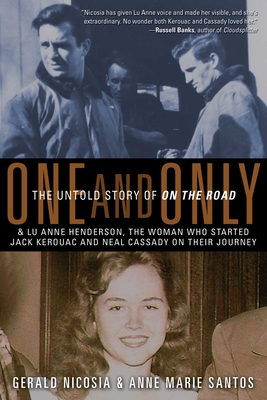
Earlier this year I read (listened to, actually) One and Only: The Untold Story of On the Road, as a sort of introduction to the era and characters.  Soon I'll find out if that was a good choice or not!


In other read-along news, Emily at As the Crowe Flies and Reads is hosting a reading of Telegraph Avenue: the yet-to-be-released Michael Chabon book.  I believe that the sign-ups are closed, and I've decided not to join in...so why on earth am I talking about it?  It's an idea I love - publishers, booksellers, and bloggers getting together for a little pre-pub-experiment.

The only book I've read by Chabon is Gentlemen of the Road, and I was really not impressed.  However, everybody [and their brother] loves him, the Pulitzer Board loves him, and the synopsis of Telegraph Avenue is intriguing, especially as NorCal is a place close to my heart.  But.  I'm afraid I won't love it so I'm going to follow their discussion and do some cheerleading on the side.  That will all be happening in the month of July, so stay tuned!


Also happening in the JU** months is Allie's (at A Literary Odyssey) Victorian Celebration.  Have you decided to join in on this one?  Last year I focused on keeping up with regular adult fiction, and found myself missing nonfiction and classics, so I've swung back over to those this year.  I love how this works together with the Classics Club and the Back to the Classics Challenge.  It's motivation!

I couldn't wait for June to arrive and got a jumpstart on this challenge in May by reading The Warden by Anthony Trollope, but I'm not stopping there!  I'm currently reading Frankenstein by Mary Shelley, and am hoping to get through at least one more before I jump into my classic novellas in August.  And after that?  Well, after that I'll need a break. :)

Friday, January 13, 2012

Anna Karenina Wrap-Up Post

Oh RIGHT! THAT'S what I was forgetting--my final Anna Karenina post!  I totally left the good old blogging hanging on that one--did I love it? hate it? finish it??  The last time I posted was before I read the last quarter of the book (meaning: yes, I did finish it...did you really doubt me, dear blog?) and then I didn't post because, well, the holidays were raging, and I sped through the end of the book so quickly that I finished it before the read-along ended and then felt a teensy-weensy bit guilty.

If you've read any of my prior posts on the book, you may remember that Anna Karenina is actually a re-read for me [technically]  although the fact that I read it in highschool (some 17 years ago or so) means that I don't remember much except for hazy pictures of unhappy people in big houses in the middle of Russia.  And trains of course.

This was my 2nd read-along (the first being last spring for Villette--also with Wallace) and it was also a very good experience.  I work well with deadlines, I suppose, so the schedule works for me.  Also, it's a great way to digest a classic: periodic discussions aid in understanding and appreciation.  So read-along=thumbs up, & hoping for more in 2012.

In Week 1, I delighted in Tolstoy's humor as well as the wonderful translation.  Also, it was crazy to realize that most of the main characters are not more than 34-35 years old.  When I was a teen that sounded ancient, now it seems oh-so-very-young. ;)

Week 2 was all about adding layers: the characters and the plot both start to become more complex as the picture starts to fill in.  Tolstoy continues to do this throughout the novel, which is one of the things that made it feel so real and intriguing to me.

Anna starts working herself into a corner in Week 3.  We see a little more of the social life in the upper class, and also some hints that the times are a-changing.

Week 4 is quieter.  We see Kitty's time abroad and Levin's observations on farming.  We are left to ponder the important things in life.

It's crunch-time in Weeks 5-7: so many things are starting to come to head and the characters' faults are showing.  I began to dislike many of the characters here, and yet was captivated by the story.

Ah, Weeks 8-9.  How many angles of love we see here.  There's the newlywed bliss and stress, there's the deluded justification of a broken marriage, there's the sad acceptance of a lesser love.  Dolly's circumspection here really touched me.  She realized that she did have love--which was good--but it wasn't the kind or the quality that she yearned for.  (sigh*)

The last quarter of the book shows Anna & Vronsky falling apart, Kitty & Levin grow stronger, Dolly and Stiva find a way to hold it together.  Seeing Anna crack up was pretty intense.  Tolstoy ended the book on a philosophical note rather than on drama and plot--something that felt very Tolstoy to me.  At first, since I'd been so enraptured in the story, I had a hard time switching back to philosophy.  In the end, though, I found that it not only allowed the story time to settle and soak in, but it also really brought all the plot points and themes together.

Tolstoy went through some major life changes while writing this book.  He struggled, as Levin does in the book, with what the meaning of life is & how he should be living.  While in the beginning Tolstoy was excited about writing what he viewed as a proper novel, in the end he was sick of it--had changed it so many times and just wanted to be done with it.  And yet the result is still wonderful.  I love that you can take so many different messages away from the book: since Tolstoy is mulling over all the issues himself, the book feels more like an invitation to mull over it along with him rather than being a vehicle to deliver his agenda.

This has solidified Tolstoy as one of my very favorite authors.  The mix of insight and action, poetry and wit are melded into perfection for me here.

[some of my favorite quotes:]

p. 236: ...She understood that she had deceived herself in thinking that she could be what she wished to be.


p. 260: Hard as Stepan Arkadyich tried to be a solicitous father and husband, he never could remember that he had a wife and children.


p. 427:  “I’ll begin from the beginning: you married a man twenty years older than yourself.  You married without love or not knowing what love is.  That was a mistake, let’s assume.”


p. 608: ...They all fall upon Anna.  What for? Am I any better? I at least have a husband I love.  Not as I’d have wanted to love, but I do love him, and Anna did not love hers. How is she to blame, then? She wants to live. God has put that into our souls. [...] I might have loved and been loved in a real way.


p. 614: “When you love someone, you love the whole person, as they are, and not as you’d like them to be.”


p. 729: Children? In Petersburg children did not hinder their father’s life.  Childen were brought up in institutions, and there existed nothing like that wild idea spreading about Moscow - as with Lvov, for instance - that children should get all the luxuries of life and parents nothing but toil and care. Here they understood that a man is obliged to live for himself, as an educated person ought to live.


p. 780: “Yes, as a tool I may prove good for something.  But as a human being I am a wreck,” he said measuredly.


p. 817: [last paragraphs]  This new feeling hasn’t changed me, hasn’t made me happy or suddenly enlightened, as I dreamed - just like the feeling for my son.  Nor was there any surprise.  And faith or not faith - I don’t know what it is - but this feeling has entered into me just as imperceptibly through suffering and has firmly lodged itself in my soul.
    I’ll get angry in the same way with the coachman Ivan, argue in the same way, speak my mind inappropriately, there will be the same wall between my soul’s holy of holies and other people, even my wife, I’ll accuse her in the same way of my own fear and then regret it, I’ll fail in the same way to understand with my reason why I pray, and yet I will pray - but my life now, my whole life, regardless of all that may happen to me, every minute of it, is not only not meaningless, as it was before but has the unquestionable meaning of the good which it is in my power to put into it!

Friday, December 9, 2011

Anna Karenina: Week 8-9 of 12


My Thoughts on pp.483-620
  1. I've enjoyed the depiction of newly married life.  What weight Kitty attaches to trivial things! How volatile are Levin's emotions!

  2. I don't know if it is simply my translation, but the phrase "in the depths of his soul" is starting to grate on me.  Must everything truly be felt in the depths of one's soul?

  3. In the quote below from p. 608, Dolly contemplates the quality of the love she lives with, comparing it to the decisions that Anna has made.  How sad, and yet how realistic, is the realization that life isn't perfect?  She admits that she does have a husband she loves, only not as she'd have wanted to love.

  4. Anna, in the last quote, declares that all she wants is to live, causing no harm to anyone but herself.  And yet this really doesn't accurately depict the choices she's made.  In reality, she chose to live instead of causing harm only to herself (the torture of not being with Vronsky).  I understand that she feels that her husband and son are better off without her, and that she is better off without the marriage, and that she is paying for her choice by ruining her reputation.  But I also see that her husband's reputation has been destroyed, and her son's happiness as well.  I know that she didn't think she had a choice, and yet I wonder...It is so common to think the grass is greener on the other side, but rarely does it really turn out that way.
Quotes from pp.483-620
  • p. 511: ...it was so necessary for him in his humiliation to possess at least an invented loftiness form which he, despised by everyone, could despise others, that he clung to his imaginary salvation as if it were salvation indeed.

  • p. 527-8: The elder brother, who had always respected the opinions of the younger, could not quite tell whether he was right or wrong until society decided the question; he himself, for his own part, had nothing against it and went together with Alexei to see Anna.

  • p. 549: And those assurances of love, which seemed so banal to him that he was ashamed to utter them, she drank in and gradually grew calm. The next day, completely reconciled, they left for the country.

  • p. 608: "And they all fall upon Anna. What for? Am I any better? I at least have a husband I love. Not as I’d have wanted to love, but I do love him, and Anna did not love hers. How is she to blame, then? She wants to live. God has put that into our souls. [...] I might have loved and been loved in a real way."

  • p. 614: “When you love someone, you love the whole person, as they are, and not as you’d like them to be.”

  • p. 616: “I don’t want to prove anything, I simply want to live; to cause no evil to anyone but myself. I have that right, haven’t I?”

Monday, November 28, 2011

Anna Karenina: Weeks 5-7 of 12

Between my Caribbean trip and my Tahoe trip, both full of family, friends, and TONS of cooking, I've fallen behind on my read-along.  I'm making it up here--so glad I finally caught up!

My Thoughts on pp.275-483
  1. How Karenin went about deciding what to do with Anna was chilling, and quite indicative of the initial state of their marriage, I think (verified in the quote from p. 427 below).  He really is very cold and methodical about it all: more concerned with the political/social appearance than anything else.  Love and compassion seem to have never had a place in their marriage, which makes my view of Anna's affair change somewhat.  She seems friendless and directionless in many senses. (see quotes below: from p. 282-3 for his view, and from p. 287 for hers)  I like that, a bit further on, he finally lets himself connect with true feeling (see quote from p. 410-11 below.)

  2. The crumbling aristocracy...Levin's discussion with others in his class about the structure of farming and peasantry etc. is somewhat like the Occupy movement from the opposite direction, yeah?  Anyhow, I find it interesting to compare the problems of one social/political structure to another, especially when we can see some of the outcome of one, and are living in the other.  I don't really know what my verdict is about the comparison, but it is adding something to the [thought] pot. 

  3. I'm completely sucked into the plot, so much so that I didn't write down as many quotes as I thought I might.  From the complete awkwardness when Stepan ran into Alexei Alexandrovich, to Levin and Kitty matching up and the whole wedding ceremony, and Vronsky's reaction to Karenin's return!  There is so much going on in this section that I'm just enthralled.

  4. Characters--not liking Anna so much any more.  I get that her choices were slim, but I don't really like Vronsky, so the fact that she does dampens my affection for her. :)  These sections took me from feeling irritated with her to being sympathetic and back to irritated (which has actually been a great thing to experience.)  I'm also not as in love with Levin as I was.  I like him fine, but it's really starting to irritate me that he gets so moody.  He can't handle truth being spoke of aloud and plainly, which is something I really don't think I could live with.  (I'm starting to feel sorry for Tolstoy's wife, if Levin=Tolstoy!)  My favorites right now are Stepan and Dolly...strange, since they played a minor role in this section.

Quotes from pp.275-483
  • p. 282-3: [Alexei Alexandrovich's thoughts:]  “I cannot be unhappy, but neither should she and he be happy.” [...] “She should be unhappy, but I am not guilty and therefore cannot be unhappy.” 

  • p. 287: [Anna's thoughts:] ...in the depths of her soul she considered her situation false, dishonest, and wished with all her soul to change it. [...] It might be bad, this new situation, but it would be definite, there would be no vagueness or falsehood in it. 

  • p. 334: [Levin's POV] ...but the landowner, like all people who think originally and solitarily, was slow to understand another man’s thought and especially partial to his own.

  • p. 375: [Levin:] “It’s true that it’s time to die. And that everything is nonsense. I’ll tell you truly: I value my thought and work terribly, but in essence--think about it--this whole world of ours is just a bit of mildew that grew over a tiny planet. And we think we can have something great--thoughts, deeds! They’re all grains of sand."

  • p. 410-11: Alexei Alexandrovich stopped and went pale. He now realized clearly how strongly he had desired her death. [...] ...feeling slightly relieved at the news that there was after all some hope of death, he went into the front hall.

  • p. 415: [Vronsky] did not understand Alexei Alexandrovich’s feelings. But he felt that this was something lofty and even inaccessible to him in his world-view.

  • p. 427: [Stepan to his sister Anna:] “I’ll begin from the beginning: you married a man twenty years older than yourself. You married without love or not knowing what love is. That was a mistake, let’s assume.”

  • p. 435: [Vronsky's thoughts:] He simply could not understand how, at this moment of their reunion, she could think about her son, about divorce. Was it not all the same?

  • p. 465: [Vronsky:] He soon felt arise in his soul a desire for desires, an anguish.

Friday, November 4, 2011

Anna Karenina: Week 4 of 12


My Thoughts on pp.214-274
  1. Another round of depth was added to our main players.  In this section we get to see Levin contrasted with his brother Sergei: country mouse/city mouse.  On page 239 (see quote below) Levin reflects on an observation that his brother's convictions don't reach his heart.  On page 243, Sergei gets frustrated that Levin's convictions don't reach his mind:   "He hardly entered into what his brother was saying."  We also get to see Kitty mature some, although she still seems rather befuddled with herself (see first three quotes below).

  2. This section was slower/quieter for me.  I enjoyed reading of Kitty's time abroad (couldn't quite figure out Varenka--can anyone really be that good and likeable and level-headed?) and seeing more of Levin.  Some of the farming descriptions left me wishing for more about Vronsky and Anna instead, even though I love nature and the education on Russian society.  Maybe I'm like Levin, and think that nature is better if it isn't talked of so much. ;)   (see quote from page 241 below)

  3. I've realized that I think of the men being much older than they really are.  Looking back on my quotes I see that Stepan is 34...they all seem so much older! I'm going to have to work at reforming the picture in my mind's eye.

Quotes from pp.214-274
  • p. 224:  From Varenka she understood that you had only to forget yourself and love others and you would be calm, happy and beautiful.

  • p. 233: She could not solve the problem her father had unwittingly posed for her by his merry view of her friends and the life she had come to like so much.

  • p. 236: ...She understood that she had deceived herself in thinking that she could be what she wished to be.

  • p. 237: For Konstantin Levin the country was the place of life, that is, of joy, suffering, labour.

  • p. 239: But, in the depths of his soul, the older he became and the more closely he got to now his brother, the more often it occurred to him that this ability to act for the common good, of which he felt himself completely deprived, was perhaps not a virtue but, on the contrary, a lack of something--not a lack of good, honest and noble desires and tastes, but a lack of life force, of what is known as heart, of that yearning which makes a man choose one out of all the countless paths in life presented to him and desire that one alone.

  • p. 241: Konstantin Levin did not like talking or hearing about the beauty of nature.  For him words took away the beauty of what he saw.

  • p. 248: "I need physical movement, otherwise my character definitely deteriorates."

  • p. 260: Hard as Stepan Arkadyich tried to be a solicitous father and husband, he never could remember that he had a wife and children.

  • p. 260: She had lived in the country in childhood, and had been left with the impression that the country was salvation from all city troubles.

Friday, October 28, 2011

Anna Karenina: Week 3 of 12


My Thoughts on pp.142-210
  1. First of all, I couldn't stop at page 210--what a cliffhanger!  I had to know, so I read a few more pages. I'm beginning to seriously doubt how I'll be able to make this book last the rest of the year!

  2. Why is it that so many of the characters base their actions on public opinion?  Are we really like this and just don't realize it?  Or is this a facet of a high-profile section of society?  As one example, Vronsky's mother was pleased with her son's affair until she realized that it was looked down upon by others.  Tolstoy has a way of giving the reader information about a character (such as their thought processes) that the character himself isn't even aware of, which not only adds a bit of humor to the story, but also exasperation that the characters don't see what we so plainly see.

  3. I really enjoyed all the macho bantering in this section.  From the comment about Vronsky being on a low-carb diet: "he avoided starches and sweets." (p.175) to teasing someone about not drinking because of the calories: "Today I don't drink." "Why? So as not to gain weight?" (p.180) and most especially about hair loss: "You should get your hair cut, it's too heavy, especially on the bald spot." (p.180)  These fellows are funny.  Can't you just picture them?

  4. I'm so sad about Anna.  She seems to have let her emotions rule, making (of course) the wrong decisions.  She can't bear to talk seriously about the issue, and puts on this lightness that I totally understand but isn't doing her any favors.  She's working herself into a corner and it is so sad to see.

Quotes from pp.70-141
  • p. 147:  "Rummaging in our souls, we often dig up something that ought to have lain there unnoticed."

  • p. 174: The majority of young women, envious of Anna and long since weary of her being called righteous, were glad of what they surmised and only waited for the turnabout of public opinion to be confirmed before they fell upon her with the full weight of their scorn.

  • p. 176: Yashvin, a gambler, a carouser, a man not merely without any principles, but with immoral principles--Yashvin was Vronsky's best friend in the regiment.

  • p. 183: He was angry with everybody for their interference precisely because in his soul he felt that they, all of them, were right.

  • p. 200: For the first time in his life he had experienced a heavy misfortune, a misfortune that was irremediable and for which he himself was to blame. [...] But the memory of this race remained in his soul for a long time as the most heavy and painful memory of his life.

Friday, October 21, 2011

Anna Karenina: Week 2


My Thoughts on pp.70-141
  1. This installment provided much character development for Levin, Vronsky, Anna, and Kitty, while Stiva and Dolly faded into the background somewhat.  Like the camera panning and zooming in on the background, these somewhat peripheral characters have become more interesting and more important.  I sympathize with Kitty, although I have to admit I'm running out of patience for her (pull it together, girl!)  I dislike Vronsky: what a player.  Anna I love, except I'm saddened that she can't resist Vronsky.  Society certainly doesn't help her out! (see the quote below form page 128)

  2. I loved the chapters that gave us greater insight into Levin; I especially liked seeing him out on his estate.  I feel so much more sympathetic toward him now.  I now see why he is referred to as being most like Tolstoy himself.  Many of his thoughts, (particularly on the economic conditions in chapter 26,) sounded much like the beginnings of the Tolstoyan movement. (see the quote below from page 93)  As of now, he is by far my favorite character.  He seeks truth and a whole, well-rounded life: something I admire.

Quotes from pp.70-141
  • p. 80: Kitty looked into [Vronsky's] face, which was such a short distance from hers, and long afterwards, for several years, that look, so full of love, which she gave him then, and to which he did not respond, cut her heart with tormenting shame.

  • p. 93: [Levin] regarded the reforming of economic conditions as nonsense, but he had always felt the injustice of his abundance as compared with the poverty of the people, and he now decided that, in order to feel himself fully in the right, though he had worked hard before and lived without luxury, he would now work still harder and allow himself still less luxury.

  • p. 95: He felt that something in the depths of his soul was being established, adjusted and settled.

  • p. 97: 
    • Dolly: "Everything in your soul is clear and good."
    • Anna: "Each of us has his skeletons in his soul..."

  • p. 104: He looked at people as if they were things.  A nervous young man across form him, who served on the circuit court, came to hate him for that look.  [...] the young man grimaced, feeling that he was losing his self-possession under the pressure of this non-recognition of himself as a human being and was unable to fall asleep because of it.

  • p. 105: Only now did Vronsky understand clearly for the first time that the husband was a person connected with her.  He knew she had a husband, but had not believed in his existence and fully believed in it only when he saw him, with his head, his shoulders, his legs in black trousers; and especially when he saw this husband calmly take her arm with a proprietary air.

  • p. 107: He called the celebrated Countess Lydia Ivanovna 'samovar', because she was always getting exited and heated up about things. 
  • p. 107: And the son, just like the husband, produced in Anna a feeling akin to disappointment.  She had imagined him better than he was in reality.  She had to descend into reality to enjoy him as he was.

  • p. 128: He knew very well that in the eyes of Betsy and all society people he ran no risk of being ridiculous.  He knew very well that for those people the role of the unhappy lover of a young girl, or of a free woman generally, might be ridiculous; but the role of a man who attached himself to a married woman and devoted his life to involving her in adultery at all costs, had something beautiful and grand about it and could never be ridiculous, and therefore, with a proud and gay smile playing under his moustache, he lowered the opera-glasses and looked at his cousin.

Friday, October 14, 2011

Anna Karenina: Week One


My Thoughts on the first 70 pages:
  1. I'm loving my edition of the book.  Translations occur at the bottom of the page, and the notes on social references are very interesting (they are in the back, but easy to flip to and well worth the effort!)
  2. The references to Pushkin's works are making me want to read more of his works.  The Tales of Belkin was one of my favorite novellas in August, so seeing him quoted by Tolstoy thrills me somewhat.
  3. The first (and only other) time I read Anna Karenina, I was around 16.  Which, unfortunately, means that it has been more than 16 years since.   This also means that I'm finding it much easier to comprehend and enjoy, as I suppose is only natural.  The reading is pretty quick, and I'm loving how philosophy is intertwined with humor.  Just what I've come to love about Tolstoy.  Because of my experience with him so far, this book isn't intimidating at all.  It doesn't even seem long (which earns me very strange looks from friends and family.)
  4. I wasn't planning on posting every week about this read-a-long, but I'm beginning to rethink that...it's nice to have a place to record my thoughts and quotes--especially for a lengthy classic.

Quotes from the first 70 pages:
  • p. 3  He could not now be repentant that he, a thirty-four-year-old, handsome, amorous man, did not feel amorous with his wife, the mother of five living and two dead children, who was only a year younger than he. [...] He had never thought the question over clearly, but vaguely imagined that his wife had long suspected him of being unfaithful to her and was looking the other way.  It even seemed to him that she, a worn-out, aged, no longer beautiful woman, not remarkable for anything, simple, merely a kind mother of a family, ought in all fairness to be indulgent.

  • p. 9  It turned out that he had forgotten nothing, except what he had wanted to forget--his wife. [...] And his inner voice told him he should not go, that there could be nothing here but falseness,that to rectify, to repair, their relations was impossible, because it was impossible to make her attractive and arousing of love again or to make him an old man incapable of love.  Nothing could come of it now but falseness and deceit, and flaseness and deceit were contrary to his nature.

  • p. 10  She still kept saying she would leave him, yet she felt it was impossible, because she could not get out of the habit of considering him her husband and of loving him.

  • p. 41  Christ would never have said those words, if he'd known how they would be misused.  Those are the only words people remember from all the gospels.  [Referring to "lovely fallen creatures" (a phrase from Pushkin) and Luke 7:47--"Wherefore I say unto thee, Her sins, which are many, are forgiven; for she loved much"]

Friday, October 7, 2011

Read-a-Long Warning

I've decided to join Wallace at Unputdownables for an end-of-the-year read.  There's still time to join if you are in the mood (it is a 12 week reading schedule--totally manageable, right?)  I'm excited at the prospect of re-reading Anna Karenina, since I enjoyed War & Peace tremendously in 2009.  I'm not planning on blogging every week about it, although you never know when inspiration may hit and the blogging bug takes over, although some status updates in the next few months are to be expected.

I originally read Anna Karenina in high school.  I was a teen that loved to read, but had migrated away from the quality reads of my younger years and was spending all my time with forgettable, dramatic stories.  My mom finally had enough, and challenged (dared?) me to read a classic.  She'd had a friend that read War & Peace in high school, so Tolstoy seemed a perfect choice.  I flew through Anna Karenina, mostly because I enjoyed seeing the horror and chagrin on my mother's face when I told her of all the dramatic plot points.  (What can I say?  I was a teen.  I knew everything, and had to make sure my mom knew it.)  Reading Anna Karenina earned me the right to go back to reading the silly stuff of my own choosing.

Now, more years later than I care to claim, pretty much all I remember is that there was an affair a train accident.  Definitely time to revisit.  In the last couple of years, Tolstoy has become one of my favorite authors.  I'm seriously in love with how the guy thought, and how he expressed those thoughts.  In War & Peace, all the philosophical bits weren't the boring parts...they were just exciting in a different way.  I'll admit, I have high expectations for this experience.  But I don't think Tolstoy will let me down.

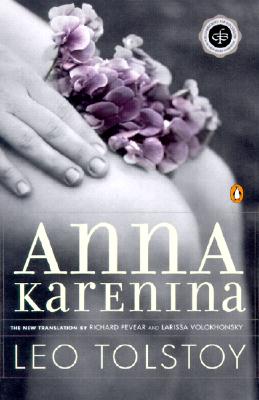
Title: Anna Karenina
Author: Leo Tolstoy
My copy published: Penguin 2001
Originally published: 1873
Translated by: Richard Pevear and Larissa Volokhonsky
Pages: 817 (without notes)

Thursday, March 31, 2011

Villette Read-Along: Final Thoughts

Villette (Everyman's Library (Cloth))Villette is just a lovely book, made even better by experiencing it through the read-along.  I know there were a couple of readers that were bored, but I found it very enjoyable to read.  There were only a couple of parts where I got impatient with the pace and wanted it to hurry on (most notably The Fete) and those didn't even last too long.  Overall I felt like it was quick to read, especially for a  600+ page book.

I thought the ending was perfect.  The perfect balance of happy/sad, you know? As Lucy got to know M.Paul, he became more understandable.  And even with Lucy's quirks, I thought she became more understandable as well.  She really just wanted a place to belong, didn't she?  I appreciated how all the little side stories were summed up, and each fate seemed to suit each character.

What bugged me?  The French.  My edition didn't have translations, and since I didn't want to miss anything, I ended up translating everything on Google Translator, which really slowed me down.  That was annoying.  Also, the discourse on religion toward the end would have irritated me were it not for the fact that I felt like I was hearing Charlotte Bronte's own opinions.

What did I appreciate?  How complex a character Lucy was.  Her story was easy to read, but deep and layered--offering whatever level of introspection you're comfortable with.  I really enjoyed the writing, as well.

Since I've posted my thoughts throughout the process of reading, I think I'll take this space to leave some of my favorite quotes.  (Links to my previous posts about Villette are at the bottom, for reference)

(from page 48)  While I loved, and while I was loved, what an existence I enjoyed!

(from page 75) I knew I was catching at straws; but in the wide and weltering deep where I found myself, I would have caught at cobwebs.

(from page 319) Really that little man was dreadful: a mere sprite of caprice and ubiquity: one never knew either his whim or his whereabout.

(from page 329) No mockery in this world ever sounds to me so hollow as that of being told to cultivate happiness.  What does such advice mean?  Happiness is not a potato, to be planted in mould, and tilled with manure.

(from page 452) At last, I struck a sharp stroke on my desk, opened my lips, and let loose this cry:--
"Long live England, History and Heroes! Down with France, Fiction and Scoundrels!"
The class was struck of a heap. I suppose they thought me mad.  The professor put up his handkerchief, and fiendishly smiled into its folds.  Little monster of malice!

(from page 461) Silence is of different kinds, and breathes different meanings...

(from page 487) Yes, you were born under my star! Tremble! for where that is the case with mortals, the threads of their destinies are difficult to disentangle; knottings and catchings occur--sudden breaks leave damage in the web.

(from page 506) ...his mind was indeed my library, and whenever it was opened to me, I entered bliss.

(from page 579) Some real lives do--for some certain days or years--actually anticipate the happiness of Heaven...

(from page 618) To see and know the worst is to take from Fear her main advantage.

Thursday, March 17, 2011

Villette Read-Along: Chapters 26-30

Villette (Everyman's Library (Cloth))
(I'm currently enjoying St. Patrick's Day in Dublin, halfway wishing I had time to blog about it and halfway wanting to get back out and do something! Happy Saint Patrick's Day to all, hope you enjoy your day wherever you are and whatever you do.)

If the last five chapters had me excited enough to engage in a heart-to-heart with Lucy, these 5 chapters had me wishing that she would just take a nap--to liven it up a bit, you know? ...and also to allow me to nap too, which is what I started to wish I was doing towards the end there.

If the last five chapters had me wondering, why all the attention on Graham? and where was M. Paul?  then these 5 chapters had me wondering, why all the attention on M. Paul? and where was Graham?  At this point I just don't like either one of them and can't really figure out what Lucy is thinking/feeling/doing.

If the last five chapters made me forget my feelings on modernity (with all the ghost talk and such), then these 5 chapters made me recall it (the layers and complexity--why does Bronte lead you around the story instead of plunging you into it? why, when most authors strive to get readers to identify as closely as possible with the main character or theme, does Bronte just keep dangling Lucy far enough away to make you keep grasping?)

We are definitely in the home stretch of the book now.  Only a couple more weeks and we will know all...well, no.  We'll probably not know all.  We may have read all, but I can't bring myself to expect Lucy to change so much in these final chapters that we will actually know all.

Actually, right this second, I'm rather worn out of M. Paul's quirks and Graham's shallowness and Paulina's oddities and Lucy's infernal aloofness and stubborness.  Can you kill your family by being too aloof and stubborn?  Maybe that's what Lucy confessed to the priest?

Thursday, March 10, 2011

Villette Read-Along: Chapters 21-25

Villette (Everyman's Library (Cloth))Oh Lucy.  What are you doing?  You need a mother around, poor dear, or a confidant of some sort that isn't afraid to smack you upside the head.  You are a smart girl--those thoughts about your warring Feelings and Reason were spectacular--but please attempt to maintain a firm grip on reality!

He doesn't love you, you do realize that, don't you?  Not in the way you need him to.  Take those rampaging feelings and listen to what they are telling you: you need a social life, dear--but don't put all of your eggs in one basket, and certainly not a flimsy one!  The Bretton's can't be your reason for living.  I think you realize that, although it seems to be your greatest wish for it to be so.  They are kind, but they aren't as deep as you.

Hold it together, sweetie.  I won't make you talk about Polly or the nun just yet.  Get to know yourself a little better.  Find some other friends.  Your life needn't be over just yet!  Just be willing to open up a bit, see the world through a wider lens.  (and now I must read on to find out where this story goes!)

(thanks again, Wallace, for hosting the read-along!  I wouldn't have gotten to this book this year without those fabulous deadlines!)

Thursday, March 3, 2011

Villette Read-Along: Chapters 16-20

Villette (Everyman's Library (Cloth))You know what you get when you follow instructions without looking into it further or asking questions when you notice something odd?  You get a break, that's what...35 pages less to read at the last minute than you'd thought.  I can't say I'm complaining.  Today, Wallace at Unputdownables (who is hosting this fun read-along) noticed that her starting post listed the chapters incorrectly.  So it was a nice surprise this morning when I found out that I didn't have to jam in another 2 chapters after all.

Now, nearly at the halfway point of the book, I have to say that the biggest surprise for me has been how modern the book feels.  Not only in density, but in ideas.  I remain surprised how fluid the writing is.  Apart from the bits in French which slow me up (because I can't stand not knowing what they are saying so I type everything into Google Translator) most of the text has been rather light.  That isn't to say that the book is simple or fluffy, because it isn't that at all.  It has layers, nuances, complexity; it makes you think about what is happening.

Lucy Snowe is certainly an intriguing character.  I'm loving the little internal monologue that we, as readers, are privy to.  These bits, along with the ideas she expressed about the art she was viewing, and the depiction of Graham's relationship with his mom all seem to have such modern sensibilities.  I can almost see the story taking place in a modern setting without changing a thing.

[possible spoilers ahead] Anyone notice how Lucy enjoys M.Paul?  At the concert she says "I smiled to myself as I watched him," and at the museum she seems to enjoy taunting him about the art work.  I'm wondering if something will develop there, or if I'm reading into it.  I'm hoping that she doesn't pin her hopes on Graham. [end possible spoliers]

If you are reading (or have read) Villette, what do you think about the pace and style?  Has anything stood out to you as seeming more modern than Victorian?  

Thursday, February 24, 2011

Villette Read-Along: Chapters 12-17

I seem to have spent all of my normal-review-writing-skills on a particularly taxing one last night, so all that Villette gets this time around is some bits that you get to piece together.  (my apologies!)

One thing I know,
These chapters didn't inspire me
to be insightful or delightful.
They weren't horrid, just a bit of a bore.
Closer to vapid than lively,
to mundane than intrigue.

Although, there was this one part
With some insight into stage fright just might--change my life:
"That first speech was the difficulty; 
it revealed to me this fact, 
that it was not the crowd I feared, 
so much as my own voice."

The humor wasn't absent, nor was the writing poor.
I still have hopes, I'm not done yet.
I'm glad the Brettons have resurfaced,
even if Lucy is still vague--rather unreliable, they say--
and hope this means we soon will meet
the [comparatively] grown up Polly.

Villette still remains more engaging, more fun,
than some other classics I happen to be reading
And if I don't identify with Lucy so much,
at least I'm appreciating her depth as a character.
One of my favorite quotes thus far:
"Medicine can give nobody good spirits."
Happy pill, anyone?

Friday, February 18, 2011

Villette Read-Along: Chapters 6-11

Yeah, I'm posting a day late.  Maybe next week I'll make up for it by posting a day early.  That would even it out, right?  Well, better late than never, I guess.

This week's reading covers Chapters 6-11 (pages 58-134 of 657 in my copy).  I'm not going to recap what happened in these chapters, because Wallace did it perfectly already.  Look here for my First Impressions, on Chapters 1-5.

The Reading Experience
The biggest difference in this section, as far as readability and pace, is all of the French included.  I know no French.  I am French-less.  I kept thinking it would be so much nicer if the French bits were Spanish bits.  I could do Spanish, (I had 4 years of it in high school,) but French?  Was it assumed that Bronte's readers would know some French?

Well, Google Translator became my close friend in these chapters.  I'm loving the layout/typesetting of my Everyman's Library edition, it's easy on the eyes, but it doesn't offer even a hint of translation.  I may switch to a Kindle version so that I don't need to keep up the reading/typing/translating cycle.  Aside from that the reading went quickly.  Much more quickly than I was expecting based on my memories of reading Jane Eyre.

The Cast
I'm still intrigued by Lucy Snowe.  We are getting to know more and more about her, but what is fascinating is how the information is related.  We get snippets of how she thinks of herself:
"If left to myself, I should infallibly have let this chance slip.  Inadventurous, unstirred by impulses of practical ambition, I was capable of sitting twenty years teaching infants the hornbook, turning silk dresses, and making children's frocks.  Not that true contentment dignified this infatuated resignation: my work had neither charm for my taste, nor hold on my interest; but it seemed to me a great thing to be without heavy anxiety, and relieved from intimate trial; the negation of severe suffering was the nearest approach to happiness I expected to know."
We also get some of her opinions (like the Protestant/Catholic issues, and the class/behavior issues) get to see some of her actions (in the classroom, around the doctor) and even get a hint of what she thinks others think of her.  "It was very seldom that I uttered more than monosyllables in Dr John's presence; he was the kind of person with whom I was likely ever to remain the neutral passive thing he thought me."  For all this information, however, she still holds herself somewhat aloof.  She is certainly a character with layers.

Other characters?   I'm loving them.  Ginevra, the Madame's children, and indeed all of the students at the school feel...foreign.  And fascinating, and frustrating.  At times it seems that Lucy is a bit bewildered with their way of living and thinking, that it is backwards and perhaps a bit daft--a fabulous representation of living in a foreign country, I would think.

The Plot and The Writing
Plot-wise, the simplicity and convenience with which Lucy lands in her new arrangements was a bit implausible, although the enjoyment I'm getting out of the book has made up for that.  This is not to say that her journey was easy, only that it seemed to lack some complexity.  Is this where the Gothic influence comes in?  Regardless, I thought this sentence was lovely:
I knew I was catching at straws; but in the wide and weltering deep where I found myself, I would have caught at cobwebs.
This paragraph made me think I was in Emily Bronte's Wuthering Heights for a moment, so dramatic did it seem:
I started.  About a hundred thoughts volleyed through my mind in a moment.  Yet I planned nothing, and considered nothing: I had not time.  Providence said, "Stop here; this is your inn."  Fate took me in her strong hand; mastered my will; directed my actions: I rung the door-bell.
Observations & Thoughts
It is rare for me to be so entranced with a classic...usually they are enjoyable, but a bit of work.  Villette has sucked me in.  The characters are interesting, and the writing sparkles.  Apart from all the French that I'm apparently supposed to be familiar with, it has been a great reading experience so far.  I'm surprised that I have so much to say about such small portions of the book!  I may end up reading ahead...I've just realized that I will be in Ireland during the last two weeks of the Read-Along, so it might be best if I finish beforehand and schedule my posts.  If the pace and interest level keep up, though, I'll have no problem reading it a bit more quickly.  Until next week!