Monday, November 28, 2011

New Books Show a Need for Nonfiction

Sometimes you know that you are in the mood for a certain type of book.
Sometimes you know that you are in the mood for a certain type of book and you immediately start reading it.
Sometimes you know that you are in the mood for a certain type of book and yet can't seem to get around to reading it.

Sometimes you don't know that you are in the mood for a certain type of book until your purchases illuminate it for you.
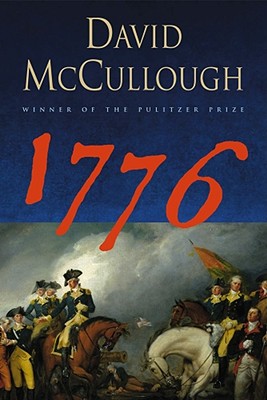
I actually own both versions of this book and haven't read either one.  They have both been following me around on my vacations from nightstand to nightstand for the last month.  I've owned them for years.  I've been wanting dreadfully to read them.  Why haven't I?
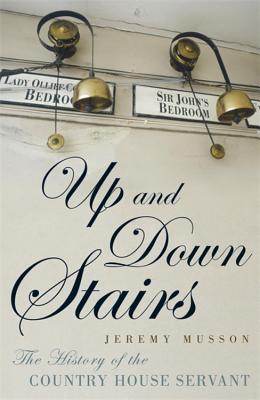
Keeping Their Place: Domestic Service in the Country House
I've just received both of these from Book Depository as an early Christmas gift to myself.  I've always been fascinated by the workings of a large estate, (I loved Gosford Park for that very reason, and touring the kitchen of Ashford Castle to make scones during my Ireland trip was mostly fantastic because I adore the behind-the-scenes view...in fact I'm fascinated with doors in general and am now wondering if the two are related?) and my interest has ramped up again after watching the first season of Downton Abbey...need.to.read...
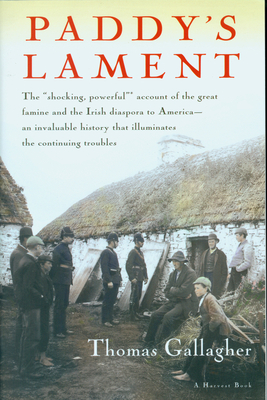
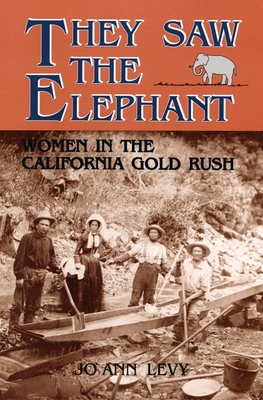
All right, so maybe these seem to have nothing in common.  But they both hold importance to my family's history: my grandfather's family emigrated from Ireland, and I grew up in California Gold Rush country.  Learning more about these topics somehow makes me feel I'll know more about myself.  I've been carrying the first around for nearly a year now, wanting to read it.  The second recently arrived from PaperbackSwap.  I want to read them both, yet somehow they aren't that the top of the pile...?

I've [obviously] been having a huge urge to read some good nonfiction (it goes beyond even these titles shown) but somehow they keep getting pushed aside.  I think that nonfiction takes a concentration that fiction often doesn't, and so I keep waiting for the perfect time.  I'm coming to think, however, that starting a nonfiction book is like starting a family:  you need to just do it, because if you wait for the perfect time it will never happen.

Have you experienced this?  Perhaps in different genres or delineations?  In the past few years I've read much more nonfiction (and much less adult fiction) than this year, which leads me to speculate that blogging might have something to do with it.  I somehow seem to adopt a running-out-of-time mentality that makes me shy away from nonfiction.  I think I'll give December a nonfiction focus: I've done well with my goals for this year, why not end the year with something I've been longing for anyhow?

Anna Karenina: Weeks 5-7 of 12

Between my Caribbean trip and my Tahoe trip, both full of family, friends, and TONS of cooking, I've fallen behind on my read-along.  I'm making it up here--so glad I finally caught up!

My Thoughts on pp.275-483
  1. How Karenin went about deciding what to do with Anna was chilling, and quite indicative of the initial state of their marriage, I think (verified in the quote from p. 427 below).  He really is very cold and methodical about it all: more concerned with the political/social appearance than anything else.  Love and compassion seem to have never had a place in their marriage, which makes my view of Anna's affair change somewhat.  She seems friendless and directionless in many senses. (see quotes below: from p. 282-3 for his view, and from p. 287 for hers)  I like that, a bit further on, he finally lets himself connect with true feeling (see quote from p. 410-11 below.)

  2. The crumbling aristocracy...Levin's discussion with others in his class about the structure of farming and peasantry etc. is somewhat like the Occupy movement from the opposite direction, yeah?  Anyhow, I find it interesting to compare the problems of one social/political structure to another, especially when we can see some of the outcome of one, and are living in the other.  I don't really know what my verdict is about the comparison, but it is adding something to the [thought] pot. 

  3. I'm completely sucked into the plot, so much so that I didn't write down as many quotes as I thought I might.  From the complete awkwardness when Stepan ran into Alexei Alexandrovich, to Levin and Kitty matching up and the whole wedding ceremony, and Vronsky's reaction to Karenin's return!  There is so much going on in this section that I'm just enthralled.

  4. Characters--not liking Anna so much any more.  I get that her choices were slim, but I don't really like Vronsky, so the fact that she does dampens my affection for her. :)  These sections took me from feeling irritated with her to being sympathetic and back to irritated (which has actually been a great thing to experience.)  I'm also not as in love with Levin as I was.  I like him fine, but it's really starting to irritate me that he gets so moody.  He can't handle truth being spoke of aloud and plainly, which is something I really don't think I could live with.  (I'm starting to feel sorry for Tolstoy's wife, if Levin=Tolstoy!)  My favorites right now are Stepan and Dolly...strange, since they played a minor role in this section.

Quotes from pp.275-483
  • p. 282-3: [Alexei Alexandrovich's thoughts:]  “I cannot be unhappy, but neither should she and he be happy.” [...] “She should be unhappy, but I am not guilty and therefore cannot be unhappy.” 

  • p. 287: [Anna's thoughts:] ...in the depths of her soul she considered her situation false, dishonest, and wished with all her soul to change it. [...] It might be bad, this new situation, but it would be definite, there would be no vagueness or falsehood in it. 

  • p. 334: [Levin's POV] ...but the landowner, like all people who think originally and solitarily, was slow to understand another man’s thought and especially partial to his own.

  • p. 375: [Levin:] “It’s true that it’s time to die. And that everything is nonsense. I’ll tell you truly: I value my thought and work terribly, but in essence--think about it--this whole world of ours is just a bit of mildew that grew over a tiny planet. And we think we can have something great--thoughts, deeds! They’re all grains of sand."

  • p. 410-11: Alexei Alexandrovich stopped and went pale. He now realized clearly how strongly he had desired her death. [...] ...feeling slightly relieved at the news that there was after all some hope of death, he went into the front hall.

  • p. 415: [Vronsky] did not understand Alexei Alexandrovich’s feelings. But he felt that this was something lofty and even inaccessible to him in his world-view.

  • p. 427: [Stepan to his sister Anna:] “I’ll begin from the beginning: you married a man twenty years older than yourself. You married without love or not knowing what love is. That was a mistake, let’s assume.”

  • p. 435: [Vronsky's thoughts:] He simply could not understand how, at this moment of their reunion, she could think about her son, about divorce. Was it not all the same?

  • p. 465: [Vronsky:] He soon felt arise in his soul a desire for desires, an anguish.

Thursday, November 17, 2011

The Eye of the Storm

Vacation Part One is over: we are back from St. John, trying to pull everything together before heading up to Northern California mountains for Thanksgiving.  I have a few little days between travel, and of course one priority is updating the good old book blog.  :)

I always get incredulous responses when I mention that the Caribbean doesn't excite me so much, but the mountains? Dreamy.  What it boils down to is that I'm just not a hot weather girl.  Now don't get me wrong--it's absolutely gorgeous and the ocean beats the So Cal ocean any day of the week, but it's awfully hard to see through the sweat and bug bites (blech, don't even get me started on those).  But this is all good news for you, since if I'm ever being cajoled into going again, I very well may just offer the trip to one of you instead. ;)

The view from our villa: Francis Bay on St. John--a rare sunny day!
The wedding (my husband's brother) was lovely and unique--very casual on a small secluded beach.  The day (11/11/11 of course) happened to be clear and beautiful for the most part, even though it rained quite a bit otherwise.  We didn't get many pictures, actually, since we spent so much time visiting, wet, or otherwise out of commission.  There happen to be exactly zero pictures of me, but here's one of my hunny and my girlies, and another of my boys:

Haha, un-posed photos are wonderful.
So now we move on...my Google Reader is suffering from sever constipation, and I discovered that Anna Karenina wasn't quite as easy to read in a beachy-tropical locale, not to mention the fact that I had a wonderful week of reading that I want to share with you all.  I'm happy to be back in a place where the heater is a welcome presence, and hoping for the chance to catch up soon.  Cheers!

Thursday, November 10, 2011

Sunday Salon: Traveling Inside and Outside of Books

I know, it isn't Sunday.  But I happen to be on vacation in the Caribbean, which makes the day of the week irrelevant.  Every day is Sunday, right?  And I'm feeling book-muse-ish and so to the Sunday Salon I go.

We are staying on St. John, with a bunch of family and friends in order to celebrate my husband's brother's wedding, so there is more visiting than sight-seeing.  Good thing, then, that I was able to see so much of that recently @ As the Crowe Flies and Reads!  (Besides, she seemed to have used up all of November's good weather...it's been mostly rainy since we've been here, so her pictures are much better than anything I could supply!)  We are in Francis Bay, and it has been a lovely time of visiting with family and journeying to other places through literature.

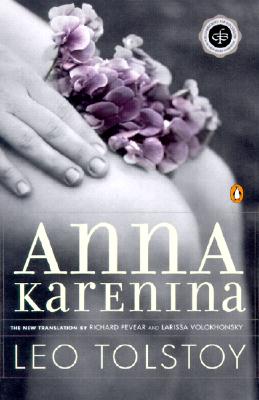
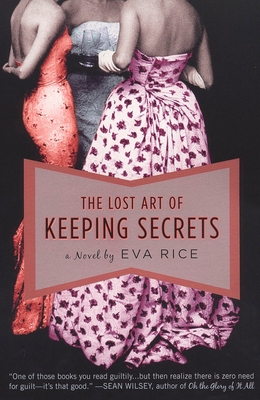
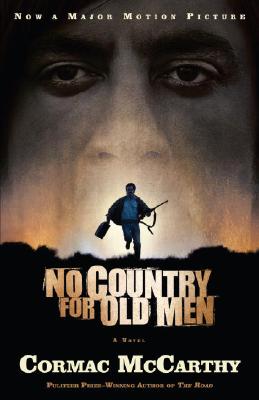
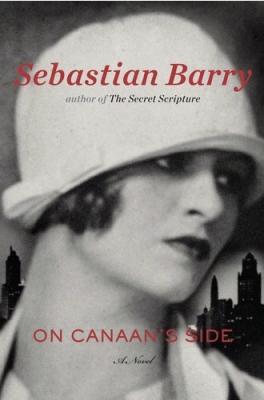
Which brings me to what I've been pondering.  When you travel, do you like to read books that take place where you are visiting?  Island books in the Caribbean?  English countryside books whilst visiting the UK?  Gossip and style in Los Angeles?  Or do you, like me, refrain from specializing in one area?  Since I've left home, I've not only arrived in tropical islands, I've also visited Japan through After the Quake, stopped over in the American Southwest in the first 100 pages of No Country for Old Men (couldn't bring myself to finish that one), as well as 1950s England in The Lost Art of Keeping Secrets, Edinburgh in The Vanishing Act of Esme Lennox, a peak into Russia in Anna Karenina, and am now in Ireland/America in On Canaan's Side.  It's been wonderful.


Books are my preferred method of travel, I must confess.  No airports or red-eye flights.  None of the grime or plugged ears that inevitably find me by the end of a long journey.  I can simply open the covers of a new book and immerse myself in a new world.  And I don't like to stay in any one place for too long...going other places in my reading allows me to better appreciate the place I'm at.  I might get on a kick for a specific topic, but interjecting other things helps keep it fresh.

Meanwhile my 11 year-old daughter gets here and reads (& REreads) The Cay...while she's surrounded by islands and cays.  What about you?  Do you prefer to saturate yourself or jump around?

Friday, November 4, 2011

Anna Karenina: Week 4 of 12


My Thoughts on pp.214-274
  1. Another round of depth was added to our main players.  In this section we get to see Levin contrasted with his brother Sergei: country mouse/city mouse.  On page 239 (see quote below) Levin reflects on an observation that his brother's convictions don't reach his heart.  On page 243, Sergei gets frustrated that Levin's convictions don't reach his mind:   "He hardly entered into what his brother was saying."  We also get to see Kitty mature some, although she still seems rather befuddled with herself (see first three quotes below).

  2. This section was slower/quieter for me.  I enjoyed reading of Kitty's time abroad (couldn't quite figure out Varenka--can anyone really be that good and likeable and level-headed?) and seeing more of Levin.  Some of the farming descriptions left me wishing for more about Vronsky and Anna instead, even though I love nature and the education on Russian society.  Maybe I'm like Levin, and think that nature is better if it isn't talked of so much. ;)   (see quote from page 241 below)

  3. I've realized that I think of the men being much older than they really are.  Looking back on my quotes I see that Stepan is 34...they all seem so much older! I'm going to have to work at reforming the picture in my mind's eye.

Quotes from pp.214-274
  • p. 224:  From Varenka she understood that you had only to forget yourself and love others and you would be calm, happy and beautiful.

  • p. 233: She could not solve the problem her father had unwittingly posed for her by his merry view of her friends and the life she had come to like so much.

  • p. 236: ...She understood that she had deceived herself in thinking that she could be what she wished to be.

  • p. 237: For Konstantin Levin the country was the place of life, that is, of joy, suffering, labour.

  • p. 239: But, in the depths of his soul, the older he became and the more closely he got to now his brother, the more often it occurred to him that this ability to act for the common good, of which he felt himself completely deprived, was perhaps not a virtue but, on the contrary, a lack of something--not a lack of good, honest and noble desires and tastes, but a lack of life force, of what is known as heart, of that yearning which makes a man choose one out of all the countless paths in life presented to him and desire that one alone.

  • p. 241: Konstantin Levin did not like talking or hearing about the beauty of nature.  For him words took away the beauty of what he saw.

  • p. 248: "I need physical movement, otherwise my character definitely deteriorates."

  • p. 260: Hard as Stepan Arkadyich tried to be a solicitous father and husband, he never could remember that he had a wife and children.

  • p. 260: She had lived in the country in childhood, and had been left with the impression that the country was salvation from all city troubles.

Tuesday, November 1, 2011

For the Record: October 2011

You know what the end of October means, right? Yep, the end of the year is nigh: I'd better prepare myself to see those BEST OF 2011 posts pop up, since they seem to happen much sooner than I'd think. I enjoyed my reading this month, even though I read some books I did not enjoy, mostly because some incredible books more than made up for it...something that is shaping my opinion on how I approach reading. I've been so goal-oriented this year that I'd almost forgotten how much fun it can be to read on a whim. I need to do much more whim-reading! Anyhow, here's the rundown:

8 Books Read in October: (112 books year-to-date) (titles link to my review)
3 for Challenges:
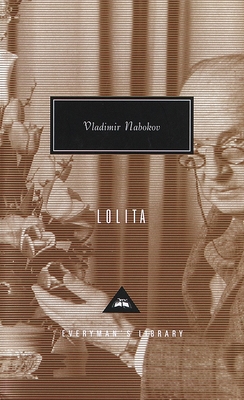
  - Lolita (Back to the Classics Challenge--3) (or read the review @ As the Crowe Flies and Reads...she states my opinion much more eloquently!)
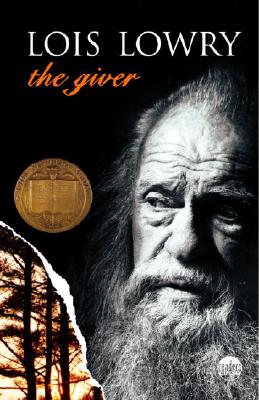
  - The Giver (Newbery Challenge--4)
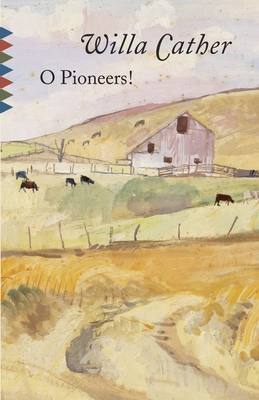
  - O Pioneers! (Willa Cather Chronologically Challenge--5)
1 Read-Aloud for my kiddos:
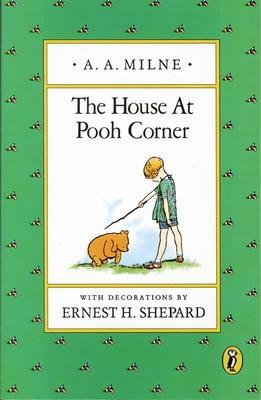
  - The House at Pooh Corner (4)
1 ARC:
  - The Ballad of Tom Dooley (for LibraryThing, I wasn't familiar with the legend or the song, and so found the story to be rather unengaging.  --2.5)
3 Just Because:
  - Lord of the Flies (because my son was reading it for school, and I couldn't remember if I'd ever actually read it.  I knew the story already, and that didn't bother me, but I had a really hard time with the moralistic heavy-handedness of the whole thing.  I'm guessing that I just don't appreciate allegories or fables much--they seem to rely too much on symbolism, sacrificing character development and complexity.  Blah.  I don't want to talk about it any more...won't be devoting a whole post to it, that's for sure! --2)
  - A Long Long Way (simply one of the most amazing books I've ever read.  5++)
  - Bright's Passage (because I love Josh Ritter's music, but I don't think his talent translates to literature quite so well...hoping to review this one soon.  --3)


2 Current Reads:
- Anna Karenina by Leo Tolstoy (read-along with Wallace @ Unputdownables.  This is a reread for me, and I'm absolutely loving the Pevear&Volokhonsky translation!  I may read ahead.)
- The Westing Game by Ellen Raskin (for my Newbery Challenge)


On My Nightstand:
  - Some Short Stories by Flannery O'Connnor (I read a couple more in October, but still have 9 of 31 stories left to read)
  - More junior fiction for my Newbery Challenge
  - Indiespensable from Powells (I haven't read the last few shipments--need to catch up!)


Before the End of the Year:
I've decided to dump my personal Top 5 of 2010 challenge.  The challenge was to read another book by the authors of my 2010 favorites, and I had 2 left--I'm just not interested in them right now so they are returning to the regular old TBR shelf.

I do want to read one more Pulitzer, one more Willa Cather, and a couple more Newbery books before the end of the year, and finish Flannery O'Connor's stories!

I'm also trying to figure out how best to make next year's reading feel a little more whim-tastic.  I've been feeling guilty about books coming into my house and not being read (I don't really like owning a bunch of unread books because I tend to get out of the mood for them after a while and then feel that space and money was wasted) but at the same time, most of these books made it onto my shelf without me having bought them, so my guilt is somewhat misplaced.  Anyhow, I need to reassess the balance here.  I feel like all I do is try to keep my TBR shelf down and look at my wishlist longingly.  Something.has.to.change.

Friday, October 28, 2011

A Long Long Way by Sebastian Barry


He was born in the dying days.

And so opens this amazing story of young Willie Dunne.  This may be the most important novel I've ever read; it's certainly one of the best.  Awarding my own 5 measly little stars makes light of the experience, since I still get teary whenever I think about the book.  It doesn't seem fair that I have no one to discuss this book with, so I'm hoping one of you has read it!

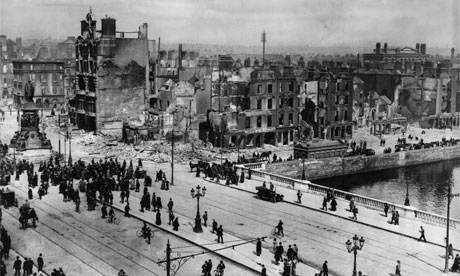
It is a book of the Great War: the First World War: a war of horrific scope and tragedy that is often overshadowed by WWII.  This isn't about the entire war, though, it focuses on the Irish boys that fought and died in it.  At the time, Ireland was controlled by England, and internally struggling with opinions about autonomy, which resulted in Easter Rising (see the photo and link below for more info). So Willie Dunne from Dublin, unable to follow his father's footsteps as a policeman because he didn't reach the height requirement, decides to volunteer to fight for England: a decision that becomes quite controversial as time passes.

I don't know about you, but when I think about "war books" I automatically groan inside.  I know from the get-go that there's going to be some rough spots, and dread reading it because I'm afraid it will be all action-movie-gruesome, lacking any introspection or emotional connection.  It was immediately apparent that this wasn't going to be the case with this book.  Here's a great example of the writing, setting the stage on the second page:
Those millions of mothers and their million gallons of mothers' milk, millions of instances of small-talk and baby-talk, beatings and kisses, ganseys and shoes, piled up in history in great ruined heaps, with a loud and broken music, human stories told for nothing, for ashes, for death's amusement, flung on the mighty scrapheap of souls, all those million boys in all their humours to be milled by the mill-stones of a coming war.
Devastation on Sackville Street, Dublin, where it crosses the River Liffey, due to the Easter Rising of 1916
Read some of the history about WWI and Easter Rising @ the guardian
What was surprising to me was how Barry managed to write a book that mostly takes place on the front lines, and yet avoid repetitive boredom.  Not to mention the fact that I'm baffled as to how he survived writing such an emotional journey in the first place.  It really is about so much more than just War, although you will be there like you've never been there before.

The prose was stunning. It ranged from simplistic to poetic, which helped to keep interest high and packed more power in the punch.  The pace and plot were thoughtful and engaging. It alternated from action to introspection with perfect timing and balance, and covered a fair amount of time, yet didn't feel rushed or dreary.  The setting and characters were vivid yet spare. Not overly descriptive, yet strong enough to feel you are there. Familiar, normal people just like those all around us.  Some we know more of, some less.  Some stir compassion, others incite frustration.

Read this when you are in the mood for a deep conversation with a good friend--that's what I felt I'd experienced when I closed the covers.  Read it with an expectation to learn, to grow, to see beauty, to remember, to feel.

A bit of background: I was introduced to Sebastian Barry during my trip to Ireland this year in March.  I went into the Clifden Bookshop to buy Joseph O'Connor's Ghost Light (which I somehow haven't posted about) and asked the bookseller for other Irish author recommendations.  She handed me The Secret Scripture by Sebastian Barry.  I enjoyed that very much, and picked this one up at the library on a whim.  I'm so glad I did; looking forward to reading Barry's other novels.

Title: A Long Long Way
Author: Sebastian Barry
Pages: 304
Published: Penguin (orig. 2005)
My Rating: 5 stars

Anna Karenina: Week 3 of 12


My Thoughts on pp.142-210
  1. First of all, I couldn't stop at page 210--what a cliffhanger!  I had to know, so I read a few more pages. I'm beginning to seriously doubt how I'll be able to make this book last the rest of the year!

  2. Why is it that so many of the characters base their actions on public opinion?  Are we really like this and just don't realize it?  Or is this a facet of a high-profile section of society?  As one example, Vronsky's mother was pleased with her son's affair until she realized that it was looked down upon by others.  Tolstoy has a way of giving the reader information about a character (such as their thought processes) that the character himself isn't even aware of, which not only adds a bit of humor to the story, but also exasperation that the characters don't see what we so plainly see.

  3. I really enjoyed all the macho bantering in this section.  From the comment about Vronsky being on a low-carb diet: "he avoided starches and sweets." (p.175) to teasing someone about not drinking because of the calories: "Today I don't drink." "Why? So as not to gain weight?" (p.180) and most especially about hair loss: "You should get your hair cut, it's too heavy, especially on the bald spot." (p.180)  These fellows are funny.  Can't you just picture them?

  4. I'm so sad about Anna.  She seems to have let her emotions rule, making (of course) the wrong decisions.  She can't bear to talk seriously about the issue, and puts on this lightness that I totally understand but isn't doing her any favors.  She's working herself into a corner and it is so sad to see.

Quotes from pp.70-141
  • p. 147:  "Rummaging in our souls, we often dig up something that ought to have lain there unnoticed."

  • p. 174: The majority of young women, envious of Anna and long since weary of her being called righteous, were glad of what they surmised and only waited for the turnabout of public opinion to be confirmed before they fell upon her with the full weight of their scorn.

  • p. 176: Yashvin, a gambler, a carouser, a man not merely without any principles, but with immoral principles--Yashvin was Vronsky's best friend in the regiment.

  • p. 183: He was angry with everybody for their interference precisely because in his soul he felt that they, all of them, were right.

  • p. 200: For the first time in his life he had experienced a heavy misfortune, a misfortune that was irremediable and for which he himself was to blame. [...] But the memory of this race remained in his soul for a long time as the most heavy and painful memory of his life.

Wednesday, October 26, 2011

O Pioneers! by Willa Cather


How can you not love a classic book that has an exclamation mark in the title?

This is my fourth stop in my personal challenge to read Willa Cather's works chronologically.  Not only that, but O Pioneers! was the first title of hers that I read, and is my first re-read.  Somewhat of a milestone, I'd say.  If this one failed to impress, I'd be rethinking my challenge.  I was able to appreciate it much deeper this time around, which has me looking forward to my next re-reads.

In her previously published works, Willa Cather experiments with her fascination for the bond between people and land, with what drives a person, and how they make difficult choices.  In O Pioneers! she really lets the land (and the power it has on people) shine.  She has a way of simplicity in her words that speaks volumes; the way she talks of the land is just as she would speak of any human character.
There is something frank and joyous and young in the open face of the country.  It gives itself ungrudgingly to the moods of the season, holding nothing back.  Like the plains of Lombardy, it seems to rise a little to meet the sun.  The air and the earth are curiously mated and intermingled, as if the one were the breath of the other.
O Pioneers! feels like a coming-of-age story, but the main character is an untamed land.  It spans those years when immigrants became Americans, when the West became the Heartland.  It also follows Alexandra Bergson's life, as she struggles to take her father's land from the wild, and wrest from it a better future for her younger brother. Sadly, Alexandra is a strong, intelligent woman living in a time when it was much more acceptable to be a subservient, simple woman.  Because of this, much of her life is spent somewhat alone.
Isn’t it queer: there are only two or three human stories, and they go on repeating themselves as fiercely as if they had never happened before; like the larks in this country, that have been singing the same five notes over for thousands of years.
Unless the idea of getting into the minds of those immigrants: the Swedish, the French, the Bohemian, is distasteful to you, then I believe you are in for a wonderful experience with O Pioneers!  The generalizations of the different nationalities, and how they responded to the land and the other new neighbors, felt unique yet somehow so familiar and comforting.  The writing is simple, yet there are many though-provoking layers.  How we need hope in order to live.  How love is not so simple.  How physical strength or vivacity are not the answer they sometimes seem to be.  How our own selves are often more of a hindrance to our futures than any other obstacle.  How the grass is not always greener.
Frank knew well enough that if he could once give up this grudge, his wife would come back to him. But he could never in the world do that. The grudge was fundamental.

(Side note: In classic Wikipedia form, the page for this book states that it is #83 on the ALA list of banned/challenged books, which is simply not true. It is #83 on Radcliffe's Rival 100 Best Novels List, which the ALA cites. And kids wonder why you can't cite Wikipedia in research papers.)

As a recap:
1st was April Twilights, a collection of poetry
2nd was The Troll Garden and Others, a collection of short stories
3rd was Alexander's Bridge, a novel[la]


Title: O Pioneers!
Author: Willa Cather
Pages: 144
Published: Vintage (orig. 1913)
Read for: my personal Willa Cather Chronologically challenge
My rating: 5 stars

Friday, October 21, 2011

Anna Karenina: Week 2


My Thoughts on pp.70-141
  1. This installment provided much character development for Levin, Vronsky, Anna, and Kitty, while Stiva and Dolly faded into the background somewhat.  Like the camera panning and zooming in on the background, these somewhat peripheral characters have become more interesting and more important.  I sympathize with Kitty, although I have to admit I'm running out of patience for her (pull it together, girl!)  I dislike Vronsky: what a player.  Anna I love, except I'm saddened that she can't resist Vronsky.  Society certainly doesn't help her out! (see the quote below form page 128)

  2. I loved the chapters that gave us greater insight into Levin; I especially liked seeing him out on his estate.  I feel so much more sympathetic toward him now.  I now see why he is referred to as being most like Tolstoy himself.  Many of his thoughts, (particularly on the economic conditions in chapter 26,) sounded much like the beginnings of the Tolstoyan movement. (see the quote below from page 93)  As of now, he is by far my favorite character.  He seeks truth and a whole, well-rounded life: something I admire.

Quotes from pp.70-141
  • p. 80: Kitty looked into [Vronsky's] face, which was such a short distance from hers, and long afterwards, for several years, that look, so full of love, which she gave him then, and to which he did not respond, cut her heart with tormenting shame.

  • p. 93: [Levin] regarded the reforming of economic conditions as nonsense, but he had always felt the injustice of his abundance as compared with the poverty of the people, and he now decided that, in order to feel himself fully in the right, though he had worked hard before and lived without luxury, he would now work still harder and allow himself still less luxury.

  • p. 95: He felt that something in the depths of his soul was being established, adjusted and settled.

  • p. 97: 
    • Dolly: "Everything in your soul is clear and good."
    • Anna: "Each of us has his skeletons in his soul..."

  • p. 104: He looked at people as if they were things.  A nervous young man across form him, who served on the circuit court, came to hate him for that look.  [...] the young man grimaced, feeling that he was losing his self-possession under the pressure of this non-recognition of himself as a human being and was unable to fall asleep because of it.

  • p. 105: Only now did Vronsky understand clearly for the first time that the husband was a person connected with her.  He knew she had a husband, but had not believed in his existence and fully believed in it only when he saw him, with his head, his shoulders, his legs in black trousers; and especially when he saw this husband calmly take her arm with a proprietary air.

  • p. 107: He called the celebrated Countess Lydia Ivanovna 'samovar', because she was always getting exited and heated up about things. 
  • p. 107: And the son, just like the husband, produced in Anna a feeling akin to disappointment.  She had imagined him better than he was in reality.  She had to descend into reality to enjoy him as he was.

  • p. 128: He knew very well that in the eyes of Betsy and all society people he ran no risk of being ridiculous.  He knew very well that for those people the role of the unhappy lover of a young girl, or of a free woman generally, might be ridiculous; but the role of a man who attached himself to a married woman and devoted his life to involving her in adultery at all costs, had something beautiful and grand about it and could never be ridiculous, and therefore, with a proud and gay smile playing under his moustache, he lowered the opera-glasses and looked at his cousin.